Compare commits
329 Commits
| Author | SHA1 | Date | |
|---|---|---|---|
 GitHub Actions GitHub Actions
|
e5723aab03 | ||
|
Jaguar Zhou
|
f51f5dd19f | ||
|
Aaron
|
aae5f0789d | ||
|
1natsu
|
586fe3950c | ||
|
Aaron
|
241c907c65 | ||
|
Aaron
|
aab4244d84 | ||
|
Aaron
|
767a3a987c | ||
|
Aaron
|
a2924d872a | ||
|
Aaron
|
54baf21490 | ||
|
Nishu
|
5a3790a7d3 | ||
|
Aaron
|
236e099b81 | ||
|
GitHub Actions
|
9b54bc4704 | ||
|
Aaron
|
ffb99af719 | ||
|
Jaguar Zhou
|
90bb145d91 | ||
|
Mira Dobrovolskaya
|
190c87d120 | ||
|
Tran Ngoc Tan
|
4c511d5728 | ||
|
Florian Metz
|
b8ecbc5a54 | ||
|
Nithur
|
8c3d756187 | ||
|
Patato
|
cfdc6b3e6b | ||
|
Aaron
|
226e6c9fbe | ||
|
Aaron
|
db41f27072 | ||
|
Aaron
|
db025cd3a2 | ||
|
GitHub Actions
|
57229c69c1 | ||
|
GitHub Actions
|
8f3a90eeb2 | ||
|
GitHub Actions
|
a360965d92 | ||
|
Aaron
|
eb1ace6d20 | ||
|
GitHub Actions
|
497c902283 | ||
|
Aaron
|
4d4453b830 | ||
|
GitHub Actions
|
ef53580ed1 | ||
|
Aaron
|
52e5387d47 | ||
|
Aaron
|
f5b7f7e0e5 | ||
|
Aaron
|
592bdbe4d9 | ||
|
Aaron
|
6fc227bad6 | ||
|
Aaron
|
d74f6b0735 | ||
|
dsrrlldr
|
62ea796045 | ||
|
Nishu
|
064704c9b7 | ||
|
Qiwei Yang
|
c846a1febf | ||
|
Aaron
|
c3959e8427 | ||
|
GitHub Actions
|
e770f9b6b7 | ||
|
Aaron
|
67f35615a2 | ||
|
Aaron
|
5c7b6098a2 | ||
|
Willow
|
f7d12b7486 | ||
|
rxliuli
|
3481313859 | ||
|
Aaron
|
2f23556893 | ||
|
GitHub Actions
|
330e39159a | ||
|
kongmoumou
|
aa14676f91 | ||
|
Goran Nikic
|
199f330324 | ||
|
jasonbla
|
63dee97ac3 | ||
|
nirtamir2
|
b121ed2fe2 | ||
|
Johnson Towoju
|
607e1162e5 | ||
|
dsrrlldr
|
b4d569a915 | ||
|
Aaron
|
4fac364542 | ||
|
Aaron
|
51c7ee5fa8 | ||
|
Aaron
|
9b780f2d00 | ||
|
Aaron
|
f5aec7ec9b | ||
|
Florian Metz
|
5d991eda31 | ||
|
Bread Grocery
|
0318a34046 | ||
|
1natsu
|
e7c66304d3 | ||
|
Ayub Kokabi
|
4603ebb511 | ||
|
GitHub Actions
|
ea570c12b7 | ||
|
Bread Grocery
|
c17ce34a27 | ||
|
Berkin Anik
|
0e4d3ad8ab | ||
|
Aaron
|
4304f71df2 | ||
|
Aaron
|
bb5ea34396 | ||
|
GitHub Actions
|
c30adb409c | ||
|
Bread Grocery
|
ab83031462 | ||
|
imnaK
|
cd7285c3ef | ||
|
Aaron
|
bdb775c88d | ||
|
Aaron
|
d20793d5e6 | ||
|
GitHub Actions
|
ae1e276577 | ||
|
Craig Slusher
|
c031c6e82e | ||
|
Malix
|
d06f8128f5 | ||
|
Florian Metz
|
6ba12e9736 | ||
|
Aaron
|
0092556c1a | ||
|
Semro
|
9721bca5a1 | ||
|
Aaron
|
1b138f86b9 | ||
|
GitHub Actions
|
e839671f13 | ||
|
Aaron
|
842c158f96 | ||
|
GitHub Actions
|
b14c9107fe | ||
|
Aaron
|
21894d2890 | ||
|
Aaron
|
22b529453f | ||
|
Aaron
|
4ec2ece85f | ||
|
Aaron
|
cee1424a4c | ||
|
Florian Metz
|
d09cf6d4b1 | ||
|
MultiViewer
|
9affa07639 | ||
|
Aaron
|
cde060ff4f | ||
|
Florian Metz
|
1a9cd438d9 | ||
|
Aaron
|
1dbb5a468d | ||
|
Aaron
|
1fe01290c0 | ||
|
Avi
|
1b900e942b | ||
|
John Wu
|
8e527dc96b | ||
|
uncenter
|
1f7ad781df | ||
|
dsrrlldr
|
c2b151be11 | ||
|
Aaron
|
a0b63e7350 | ||
|
Aaron
|
10902351be | ||
|
GitHub Actions
|
1c3009a48f | ||
|
Aaron
|
6c6087249f | ||
|
Aaron
|
539d482f71 | ||
|
Aaron
|
cab97bca1e | ||
|
Florian Metz
|
6020083b89 | ||
|
GitHub Actions
|
947b24f1b0 | ||
|
windmillcode0
|
2c5ba64b61 | ||
|
Aaron
|
faa4fcb718 | ||
|
dependabot[bot]
|
8e9b67fea2 | ||
|
dependabot[bot]
|
659bdd46a0 | ||
|
dependabot[bot]
|
edcc411d26 | ||
|
dependabot[bot]
|
e022423bad | ||
|
dependabot[bot]
|
84e1fd44eb | ||
|
dependabot[bot]
|
b68d1ff828 | ||
|
dependabot[bot]
|
c31a5c30ed | ||
|
Aaron
|
5b408c2bc2 | ||
|
mezannic
|
ca29419db6 | ||
|
Aaron
|
ab26bdc7c1 | ||
|
GitHub Actions
|
d270250633 | ||
|
Florian Metz
|
d75f64df79 | ||
|
Gurvir Singh
|
5faa5d7537 | ||
|
mezannic
|
177223c625 | ||
|
deyu
|
a64ff22917 | ||
|
Gourav Goyal
|
0bf08329b0 | ||
|
Guilherme Oenning
|
e3f00d2797 | ||
|
Andy Zhou
|
09de72895e | ||
|
Aaron
|
c0aa12089e | ||
|
Aaron
|
0248f58785 | ||
|
Florian Metz
|
247cd66f74 | ||
|
GitHub Actions
|
4a1bd41df9 | ||
|
1natsu
|
efcb593718 | ||
|
Okinea Dev
|
a82c7cbf71 | ||
|
renxinyan
|
db60e79a99 | ||
|
Jarle Mathiesen
|
722eff145f | ||
|
Zain Hasan
|
282458748d | ||
|
the-syndrome
|
26197f11a3 | ||
|
aklinker1
|
9d560f9798 | ||
|
Okinea Dev
|
786292c95e | ||
|
rxliuli
|
e760ee444e | ||
|
kongmoumou
|
78f91fefb6 | ||
|
Aaron Klinker
|
fda1e18f48 | ||
|
hikiko4ern
|
c94168e2d1 | ||
|
GitHub Actions
|
3eb505dbde | ||
|
1natsu
|
fbe502fddf | ||
|
1natsu
|
c143a9978d | ||
|
Aaron Klinker
|
e3555b663d | ||
|
Aaron Klinker
|
df934d252c | ||
|
Aaron Klinker
|
447d011b8f | ||
|
Aaron
|
abe1263d27 | ||
|
Aaron Klinker
|
143b5ac81f | ||
|
dependabot[bot]
|
87fbb1f4c3 | ||
|
dependabot[bot]
|
62f11bf605 | ||
|
dependabot[bot]
|
3ead54b58e | ||
|
dependabot[bot]
|
580f4f3cfe | ||
|
1natsu
|
da0accebe8 | ||
|
Aaron
|
eb65d0b42a | ||
|
Alex Nguyen
|
c2784135b0 | ||
|
Aaron
|
61d54bd1f9 | ||
|
Aaron
|
0bd94fce3b | ||
|
Amal Chandran
|
2a97c06443 | ||
|
Aaron
|
8213aa776a | ||
|
Aaron
|
026f78254d | ||
|
Aaron
|
0ebb013ba6 | ||
|
Aaron
|
c5f78d0c8d | ||
|
GitHub Actions
|
8771676e69 | ||
|
1natsu
|
aebbbb0685 | ||
|
Aaron
|
68183b648e | ||
|
Aaron Klinker
|
45809c0198 | ||
|
Aaron Klinker
|
13163c9ba1 | ||
|
1natsu
|
aedbba3f3d | ||
|
GitHub Actions
|
763dbd5ee8 | ||
|
Aaron
|
5821ae0e8c | ||
|
Aaron
|
751706d2ae | ||
|
Aaron
|
cf8554718d | ||
|
Aaron
|
5f653b3ff9 | ||
|
Aaron
|
5f2e1c38a7 | ||
|
Aaron
|
8a9d8be8a4 | ||
|
Aaron
|
067b2eccf3 | ||
|
Aaron
|
2e1bd6ec93 | ||
|
Aaron
|
b463cef1c2 | ||
|
GitHub Actions
|
adf9d39d69 | ||
|
1natsu
|
b1699592e4 | ||
|
Aaron
|
8675abfced | ||
|
Aaron
|
a1fc19e47c | ||
|
Aaron
|
8235de04d2 | ||
|
Aaron
|
46a324adc2 | ||
|
Aaron
|
c0af62316d | ||
|
GitHub Actions
|
2fd3503694 | ||
|
Aaron
|
e6529e6e41 | ||
|
1natsu
|
72673ca366 | ||
|
Florian Metz
|
cbda49ba7b | ||
|
hikiko4ern
|
0ab32e5afa | ||
|
GitHub Actions
|
36cfcd0acb | ||
|
GitHub Actions
|
f746d46247 | ||
|
GitHub Actions
|
a2de6cbe44 | ||
|
GitHub Actions
|
e632a2964a | ||
|
GitHub Actions
|
f736a14651 | ||
|
uncenter
|
a8b0d40959 | ||
|
Aaron
|
4c5504d139 | ||
|
GitHub Actions
|
fb86deb388 | ||
|
Aaron
|
3a8e6135ac | ||
|
Aaron
|
a38de0c03f | ||
|
Aaron
|
ea97410fb4 | ||
|
hikiko4ern
|
e36549ddce | ||
|
KnightYoshi
|
10851ae01c | ||
|
GitHub Actions
|
d553ef6b29 | ||
|
Aaron
|
15bf0da82e | ||
|
hikiko4ern
|
fc246ffaac | ||
|
Florian Metz
|
9785eff21e | ||
|
Himanshu Patil
|
52fbd2c99e | ||
|
GitHub Actions
|
648ae4fb8d | ||
|
Aaron Klinker
|
bbeeabc9ea | ||
|
web-dahuyou
|
35cf6e7bc0 | ||
|
Florian Metz
|
78822acdac | ||
|
不游
|
aea123890f | ||
|
Matt Strayer
|
c369f4a955 | ||
|
GitHub Actions
|
16d8240406 | ||
|
Aaron
|
24cd01dd31 | ||
|
Aaron
|
fb22beadb8 | ||
|
Aaron Klinker
|
fa85177648 | ||
|
Aaron Klinker
|
ed07a49dd2 | ||
|
Aaron
|
09c9de0a60 | ||
|
Aaron
|
523296b29a | ||
|
Aaron Klinker
|
ef67ef47aa | ||
|
Aaron Klinker
|
cb5eb68d62 | ||
|
GitHub Actions
|
2e9ab75e2b | ||
|
Aaron
|
0c2d795800 | ||
|
Aaron
|
97aa173f7e | ||
|
Aaron
|
9eb64d94d6 | ||
|
Florian Metz
|
a0971cab52 | ||
|
Aaron
|
127562e9d0 | ||
|
Aaron
|
038e7450e0 | ||
|
Aaron
|
6c00763187 | ||
|
Aaron
|
2da0f3d686 | ||
|
GitHub Actions
|
742d2f1536 | ||
|
Aaron
|
b4b69783d5 | ||
|
Aaron
|
c8ddc66cfa | ||
|
Aaron
|
2b6ff8d30f | ||
|
Aaron
|
d79d7ed778 | ||
|
Aaron Klinker
|
ab234c0f45 | ||
|
Aaron Klinker
|
eeb43c6bf4 | ||
|
Aaron
|
17bda1eb34 | ||
|
Aaron
|
96e28c415c | ||
|
Florian Metz
|
1f9f6d9681 | ||
|
Aaron
|
f1bb7cb0c2 | ||
|
Aaron
|
5eb5be7123 | ||
|
Florian Metz
|
886b2081c2 | ||
|
Radek Grebski
|
c69e51ce50 | ||
|
Hagatopaxi
|
861efa3415 | ||
|
Aaron
|
792b57542d | ||
|
Aaron
|
97e6678e5b | ||
|
Aaron
|
66c4ec3f99 | ||
|
Aaron
|
8988d6a241 | ||
|
Aaron
|
b52856bea4 | ||
|
Aaron
|
16fee19b85 | ||
|
Aaron
|
14011c19cb | ||
|
Aaron
|
005a9dff16 | ||
|
Aaron
|
3109bbadbe | ||
|
Aaron
|
34ae689569 | ||
|
Aaron
|
1f216dd57b | ||
|
GitHub Actions
|
a7963e23db | ||
|
Aaron
|
069bd6c435 | ||
|
Aaron
|
88a1244ca9 | ||
|
Aaron
|
7ee391f688 | ||
|
Aaron
|
2b3eab9c2a | ||
|
eetann
|
a3fc9e1e18 | ||
|
Aaron
|
559d32e6eb | ||
|
Aaron
|
f904b79367 | ||
|
eetann
|
9cd7cca81c | ||
|
GitHub Actions
|
3366c1e35f | ||
|
Aaron
|
82be31a408 | ||
|
GitHub Actions
|
d767f3f598 | ||
|
Ayub Kokabi
|
48967c7c5f | ||
|
Aaron
|
6c4da7225d | ||
|
多吃点
|
e9025fb13e | ||
|
jy00566722
|
8db6b3187b | ||
|
Aaron
|
a19f9e12c4 | ||
|
Farzad Soltani
|
a82eb46511 | ||
|
GitHub Actions
|
e50f2b047a | ||
|
Aaron
|
1b41cd26ee | ||
|
Aaron
|
e32fbed1b7 | ||
|
sacrosanctic
|
f8acdd6352 | ||
|
ntnyq
|
9ea89c6340 | ||
|
Margarita Balkheeva
|
a521a80d43 | ||
|
sacrosanctic
|
4c6a57dd33 | ||
|
Florian Metz
|
3ce8c8b1f4 | ||
|
deyu
|
4ee8f7837e | ||
|
Aaron
|
1e8e5488af | ||
|
GitHub Actions
|
5704765cc4 | ||
|
GitHub Actions
|
8c7adbf463 | ||
|
Aaron
|
8c4436efe8 | ||
|
GitHub Actions
|
5e361c0085 | ||
|
Aaron
|
ccfc207e92 | ||
|
GitHub Actions
|
36be4ce771 | ||
|
KnightYoshi
|
18f8a387b0 | ||
|
C.C
|
48c2c07557 | ||
|
Aaron
|
61548a9478 | ||
|
dependabot[bot]
|
fd678e9572 | ||
|
Aaron
|
63fb913f76 | ||
|
Aaron
|
faffe20a62 | ||
|
Aaron
|
3ed8bd10fd | ||
|
Asakura Mizu
|
6f3f270573 | ||
|
Aaron
|
5347cb4626 | ||
|
Aaron
|
d6b4d2d1f6 | ||
|
Aaron
|
0d7ae287da | ||
|
Aaron
|
90cb3bd3bf | ||
|
Prakhar 🔱 Man of Creativity
|
60eb97c4b2 | ||
|
Aaron
|
0ffc6eae3e | ||
|
GitHub Actions
|
06a8c5fb0e | ||
|
Aaron
|
eb86413f35 | ||
|
Aaron
|
b29d49cbf1 | ||
|
Aaron
|
c0a0edb30c | ||
|
Aaron
|
b15a933c75 | ||
|
Malix
|
1851be22a7 | ||
|
Aaron
|
39f6c29e4f | ||
|
GitHub Actions
|
936e89fbfb | ||
|
Aaron
|
ad365ecde4 | ||
|
GitHub Actions
|
b4283e37bd | ||
|
Aaron
|
b467ad760a | ||
|
Aaron
|
9fc6408ef9 | ||
|
Aaron
|
394cb1a520 | ||
|
Aaron
|
ffec88549b | ||
|
Ziheng Xun
|
4758bea187 | ||
|
Aaron
|
6671471f75 | ||
|
Aaron
|
ae78dc7fb3 | ||
|
Aaron
|
b62af3d007 | ||
|
Aaron
|
43ae44ecd5 | ||
|
Aaron
|
5bab9d2f59 | ||
|
Aaron
|
7edf1c8103 | ||
|
Aaron
|
53b4eac955 | ||
|
GitHub Actions
|
f9a10c2c52 | ||
|
Aaron
|
8206ca9164 | ||
|
Aaron
|
1a823cc008 | ||
|
Aaron
|
efc011eb81 |
@@ -0,0 +1,15 @@
|
||||
# These are supported funding model platforms
|
||||
|
||||
github: [wxt-dev] # Replace with up to 4 GitHub Sponsors-enabled usernames e.g., [user1, user2]
|
||||
patreon: # Replace with a single Patreon username
|
||||
open_collective: # Replace with a single Open Collective username
|
||||
ko_fi: # Replace with a single Ko-fi username
|
||||
tidelift: # Replace with a single Tidelift platform-name/package-name e.g., npm/babel
|
||||
community_bridge: # Replace with a single Community Bridge project-name e.g., cloud-foundry
|
||||
liberapay: # Replace with a single Liberapay username
|
||||
issuehunt: # Replace with a single IssueHunt username
|
||||
lfx_crowdfunding: # Replace with a single LFX Crowdfunding project-name e.g., cloud-foundry
|
||||
polar: # Replace with a single Polar username
|
||||
buy_me_a_coffee: # Replace with a single Buy Me a Coffee username
|
||||
thanks_dev: # Replace with a single thanks.dev username
|
||||
custom: # Replace with up to 4 custom sponsorship URLs e.g., ['link1', 'link2']
|
||||
@@ -1,5 +1,12 @@
|
||||
name: Basic Setup
|
||||
description: Install PNPM, Node, and dependencies
|
||||
inputs:
|
||||
install:
|
||||
default: 'true'
|
||||
description: Whether or not to run 'pnpm install'
|
||||
installArgs:
|
||||
default: ''
|
||||
description: Additional args to append to "pnpm install"
|
||||
runs:
|
||||
using: composite
|
||||
steps:
|
||||
@@ -11,5 +18,6 @@ runs:
|
||||
node-version: 18
|
||||
cache: pnpm
|
||||
- name: Install Dependencies
|
||||
if: ${{ inputs.install == 'true' }}
|
||||
shell: bash
|
||||
run: pnpm install
|
||||
run: pnpm install ${{ inputs.installArgs }}
|
||||
|
||||
@@ -6,7 +6,9 @@
|
||||
version: 2
|
||||
updates:
|
||||
- package-ecosystem: npm
|
||||
directory: '/' # Location of package manifests
|
||||
directories:
|
||||
- /
|
||||
- packages/*
|
||||
schedule:
|
||||
interval: 'monthly'
|
||||
- package-ecosystem: 'github-actions'
|
||||
|
||||
@@ -0,0 +1,17 @@
|
||||
name: Continuous Publish
|
||||
on:
|
||||
push:
|
||||
branches:
|
||||
- main
|
||||
pull_request:
|
||||
branches:
|
||||
- main
|
||||
|
||||
jobs:
|
||||
build:
|
||||
runs-on: ubuntu-22.04
|
||||
steps:
|
||||
- uses: actions/checkout@v4
|
||||
- uses: ./.github/actions/setup
|
||||
- run: pnpm buildc all
|
||||
- run: pnpx pkg-pr-new publish --compact './packages/*'
|
||||
@@ -12,6 +12,8 @@ on:
|
||||
|
||||
jobs:
|
||||
publish:
|
||||
# Only run if it's the upstream repository, not forks
|
||||
if: github.repository == 'wxt-dev/wxt'
|
||||
runs-on: ubuntu-22.04
|
||||
steps:
|
||||
- uses: actions/checkout@v4
|
||||
|
||||
@@ -7,11 +7,15 @@ on:
|
||||
default: wxt
|
||||
type: choice
|
||||
options:
|
||||
- wxt
|
||||
- auto-icons
|
||||
- i18n
|
||||
- module-react
|
||||
- module-vue
|
||||
- module-svelte
|
||||
- module-solid
|
||||
- module-svelte
|
||||
- module-vue
|
||||
- storage
|
||||
- unocss
|
||||
- wxt
|
||||
|
||||
jobs:
|
||||
validate:
|
||||
|
||||
@@ -7,11 +7,14 @@ on:
|
||||
default: wxt
|
||||
type: choice
|
||||
options:
|
||||
- wxt
|
||||
- auto-icons
|
||||
- i18n
|
||||
- module-react
|
||||
- module-vue
|
||||
- module-svelte
|
||||
- module-solid
|
||||
- module-svelte
|
||||
- module-vue
|
||||
- storage
|
||||
- wxt
|
||||
|
||||
jobs:
|
||||
sync:
|
||||
@@ -19,6 +22,8 @@ jobs:
|
||||
steps:
|
||||
- uses: actions/checkout@v4
|
||||
- uses: ./.github/actions/setup
|
||||
with:
|
||||
installArgs: --ignore-scripts
|
||||
- run: pnpm tsx scripts/sync-releases.ts ${{ inputs.package }}
|
||||
env:
|
||||
GITHUB_TOKEN: ${{ secrets.GITHUB_TOKEN }}
|
||||
|
||||
@@ -18,7 +18,7 @@ jobs:
|
||||
steps:
|
||||
- uses: actions/checkout@v4
|
||||
- uses: ./.github/actions/setup
|
||||
- run: pnpm -r --sequential build
|
||||
- run: pnpm buildc all
|
||||
build-demo:
|
||||
runs-on: ubuntu-22.04
|
||||
steps:
|
||||
@@ -33,9 +33,9 @@ jobs:
|
||||
steps:
|
||||
- uses: actions/checkout@v4
|
||||
- uses: ./.github/actions/setup
|
||||
- uses: oven-sh/setup-bun@v1
|
||||
- uses: oven-sh/setup-bun@v2
|
||||
- name: pnpm test:coverage
|
||||
run: pnpm test:coverage --reporter=default --reporter=hanging-process
|
||||
run: pnpm test:coverage -- --reporter=default --reporter=hanging-process
|
||||
- uses: codecov/codecov-action@v4
|
||||
env:
|
||||
CODECOV_TOKEN: ${{ secrets.CODECOV_TOKEN }}
|
||||
@@ -44,10 +44,11 @@ jobs:
|
||||
steps:
|
||||
- uses: actions/checkout@v4
|
||||
- uses: ./.github/actions/setup
|
||||
- run: pnpm test run
|
||||
- run: pnpm test
|
||||
template:
|
||||
runs-on: ubuntu-22.04
|
||||
strategy:
|
||||
fail-fast: false
|
||||
matrix:
|
||||
template:
|
||||
- react
|
||||
|
||||
@@ -0,0 +1,29 @@
|
||||
name: vhs
|
||||
on:
|
||||
push:
|
||||
paths:
|
||||
- 'docs/tapes/*.tape'
|
||||
workflow_dispatch:
|
||||
|
||||
jobs:
|
||||
vhs:
|
||||
runs-on: ubuntu-22.04
|
||||
steps:
|
||||
- uses: actions/checkout@v4
|
||||
- uses: ./.github/actions/setup
|
||||
with:
|
||||
install: 'false'
|
||||
- name: Preinstall WXT
|
||||
run: |
|
||||
pnpm store add wxt@latest
|
||||
pnpm dlx wxt@latest --version
|
||||
- uses: charmbracelet/vhs-action@v2.1.0
|
||||
with:
|
||||
path: 'docs/tapes/init-demo.tape'
|
||||
- uses: stefanzweifel/git-auto-commit-action@v5
|
||||
env:
|
||||
GITHUB_TOKEN: ${{ secrets.GITHUB_TOKEN }}
|
||||
with:
|
||||
commit_message: 'docs: Update `wxt init` GIF'
|
||||
# https://github.com/charmbracelet/vhs#output
|
||||
file_pattern: 'docs/assets/*.gif'
|
||||
@@ -21,3 +21,4 @@ docs/api/reference
|
||||
stats.html
|
||||
.tool-versions
|
||||
.cache
|
||||
*-stats.txt
|
||||
|
||||
+18
-2
@@ -1,6 +1,6 @@
|
||||
# Contributing
|
||||
|
||||
Everyone is welcome to contribute to WXT!
|
||||
Everyone is welcome to contribute to **WXT**!
|
||||
|
||||
If you are changing the docs or fixing a bug, feel free to fork and open a PR.
|
||||
|
||||
@@ -32,6 +32,7 @@ Here are some helpful commands:
|
||||
|
||||
```sh
|
||||
# Build WXT package
|
||||
cd packages/wxt
|
||||
pnpm build
|
||||
```
|
||||
|
||||
@@ -57,6 +58,21 @@ pnpm test
|
||||
pnpm docs:dev
|
||||
```
|
||||
|
||||
## Profiling
|
||||
|
||||
```sh
|
||||
# Build the latest version
|
||||
pnpm --filter wxt build
|
||||
|
||||
# CD to the demo directory
|
||||
cd packages/wxt-demo
|
||||
|
||||
# 1. Generate a flamechart with 0x
|
||||
pnpm dlx 0x node_modules/wxt/bin/wxt.mjs build
|
||||
# 2. Inspect the process with chrome @ chrome://inspect
|
||||
pnpm node --inspect node_modules/wxt/bin/wxt.mjs build
|
||||
```
|
||||
|
||||
## Updating Docs
|
||||
|
||||
Documentation is written with VitePress, and is located in the `docs/` directory.
|
||||
@@ -124,7 +140,7 @@ Releases are done with GitHub actions:
|
||||
|
||||
Use [`taze`](https://www.npmjs.com/package/taze) to upgrade dependencies throughout the entire monorepo.
|
||||
|
||||
```ts
|
||||
```sh
|
||||
pnpm dlx taze -r
|
||||
```
|
||||
|
||||
|
||||
@@ -1,16 +1,16 @@
|
||||
<h1 align="center">
|
||||
<img style="vertical-align:middle" width="44" src="./docs/public/hero-logo.svg" alt="WXT Logo">
|
||||
<img align="top" width="44" src="https://raw.githubusercontent.com/wxt-dev/wxt/HEAD/docs/public/hero-logo.svg" alt="WXT Logo">
|
||||
<span>WXT</span>
|
||||
</h1>
|
||||
|
||||
<p align="center">
|
||||
<a href="https://www.npmjs.com/package/wxt" target="_blank"><img alt="npm" src="https://img.shields.io/npm/v/wxt?labelColor=black&color=%234fa048"></a>
|
||||
<a href="https://www.npmjs.com/package/wxt" target="_blank"><img alt="npm version" src="https://img.shields.io/npm/v/wxt?labelColor=black&color=%234fa048"></a>
|
||||
<span> </span>
|
||||
<a href="https://www.npmjs.com/package/wxt" target="_blank"><img alt="npm" src="https://img.shields.io/npm/dm/wxt?labelColor=black&color=%234fa048"></a>
|
||||
<a href="https://www.npmjs.com/package/wxt" target="_blank"><img alt="downloads" src="https://img.shields.io/npm/dm/wxt?labelColor=black&color=%234fa048"></a>
|
||||
<span> </span>
|
||||
<a href="https://github.com/wxt-dev/wxt/blob/main/LICENSE" target="_blank"><img alt="NPM" src="https://img.shields.io/npm/l/wxt?labelColor=black&color=%234fa048"></a>
|
||||
<a href="https://github.com/wxt-dev/wxt/blob/main/LICENSE" target="_blank"><img alt="license | MIT" src="https://img.shields.io/npm/l/wxt?labelColor=black&color=%234fa048"></a>
|
||||
<span> </span>
|
||||
<a href="https://codecov.io/github/wxt-dev/wxt" target="_blank"><img alt="Codecov" src="https://img.shields.io/codecov/c/github/wxt-dev/wxt?labelColor=black&color=%234fa048"></a>
|
||||
<a href="https://codecov.io/github/wxt-dev/wxt" target="_blank"><img alt="coverage" src="https://img.shields.io/codecov/c/github/wxt-dev/wxt?labelColor=black&color=%234fa048"></a>
|
||||
</p>
|
||||
|
||||
<p align="center">
|
||||
@@ -18,22 +18,22 @@
|
||||
<br/>
|
||||
<span>⚡</span>
|
||||
<br/>
|
||||
<q><i>It's like Nuxt, but for Chrome Extensions</i></q>
|
||||
<q><i>It's like Nuxt, but for Web Extensions</i></q>
|
||||
</p>
|
||||
|
||||
<p align="center">
|
||||
<a href="https://wxt.dev" target="_blank">Get Started</a>
|
||||
•
|
||||
<a href="https://wxt.dev/guide/installation.html" target="_blank">Installation</a>
|
||||
<a href="https://wxt.dev/guide/installation.html" target="_blank">Get Started</a>
|
||||
•
|
||||
<a href="https://wxt.dev/api/config.html" target="_blank">Configuration</a>
|
||||
•
|
||||
<a href="https://wxt.dev/examples.html" target="_blank">Examples</a>
|
||||
•
|
||||
<a href="https://github.com/wxt-dev/wxt/blob/main/packages/wxt/CHANGELOG.md" target="_blank">Changelog</a>
|
||||
•
|
||||
<a href="https://discord.gg/ZFsZqGery9" target="_blank">Discord</a>
|
||||
</p>
|
||||
|
||||

|
||||
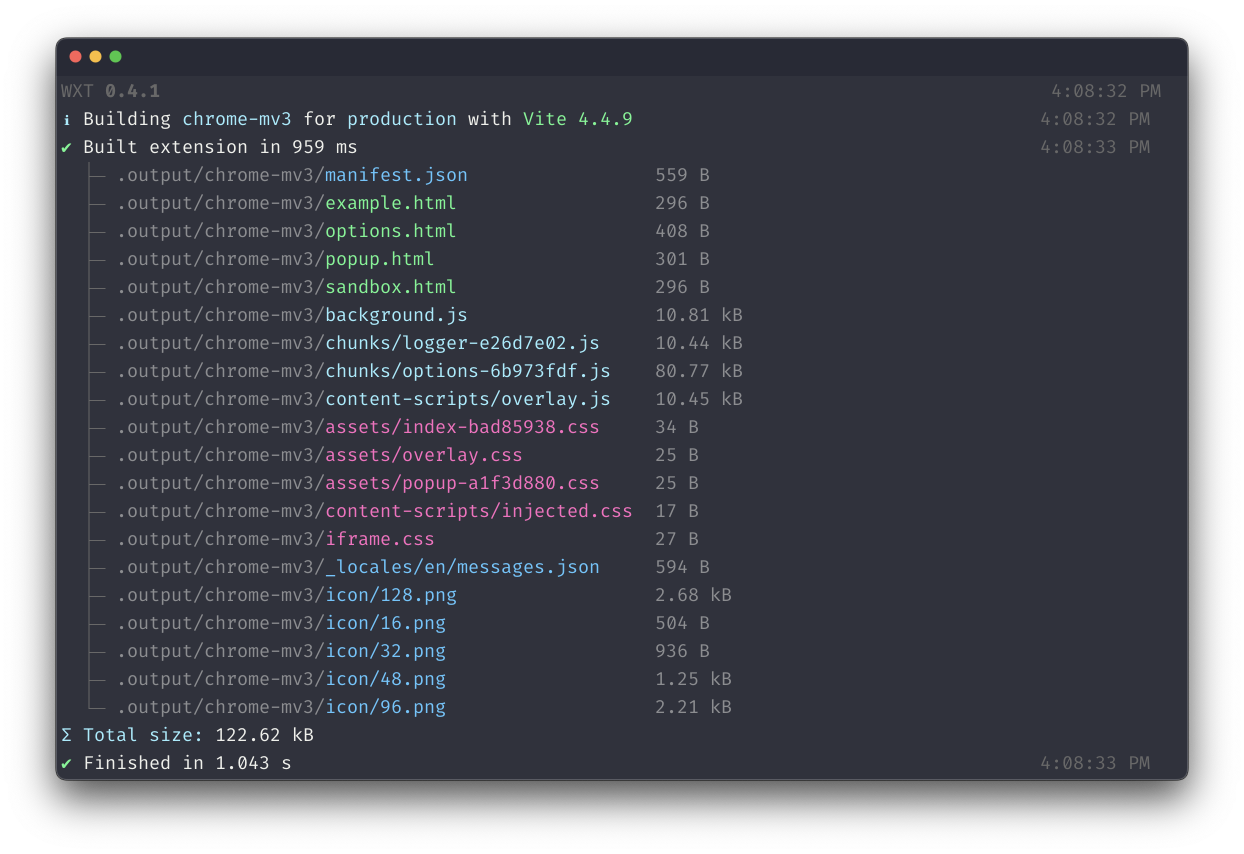
|
||||
|
||||
## Demo
|
||||
|
||||
@@ -43,10 +43,21 @@ https://github.com/wxt-dev/wxt/assets/10101283/4d678939-1bdb-495c-9c36-3aa281d84
|
||||
|
||||
Bootstrap a new project:
|
||||
|
||||
<!-- automd:pm-x version="latest" name="wxt" args="init" -->
|
||||
|
||||
```sh
|
||||
pnpm dlx wxt@latest init <project-name>
|
||||
# npm
|
||||
npx wxt@latest init
|
||||
|
||||
# pnpm
|
||||
pnpm dlx wxt@latest init
|
||||
|
||||
# bun
|
||||
bunx wxt@latest init
|
||||
```
|
||||
|
||||
<!-- /automd -->
|
||||
|
||||
Or see the [installation guide](https://wxt.dev/guide/installation.html) to get started with WXT.
|
||||
|
||||
## Features
|
||||
@@ -59,12 +70,20 @@ Or see the [installation guide](https://wxt.dev/guide/installation.html) to get
|
||||
- 🦾 Auto-imports
|
||||
- 🤖 Automated publishing
|
||||
- 🎨 Frontend framework agnostic: works with Vue, React, Svelte, etc
|
||||
- 📦 [Module system](https://wxt.dev/guide/essentials/wxt-modules.html#overview) for reusing code between extensions
|
||||
- 🖍️ Quickly bootstrap a new project
|
||||
- 📏 Bundle analysis
|
||||
- ⬇️ Download and bundle remote URL imports
|
||||
|
||||
## Contributors
|
||||
|
||||
<!-- automd:contributors author="aklinker1" license="MIT" github="wxt-dev/wxt" -->
|
||||
|
||||
Published under the [MIT](https://github.com/wxt-dev/wxt/blob/main/LICENSE) license.
|
||||
Made by [@aklinker1](https://github.com/aklinker1) and [community](https://github.com/wxt-dev/wxt/graphs/contributors) 💛
|
||||
<br><br>
|
||||
<a href="https://github.com/wxt-dev/wxt/graphs/contributors">
|
||||
<img src="https://contrib.rocks/image?repo=wxt-dev/wxt" />
|
||||
<img src="https://contrib.rocks/image?repo=wxt-dev/wxt" />
|
||||
</a>
|
||||
|
||||
<!-- /automd -->
|
||||
|
||||
@@ -1,116 +0,0 @@
|
||||
# Development
|
||||
|
||||
WXT's main goal is providing the best DX it possibly can. When running your extension in dev mode, each part of your extension is reloaded separately when possible.
|
||||
|
||||
| | HMR | Reloaded individually | Reload extension | Restart browser |
|
||||
| ------------------- | :-: | :-------------------: | :--------------: | :----------------------------------------------------: |
|
||||
| HTML File | | ✅ |
|
||||
| HTML Dependency | ✅ |
|
||||
| MV3 Content Script | | ✅ |
|
||||
| MV2 Content Script | | | ✅ |
|
||||
| Background | | | ✅ |
|
||||
| manifest.json | | | | 🟡 See [#16](https://github.com/wxt-dev/wxt/issues/16) |
|
||||
| `wxt.config.ts` | | | | 🟡 See [#10](https://github.com/wxt-dev/wxt/issues/10) |
|
||||
| `web-ext.config.ts` | | | | 🟡 See [#10](https://github.com/wxt-dev/wxt/issues/10) |
|
||||
|
||||
## Dev Mode vs Production Builds
|
||||
|
||||
There are some notable differences between the development and production versions of an extension. During development:
|
||||
|
||||
1. **Content scripts are not listed in the `manifest.json`** when targeting MV3. Instead, the [`scripting`](https://developer.chrome.com/docs/extensions/reference/api/scripting) permission is used to register content scripts at runtime so they can be reloaded individually.
|
||||
|
||||
To get the list of content scripts during development, run the following in the background's console:
|
||||
|
||||
```ts
|
||||
await chrome.scripting.getRegisteredContentScripts();
|
||||
```
|
||||
|
||||
2. **The CSP is modified to allow loading scripts from the dev server**. Make sure you're using Chrome v110 or above for HMR to work.
|
||||
|
||||
3. If you don't include a background script/service worker, one will be created to perform various tasks in dev mode, mostly related to reloading different parts of the extension on change.
|
||||
|
||||
For production builds, none of the above modifications will be applied, and you're extension/manifest will only include what you have defined.
|
||||
|
||||
## Configure Browser Startup
|
||||
|
||||
WXT uses [`web-ext` by Mozilla](https://github.com/mozilla/web-ext) to automatically open a browser with the extension installed. You can configure the runner's behavior via the [`runner`](/api/reference/wxt/interfaces/InlineConfig#runner) option, or in a separate gitignored file, `web-ext.config.ts`.
|
||||
|
||||
:::code-group
|
||||
|
||||
```ts [wxt.config.ts]
|
||||
import { defineConfig } from 'wxt';
|
||||
|
||||
export default defineConfig({
|
||||
runner: {
|
||||
// Runner config
|
||||
},
|
||||
});
|
||||
```
|
||||
|
||||
```ts [web-ext.config.ts]
|
||||
import { defineRunnerConfig } from 'wxt';
|
||||
|
||||
export default defineRunnerConfig({
|
||||
// Runner config
|
||||
});
|
||||
```
|
||||
|
||||
:::
|
||||
|
||||
### Browser Binaries
|
||||
|
||||
`web-ext`'s browser discovery is very limited. By default, it only guesses at where Chrome and Firefox are installed. If you've customized your install locations, you may need to tell `web-ext` where the binaries/executables are located using the [`binaries` option](/api/reference/wxt/interfaces/ExtensionRunnerConfig#binaries). For other Chromium based browsers, like Edge or Opera, you'll need to explicitly list them in the `binaries` option as well, otherwise they will open in Chrome by default.
|
||||
|
||||
```ts
|
||||
// ~/web-ext.config.ts
|
||||
import { defineRunnerConfig } from 'wxt';
|
||||
|
||||
export default defineRunnerConfig({
|
||||
binaries: {
|
||||
chrome: '/path/to/chrome-beta', // Use Chrome Beta instead of regular Chrome
|
||||
firefox: 'firefoxdeveloperedition', // Use Firefox Developer Edition instead of regular Firefox
|
||||
edge: '/path/to/edge', // Open MS Edge when running "wxt -b edge"
|
||||
},
|
||||
});
|
||||
```
|
||||
|
||||
:::tip
|
||||
When configuring browser binaries, it's helpful to put them in `~/web-ext.config.ts` instead of the project directory's `web-ext.config.ts` file. When placed in your home directory (`~/`), this config will be used by all WXT projects, so you only need to configure the binaries once.
|
||||
:::
|
||||
|
||||
### Other options
|
||||
|
||||
You can customize other options as well, like startup URLs, profiles, or additional command line arguments:
|
||||
|
||||
```ts
|
||||
// web-ext.config.ts
|
||||
import { defineRunnerConfig } from 'wxt';
|
||||
|
||||
export default defineRunnerConfig({
|
||||
startUrls: ['https://google.com', 'https://duckduckgo.com'],
|
||||
chromiumProfile: '/path/to/profile/to/use',
|
||||
chromiumArgs: ['--window-size=400,300'],
|
||||
});
|
||||
```
|
||||
|
||||
For a full list of options, see the [API Reference](/api/reference/wxt/interfaces/ExtensionRunnerConfig).
|
||||
|
||||
## Reload the Extension
|
||||
|
||||
Normally, to manually reload an extension, you have to visit `chrome://extensions` and click the reload button for your extension.
|
||||
|
||||
When running `wxt` command to start the dev server, WXT adds a keyboard shortcut `Alt+R`, that reloads the extension when pressed, without visiting `chrome://extensions`. This can also be customized or disabled:
|
||||
|
||||
```ts [wxt.config.ts]
|
||||
import { defineConfig } from 'wxt';
|
||||
|
||||
export default defineConfig({
|
||||
dev: {
|
||||
reloadCommand: 'Alt+T', // false, to disable
|
||||
},
|
||||
});
|
||||
```
|
||||
|
||||
:::info
|
||||
This shortcut is only available during development, and is not be added to your extension when running `wxt build` or `wxt-zip`.
|
||||
:::
|
||||
@@ -8,14 +8,14 @@ const props = defineProps<{
|
||||
<table class="no-vertical-dividers">
|
||||
<thead>
|
||||
<tr>
|
||||
<th>Input Pattern</th>
|
||||
<th style="width: 100%">Filename</th>
|
||||
<th></th>
|
||||
<th>Output Path</th>
|
||||
</tr>
|
||||
</thead>
|
||||
<tbody>
|
||||
<tr v-for="pattern of patterns">
|
||||
<td style="white-space: nowrap">
|
||||
<td style="white-space: nowrap; padding-right: 8px">
|
||||
<code>entrypoints/{{ pattern[0] }}</code>
|
||||
</td>
|
||||
<td style="padding: 6px; opacity: 50%">
|
||||
@@ -31,7 +31,7 @@ const props = defineProps<{
|
||||
/>
|
||||
</svg>
|
||||
</td>
|
||||
<td style="white-space: nowrap">
|
||||
<td style="white-space: nowrap; padding-left: 8px">
|
||||
<code>/{{ pattern[1] }}</code>
|
||||
</td>
|
||||
</tr>
|
||||
|
||||
@@ -1,34 +0,0 @@
|
||||
<script lang="ts" setup>
|
||||
import { ref, onMounted, computed } from 'vue';
|
||||
|
||||
const props = defineProps<{
|
||||
tag?: string;
|
||||
}>();
|
||||
|
||||
const examples = ref();
|
||||
onMounted(async () => {
|
||||
const res = await fetch(
|
||||
'https://raw.githubusercontent.com/wxt-dev/wxt-examples/main/examples.json',
|
||||
);
|
||||
examples.value = await res.json();
|
||||
});
|
||||
|
||||
const filteredExamples = computed(() => {
|
||||
if (props.tag == null) return examples.value;
|
||||
|
||||
return examples.value.filter((example) => {
|
||||
return example.tags?.includes(props.tag);
|
||||
});
|
||||
});
|
||||
</script>
|
||||
|
||||
<template>
|
||||
<ul>
|
||||
<li v-if="examples == null">Loading...</li>
|
||||
<template v-else>
|
||||
<li v-for="example of filteredExamples">
|
||||
<a :href="example.url" target="_blank">{{ example.name }}</a>
|
||||
</li>
|
||||
</template>
|
||||
</ul>
|
||||
</template>
|
||||
@@ -0,0 +1,226 @@
|
||||
<script lang="ts" setup>
|
||||
import { ref, onMounted, computed, toRaw, Ref } from 'vue';
|
||||
import ExampleSearchFilterByItem from './ExampleSearchFilterByItem.vue';
|
||||
import ExampleSearchResult from './ExampleSearchResult.vue';
|
||||
import { ExamplesMetadata, KeySelectedObject } from '../utils/types';
|
||||
|
||||
const props = defineProps<{
|
||||
tag?: string;
|
||||
}>();
|
||||
|
||||
const exampleMetadata = ref<ExamplesMetadata>();
|
||||
onMounted(async () => {
|
||||
const res = await fetch(
|
||||
'https://raw.githubusercontent.com/wxt-dev/examples/main/metadata.json',
|
||||
);
|
||||
exampleMetadata.value = await res.json();
|
||||
});
|
||||
|
||||
const searchText = ref('');
|
||||
const selectedApis = ref<KeySelectedObject>({});
|
||||
const selectedPermissions = ref<KeySelectedObject>({});
|
||||
const selectedPackages = ref<KeySelectedObject>({});
|
||||
|
||||
function useRequiredItems(selectedItems: Ref<KeySelectedObject>) {
|
||||
return computed(() =>
|
||||
Array.from(
|
||||
Object.entries(toRaw(selectedItems.value)).reduce(
|
||||
(set, [pkg, checked]) => {
|
||||
if (checked) set.add(pkg);
|
||||
return set;
|
||||
},
|
||||
new Set<string>(),
|
||||
),
|
||||
),
|
||||
);
|
||||
}
|
||||
const requiredApis = useRequiredItems(selectedApis);
|
||||
const requiredPermissions = useRequiredItems(selectedPermissions);
|
||||
const requiredPackages = useRequiredItems(selectedPackages);
|
||||
|
||||
function doesExampleMatchSelected(
|
||||
exampleItems: string[],
|
||||
requiredItems: Ref<string[]>,
|
||||
) {
|
||||
const exampleItemsSet = new Set(exampleItems);
|
||||
return !requiredItems.value.find((item) => !exampleItemsSet.has(item));
|
||||
}
|
||||
|
||||
const filteredExamples = computed(() => {
|
||||
const text = searchText.value.toLowerCase();
|
||||
return exampleMetadata.value.examples.filter((example) => {
|
||||
const matchesText = example.searchText.toLowerCase().includes(text);
|
||||
const matchesApis = doesExampleMatchSelected(example.apis, requiredApis);
|
||||
const matchesPermissions = doesExampleMatchSelected(
|
||||
example.permissions,
|
||||
requiredPermissions,
|
||||
);
|
||||
const matchesPackages = doesExampleMatchSelected(
|
||||
example.packages,
|
||||
requiredPackages,
|
||||
);
|
||||
return matchesText && matchesApis && matchesPermissions && matchesPackages;
|
||||
});
|
||||
});
|
||||
</script>
|
||||
|
||||
<template>
|
||||
<div class="example-layout">
|
||||
<div class="search">
|
||||
<input v-model="searchText" placeholder="Search for an example..." />
|
||||
</div>
|
||||
|
||||
<div class="filters">
|
||||
<ExampleSearchFilterByItem
|
||||
label="APIs"
|
||||
:items="exampleMetadata?.allApis"
|
||||
v-model="selectedApis"
|
||||
/>
|
||||
<ExampleSearchFilterByItem
|
||||
label="Permissions"
|
||||
:items="exampleMetadata?.allPermissions"
|
||||
v-model="selectedPermissions"
|
||||
/>
|
||||
<ExampleSearchFilterByItem
|
||||
label="Packages"
|
||||
:items="exampleMetadata?.allPackages"
|
||||
v-model="selectedPackages"
|
||||
/>
|
||||
</div>
|
||||
|
||||
<div class="results">
|
||||
<p v-if="exampleMetadata == null">Loading examples...</p>
|
||||
<template v-else>
|
||||
<ul class="search-results">
|
||||
<ExampleSearchResult
|
||||
v-for="example of filteredExamples"
|
||||
:key="example.name"
|
||||
:example
|
||||
/>
|
||||
</ul>
|
||||
<p v-if="filteredExamples.length === 0">No matching examples</p>
|
||||
</template>
|
||||
</div>
|
||||
</div>
|
||||
</template>
|
||||
|
||||
<style scoped>
|
||||
.example-layout {
|
||||
display: grid;
|
||||
grid-template-columns: 1fr;
|
||||
grid-template-rows: 1fr;
|
||||
grid-template-areas:
|
||||
'search'
|
||||
'results';
|
||||
gap: 16px;
|
||||
}
|
||||
@media only screen and (min-width: 720px) {
|
||||
.example-layout {
|
||||
grid-template-columns: 256px 1fr;
|
||||
grid-template-rows: auto 1fr;
|
||||
grid-template-areas:
|
||||
'filters search'
|
||||
'filters results';
|
||||
}
|
||||
}
|
||||
.search {
|
||||
grid-area: search;
|
||||
background: var(--vp-c-bg-soft);
|
||||
padding: 20px;
|
||||
width: 100%;
|
||||
display: flex;
|
||||
border-radius: 16px;
|
||||
}
|
||||
.filters {
|
||||
display: none;
|
||||
grid-area: filters;
|
||||
}
|
||||
@media only screen and (min-width: 720px) {
|
||||
.filters {
|
||||
display: flex;
|
||||
flex-direction: column;
|
||||
gap: 2px;
|
||||
border-radius: 16px;
|
||||
overflow: hidden;
|
||||
align-self: flex-start;
|
||||
}
|
||||
}
|
||||
.results {
|
||||
grid-area: results;
|
||||
}
|
||||
|
||||
.box {
|
||||
border-radius: 16px;
|
||||
overflow: hidden;
|
||||
}
|
||||
|
||||
.search input {
|
||||
min-width: 0;
|
||||
flex: 1;
|
||||
font-size: 16px;
|
||||
}
|
||||
|
||||
.checkbox-col {
|
||||
flex: 1;
|
||||
padding: 16px;
|
||||
display: flex;
|
||||
flex-direction: column;
|
||||
overflow-y: auto;
|
||||
max-height: 200px;
|
||||
font-size: 14px;
|
||||
gap: 4px;
|
||||
}
|
||||
|
||||
.filter-btn {
|
||||
color: var(--vp-c-brand-1);
|
||||
}
|
||||
|
||||
.checkbox-col .header {
|
||||
font-size: 12px;
|
||||
font-weight: bold;
|
||||
opacity: 50%;
|
||||
}
|
||||
|
||||
.checkbox-col p {
|
||||
display: flex;
|
||||
gap: 4px;
|
||||
align-items: flex-start;
|
||||
text-wrap: wrap;
|
||||
overflow-wrap: anywhere;
|
||||
line-height: 140%;
|
||||
}
|
||||
|
||||
span {
|
||||
padding-top: 1px;
|
||||
}
|
||||
|
||||
.checkbox-col input[type='checkbox'] {
|
||||
width: 16px;
|
||||
height: 16px;
|
||||
flex-shrink: 0;
|
||||
}
|
||||
|
||||
.checkbox-col-container {
|
||||
display: flex;
|
||||
}
|
||||
|
||||
.search-results {
|
||||
display: grid;
|
||||
grid-template-columns: repeat(1, 1fr);
|
||||
gap: 16px;
|
||||
}
|
||||
@media only screen and (min-width: 800px) {
|
||||
.search-results {
|
||||
grid-template-columns: repeat(2, 1fr);
|
||||
}
|
||||
}
|
||||
@media only screen and (min-width: 1024px) {
|
||||
.search-results {
|
||||
grid-template-columns: repeat(3, 1fr);
|
||||
}
|
||||
}
|
||||
|
||||
a {
|
||||
background-color: red;
|
||||
}
|
||||
</style>
|
||||
@@ -0,0 +1,100 @@
|
||||
<script lang="ts" setup>
|
||||
import { computed, toRaw } from 'vue';
|
||||
import { KeySelectedObject } from '../utils/types';
|
||||
|
||||
const props = defineProps<{
|
||||
label: string;
|
||||
items?: string[];
|
||||
}>();
|
||||
|
||||
const selectedItems = defineModel<KeySelectedObject>({
|
||||
required: true,
|
||||
});
|
||||
|
||||
const count = computed(() => {
|
||||
return Object.values(toRaw(selectedItems.value)).filter(Boolean).length;
|
||||
});
|
||||
|
||||
function toggleItem(pkg: string) {
|
||||
selectedItems.value = {
|
||||
...toRaw(selectedItems.value),
|
||||
[pkg]: !selectedItems.value[pkg],
|
||||
};
|
||||
}
|
||||
</script>
|
||||
|
||||
<template>
|
||||
<div class="filter-container">
|
||||
<p class="header">
|
||||
<span>Filter by {{ label }}</span> <span v-if="count">({{ count }})</span>
|
||||
</p>
|
||||
<div class="scroll-container">
|
||||
<ul>
|
||||
<li v-for="item in items">
|
||||
<label :title="item">
|
||||
<input
|
||||
type="checkbox"
|
||||
:checked="selectedItems[item]"
|
||||
@input="toggleItem(item)"
|
||||
/>
|
||||
<span>{{ item }}</span>
|
||||
</label>
|
||||
</li>
|
||||
</ul>
|
||||
</div>
|
||||
</div>
|
||||
</template>
|
||||
|
||||
<style scoped>
|
||||
.filter-container {
|
||||
height: 300px;
|
||||
display: flex;
|
||||
flex-direction: column;
|
||||
background: var(--vp-c-bg-soft);
|
||||
}
|
||||
|
||||
.scroll-container {
|
||||
flex: 1;
|
||||
overflow: hidden;
|
||||
position: relative;
|
||||
}
|
||||
|
||||
.scroll-container ul {
|
||||
position: absolute;
|
||||
overflow-y: auto;
|
||||
left: 0;
|
||||
top: 0;
|
||||
right: 0;
|
||||
bottom: 0;
|
||||
display: flex;
|
||||
flex-direction: column;
|
||||
gap: 4px;
|
||||
font-size: small;
|
||||
padding: 8px 16px 16px 16px;
|
||||
}
|
||||
|
||||
.header {
|
||||
padding: 8px 16px;
|
||||
font-size: 12px;
|
||||
font-weight: bold;
|
||||
opacity: 50%;
|
||||
}
|
||||
label {
|
||||
display: flex;
|
||||
gap: 4px;
|
||||
align-items: flex-start;
|
||||
text-wrap: wrap;
|
||||
overflow-wrap: anywhere;
|
||||
line-height: 140%;
|
||||
cursor: pointer;
|
||||
text-wrap: nowrap;
|
||||
}
|
||||
span {
|
||||
padding-top: 1px;
|
||||
}
|
||||
input[type='checkbox'] {
|
||||
width: 16px;
|
||||
height: 16px;
|
||||
flex-shrink: 0;
|
||||
}
|
||||
</style>
|
||||
@@ -0,0 +1,72 @@
|
||||
<script lang="ts" setup>
|
||||
import { Example } from '../utils/types';
|
||||
|
||||
const props = defineProps<{
|
||||
example: Example;
|
||||
}>();
|
||||
</script>
|
||||
|
||||
<template>
|
||||
<li>
|
||||
<a :href="example.url" target="_blank">
|
||||
<p class="name">{{ example.name }}</p>
|
||||
<p class="description">{{ example.description }}</p>
|
||||
<p class="link">Open →</p>
|
||||
</a>
|
||||
</li>
|
||||
</template>
|
||||
|
||||
<style scoped>
|
||||
* {
|
||||
min-width: 0;
|
||||
}
|
||||
a {
|
||||
padding: 16px;
|
||||
display: flex;
|
||||
flex-direction: column;
|
||||
border: 2px solid var(--vp-c-bg-soft);
|
||||
border-radius: 16px;
|
||||
color: var(--vp-c-text-1) !important;
|
||||
gap: 8px;
|
||||
}
|
||||
|
||||
a:hover {
|
||||
outline: 2px solid var(--vp-c-brand-2);
|
||||
}
|
||||
.name {
|
||||
font-size: 16px;
|
||||
font-weight: 500;
|
||||
white-space: nowrap;
|
||||
overflow: hidden;
|
||||
text-overflow: ellipsis;
|
||||
flex-shrink: 0;
|
||||
|
||||
text-overflow: ellipsis;
|
||||
overflow: hidden;
|
||||
white-space: nowrap;
|
||||
}
|
||||
.description {
|
||||
height: 53px;
|
||||
opacity: 70%;
|
||||
font-size: 14px;
|
||||
font-weight: normal;
|
||||
line-height: 120%;
|
||||
min-height: 0;
|
||||
|
||||
display: -webkit-box;
|
||||
-webkit-line-clamp: 3;
|
||||
-webkit-box-orient: vertical;
|
||||
overflow: hidden;
|
||||
}
|
||||
|
||||
.link {
|
||||
opacity: 0;
|
||||
transition: 250ms;
|
||||
color: var(--vp-c-brand-2);
|
||||
font-weight: bold;
|
||||
text-align: right;
|
||||
}
|
||||
a:hover .link {
|
||||
opacity: 100%;
|
||||
}
|
||||
</style>
|
||||
@@ -29,6 +29,35 @@ const chromeExtensionIds = [
|
||||
'nedcanggplmbbgmlpcjiafgjcpdimpea', // YTBlock - Block any content from YouTube™
|
||||
'oadbjpccljkplmhnjekgjamejnbadlne', // demo.fun - Interactive product demos that convert
|
||||
'iopdafdcollfgaoffingmahpffckmjni', // SmartEReply: Elevate Your LinkedIn™ Engagement with AI 🚀📈
|
||||
'khjdmjcmpolknpccmaaipmidphjokhdf', // WorkFlowy MultiFlow
|
||||
'fencadnndhdeggodopebjgdfdlhcimfk', // 香草布丁🌿🍮- https://github.com/Xdy1579883916/vanilla-pudding
|
||||
'bnacincmbaknlbegecpioobkfgejlojp', // MaxFocus: Link Preview
|
||||
'bcpgdpedphodjcjlminjbdeejccjbimp', // 汇率转换-中文版本
|
||||
'loeilaonggnalkaiiaepbegccilkmjjp', // Currency Converter Plus
|
||||
'npcnninnjghigjfiecefheeibomjpkak', // Respond Easy
|
||||
'cfkdcideecefncbglkhneoflfnmhoicc', // mindful - stay focused on your goals
|
||||
'lnhejcpclabmbgpiiomjbhalblnnbffg', // 1Proompt
|
||||
'fonflmjnjbkigocpoommgmhljdpljain', // NiceTab - https://github.com/web-dahuyou/NiceTab
|
||||
'fcffekbnfcfdemeekijbbmgmkognnmkd', // Draftly for LinkedIn
|
||||
'nkndldfehcidpejfkokbeghpnlbppdmo', // YouTube Summarized - Summarize any YouTube video
|
||||
'dbichmdlbjdeplpkhcejgkakobjbjalc', // 社媒助手 - https://github.com/iszhouhua/social-media-copilot
|
||||
'opepfpjeogkbgeigkbepobceinnfmjdd', // Dofollow Links for SEO
|
||||
'pdnenlnelpdomajfejgapbdpmjkfpjkp', // ChatGPT Writer: Use AI on Any Site (GPT-4o, Claude, Gemini, and More)
|
||||
'jobnhifpphkgoelnhnopgkdhbdkiadmj', // discord message translator
|
||||
'ncokhechhpjgjonhjnlaneglmdkfkcbj', // Habit Tracker app widget for daily habit tracking
|
||||
'lnjaiaapbakfhlbjenjkhffcdpoompki', // Catppuccin for GitHub File Explorer Icons
|
||||
'cpaedhbidlpnbdfegakhiamfpndhjpgf', // WebChat: Chat with anyone on any website
|
||||
'fcphghnknhkimeagdglkljinmpbagone', // YouTube Auto HD + FPS
|
||||
'lpomjgbicdemjkgmbnkjncgdebogkhlb', // MultiViewer Companion
|
||||
'ggiafipgeeaaahnjamgpjcgkdpanhddg', // Sync Watch - Watch videos together on any site
|
||||
'nmldnjcblcihmegipecakhmnieiofmgl', // Keyword Rank Checker
|
||||
'gppllamhaciichleihemgilcpledblpn', // YouTube Simple View - Hide distractions & more
|
||||
'pccbghdfdnnkkbcdcibchpbffdgednkf', // Propbar - Property Data Enhancer
|
||||
'lfknakglefggmdkjdfhhofkjnnolffkh', // Text Search Pro - Search by case and whole-word match!
|
||||
'mbenhbocjckkbaojacmaepiameldglij', // Invoice Generator
|
||||
'phlfhkmdofajnbhgmbmjkbkdgppgoppb', // Monthly Bill Tracker
|
||||
'macmkmchfoclhpbncclinhjflmdkaoom', // Wandpen - Instantly improve your writing with AI
|
||||
'lhmgechokhmdekdpgkkemoeecelcaonm', // YouTube Hider - Remove Comments By Keywords, Usernames & Tools
|
||||
];
|
||||
|
||||
const { data, err, isLoading } = useListExtensionDetails(chromeExtensionIds);
|
||||
|
||||
+90
-84
@@ -8,6 +8,12 @@ import {
|
||||
prepareTypedocSidebar,
|
||||
} from './utils/menus';
|
||||
import { meta, script } from './utils/head';
|
||||
import footnote from 'markdown-it-footnote';
|
||||
import { version as wxtVersion } from '../../packages/wxt/package.json';
|
||||
import { version as i18nVersion } from '../../packages/i18n/package.json';
|
||||
import { version as autoIconsVersion } from '../../packages/auto-icons/package.json';
|
||||
import { version as unocssVersion } from '../../packages/unocss/package.json';
|
||||
import { version as storageVersion } from '../../packages/storage/package.json';
|
||||
|
||||
const title = 'Next-gen Web Extension Framework';
|
||||
const titleSuffix = ' – WXT';
|
||||
@@ -43,6 +49,12 @@ export default defineConfig({
|
||||
}),
|
||||
],
|
||||
|
||||
markdown: {
|
||||
config: (md) => {
|
||||
md.use(footnote);
|
||||
},
|
||||
},
|
||||
|
||||
themeConfig: {
|
||||
// https://vitepress.dev/reference/default-theme-config
|
||||
logo: {
|
||||
@@ -64,100 +76,94 @@ export default defineConfig({
|
||||
],
|
||||
|
||||
nav: [
|
||||
navItem('Get Started', '/get-started/introduction'),
|
||||
navItem('Guide', '/guide/key-concepts/manifest'),
|
||||
navItem('API', '/api/reference/wxt'),
|
||||
navItem('Guide', '/guide/installation'),
|
||||
navItem('Examples', '/examples'),
|
||||
navItem('API', '/api/reference/wxt'),
|
||||
navItem(`v${wxtVersion}`, [
|
||||
navItem('wxt', [
|
||||
navItem(`v${wxtVersion}`, '/'),
|
||||
navItem(
|
||||
`Changelog`,
|
||||
'https://github.com/wxt-dev/wxt/blob/main/packages/wxt/CHANGELOG.md',
|
||||
),
|
||||
]),
|
||||
navItem('Other Packages', [
|
||||
navItem(`@wxt-dev/storage — ${storageVersion}`, '/storage'),
|
||||
navItem(`@wxt-dev/auto-icons — ${autoIconsVersion}`, '/auto-icons'),
|
||||
navItem(`@wxt-dev/i18n — ${i18nVersion}`, '/i18n'),
|
||||
navItem(`@wxt-dev/unocss — ${unocssVersion}`, '/unocss'),
|
||||
]),
|
||||
]),
|
||||
],
|
||||
|
||||
sidebar: {
|
||||
'/get-started/': menuRoot([
|
||||
menuGroup('Get Started', '/get-started/', [
|
||||
menuItem('Introduction', 'introduction'),
|
||||
menuItem('Installation', 'installation'),
|
||||
menuItem('Configuration', 'configuration'),
|
||||
menuItem('Entrypoints', 'entrypoints'),
|
||||
menuItem('Assets', 'assets'),
|
||||
menuItem('Testing', 'testing'),
|
||||
menuItem('Publishing', 'publishing'),
|
||||
menuItem('Migrate to WXT', 'migrate-to-wxt'),
|
||||
menuItem('Compare', 'compare'),
|
||||
]),
|
||||
]),
|
||||
'/guide/': menuRoot([
|
||||
menuGroup('Key Concepts', '/guide/key-concepts/', [
|
||||
menuItem('Manifest', 'manifest'),
|
||||
menuItem('Auto-imports', 'auto-imports'),
|
||||
menuItem('Web Extension Polyfill', 'web-extension-polyfill'),
|
||||
menuItem('Frontend Frameworks', 'frontend-frameworks'),
|
||||
menuItem('Content Script UI', 'content-script-ui'),
|
||||
menuGroup('Get Started', '/guide/', [
|
||||
menuItem('Introduction', 'introduction.md'),
|
||||
menuItem('Installation', 'installation.md'),
|
||||
]),
|
||||
menuGroup('Directory Structure', '/guide/directory-structure/', [
|
||||
// Folders
|
||||
menuItem('.output/', 'output'),
|
||||
menuItem('.wxt/', 'wxt'),
|
||||
menuItem('assets/', 'assets'),
|
||||
menuItem('components/', 'components'),
|
||||
menuItem('composables/', 'composables'),
|
||||
menuGroup('entrypoints/', '/guide/directory-structure/entrypoints/', [
|
||||
menuItem('background', 'background.md'),
|
||||
menuItem('bookmarks', 'bookmarks.md'),
|
||||
menuItem('*.content.ts', 'content-scripts.md'),
|
||||
menuItem('*.css', 'css.md'),
|
||||
menuItem('devtools', 'devtools.md'),
|
||||
menuItem('history', 'history.md'),
|
||||
menuItem('newtab', 'newtab.md'),
|
||||
menuItem('options', 'options.md'),
|
||||
menuItem('popup', 'popup.md'),
|
||||
menuItem('sandbox', 'sandbox.md'),
|
||||
menuItem('sidepanel', 'sidepanel.md'),
|
||||
menuItem('*.html', 'unlisted-pages.md'),
|
||||
menuItem('*.ts', 'unlisted-scripts.md'),
|
||||
]),
|
||||
menuItem('hooks/', 'hooks'),
|
||||
menuItem('public/', 'public/', [
|
||||
menuItem('_locales/', 'public/locales'),
|
||||
]),
|
||||
menuItem('utils/', 'utils'),
|
||||
|
||||
// Files
|
||||
menuItem('.env', 'env'),
|
||||
menuItem('package.json', 'package'),
|
||||
menuItem('tsconfig.json', 'tsconfig'),
|
||||
menuItem('web-ext.config.ts', 'web-ext-config'),
|
||||
menuItem('wxt.config.ts', 'wxt-config'),
|
||||
menuGroup('Essentials', '/guide/essentials/', [
|
||||
menuItem('Project Structure', 'project-structure.md'),
|
||||
menuItem('Entrypoints', 'entrypoints.md'),
|
||||
menuGroup(
|
||||
'Configuration',
|
||||
'/guide/essentials/config/',
|
||||
[
|
||||
menuItem('Manifest', 'manifest.md'),
|
||||
menuItem('Browser Startup', 'browser-startup.md'),
|
||||
menuItem('Auto-imports', 'auto-imports.md'),
|
||||
menuItem('Environment Variables', 'environment-variables.md'),
|
||||
menuItem('Runtime Config', 'runtime.md'),
|
||||
menuItem('Vite', 'vite.md'),
|
||||
menuItem('Build Mode', 'build-mode.md'),
|
||||
menuItem('TypeScript', 'typescript.md'),
|
||||
menuItem('Hooks', 'hooks.md'),
|
||||
menuItem('Entrypoint Loaders', 'entrypoint-loaders.md'),
|
||||
],
|
||||
true,
|
||||
),
|
||||
menuItem('Extension APIs', 'extension-apis.md'),
|
||||
menuItem('Assets', 'assets.md'),
|
||||
menuItem('Target Different Browsers', 'target-different-browsers.md'),
|
||||
menuItem('Content Scripts', 'content-scripts.md'),
|
||||
menuItem('Storage', 'storage.md'),
|
||||
menuItem('Messaging', 'messaging.md'),
|
||||
menuItem('I18n', 'i18n.md'),
|
||||
menuItem('Scripting', 'scripting.md'),
|
||||
menuItem('WXT Modules', 'wxt-modules.md'),
|
||||
menuItem('Frontend Frameworks', 'frontend-frameworks.md'),
|
||||
menuItem('ES Modules', 'es-modules.md'),
|
||||
menuItem('Remote Code', 'remote-code.md'),
|
||||
menuItem('Unit Testing', 'unit-testing.md'),
|
||||
menuItem('E2E Testing', 'e2e-testing.md'),
|
||||
menuItem('Publishing', 'publishing.md'),
|
||||
menuItem('Testing Updates', 'testing-updates.md'),
|
||||
]),
|
||||
menuGroup('Extension APIs', '/guide/extension-apis/', [
|
||||
menuItem('Storage', 'storage'),
|
||||
menuItem('Messaging', 'messaging'),
|
||||
menuItem('Scripting', 'scripting'),
|
||||
menuItem('Others', 'others'),
|
||||
]),
|
||||
menuGroup('Go Further', '/guide/go-further/', [
|
||||
menuItem('Testing', 'testing'),
|
||||
menuItem('ES Modules', 'es-modules'),
|
||||
menuItem('Debugging', 'debugging'),
|
||||
menuItem('Handling Updates', 'handling-updates'),
|
||||
menuItem('Vite', 'vite'),
|
||||
menuItem('Custom Events', 'custom-events'),
|
||||
menuItem('Reusable Modules', 'reusable-modules'),
|
||||
menuItem('Remote Code', 'remote-code'),
|
||||
menuItem('Entrypoint Side Effects', 'entrypoint-side-effects'),
|
||||
menuItem('How WXT Works', 'how-wxt-works'),
|
||||
menuGroup('Resources', '/guide/resources/', [
|
||||
menuItem('Compare', 'compare.md'),
|
||||
menuItem('FAQ', 'faq.md'),
|
||||
menuItem('Upgrading WXT', 'upgrading.md'),
|
||||
menuItem('Migrate to WXT', 'migrate.md'),
|
||||
menuItem('How WXT Works', 'how-wxt-works.md'),
|
||||
]),
|
||||
]),
|
||||
'/api/': menuRoot([
|
||||
menuGroup('CLI', '/api/cli/', [
|
||||
menuItem('wxt', 'wxt.md'),
|
||||
menuItem('wxt build', 'wxt-build.md'),
|
||||
menuItem('wxt zip', 'wxt-zip.md'),
|
||||
menuItem('wxt prepare', 'wxt-prepare.md'),
|
||||
menuItem('wxt clean', 'wxt-clean.md'),
|
||||
menuItem('wxt init', 'wxt-init.md'),
|
||||
menuItem('wxt submit', 'wxt-submit.md'),
|
||||
menuItem('wxt submit init', 'wxt-submit-init.md'),
|
||||
]),
|
||||
menuGroup('API Reference', prepareTypedocSidebar(typedocSidebar)),
|
||||
menuGroup(
|
||||
'CLI Reference',
|
||||
'/api/cli/',
|
||||
[
|
||||
menuItem('wxt', 'wxt.md'),
|
||||
menuItem('wxt build', 'wxt-build.md'),
|
||||
menuItem('wxt zip', 'wxt-zip.md'),
|
||||
menuItem('wxt prepare', 'wxt-prepare.md'),
|
||||
menuItem('wxt clean', 'wxt-clean.md'),
|
||||
menuItem('wxt init', 'wxt-init.md'),
|
||||
menuItem('wxt submit', 'wxt-submit.md'),
|
||||
menuItem('wxt submit init', 'wxt-submit-init.md'),
|
||||
],
|
||||
true,
|
||||
),
|
||||
menuGroup('API Reference', prepareTypedocSidebar(typedocSidebar), true),
|
||||
]),
|
||||
},
|
||||
},
|
||||
|
||||
@@ -1,6 +1,6 @@
|
||||
import { resolve, join } from 'node:path';
|
||||
import { resolve } from 'node:path';
|
||||
import consola from 'consola';
|
||||
import { execaCommand } from 'execa';
|
||||
import spawn from 'nano-spawn';
|
||||
|
||||
const cliDir = resolve('packages/wxt/src/cli/commands');
|
||||
const cliDirGlob = resolve(cliDir, '**');
|
||||
@@ -37,7 +37,8 @@ export default {
|
||||
};
|
||||
|
||||
async function getHelp(command: string): Promise<string> {
|
||||
const res = await execaCommand(command + ' --help', {
|
||||
const args = command.split(' ');
|
||||
const res = await spawn(args[0], [...args.slice(1), '--help'], {
|
||||
cwd: 'packages/wxt',
|
||||
});
|
||||
return res.stdout;
|
||||
|
||||
@@ -85,23 +85,6 @@ body {
|
||||
user-select: none;
|
||||
}
|
||||
|
||||
.VPSidebarItem.level-0.collapsible {
|
||||
padding-bottom: 0.5rem;
|
||||
}
|
||||
|
||||
.VPSidebarItem.level-0.collapsible .items {
|
||||
/*border-left: 1px solid var(--vp-c-divider);*/
|
||||
}
|
||||
|
||||
.VPSidebarItem.level-1 {
|
||||
padding-left: 0.75rem;
|
||||
}
|
||||
|
||||
.VPSidebar .group + .group {
|
||||
border-top: none;
|
||||
padding-top: 0;
|
||||
}
|
||||
|
||||
.VPSidebarItem .badge {
|
||||
display: inline-block;
|
||||
min-width: 1.6em;
|
||||
|
||||
@@ -2,7 +2,7 @@ import DefaultTheme from 'vitepress/theme';
|
||||
import Icon from '../components/Icon.vue';
|
||||
import EntrypointPatterns from '../components/EntrypointPatterns.vue';
|
||||
import UsingWxtSection from '../components/UsingWxtSection.vue';
|
||||
import ExampleList from '../components/ExampleList.vue';
|
||||
import ExampleSearch from '../components/ExampleSearch.vue';
|
||||
import './custom.css';
|
||||
|
||||
export default {
|
||||
@@ -11,6 +11,6 @@ export default {
|
||||
ctx.app.component('Icon', Icon);
|
||||
ctx.app.component('EntrypointPatterns', EntrypointPatterns);
|
||||
ctx.app.component('UsingWxtSection', UsingWxtSection);
|
||||
ctx.app.component('ExampleList', ExampleList);
|
||||
ctx.app.component('ExampleSearch', ExampleSearch);
|
||||
},
|
||||
};
|
||||
|
||||
@@ -2,9 +2,20 @@ import { DefaultTheme } from 'vitepress';
|
||||
|
||||
type SidebarItem = DefaultTheme.SidebarItem;
|
||||
type NavItem = DefaultTheme.NavItem;
|
||||
type NavItemWithLink = DefaultTheme.NavItemWithLink;
|
||||
type NavItemWithChildren = DefaultTheme.NavItemWithChildren;
|
||||
type NavItemChildren = DefaultTheme.NavItemChildren;
|
||||
|
||||
export function navItem(text: string, link: string): NavItem {
|
||||
return { text, link };
|
||||
export function navItem(text: string): NavItemChildren;
|
||||
export function navItem(text: string, link: string): NavItemChildren;
|
||||
export function navItem(text: string, items: any[]): NavItemWithChildren;
|
||||
export function navItem(text: string, arg2?: unknown): any {
|
||||
if (typeof arg2 === 'string') {
|
||||
return { text, link: arg2 };
|
||||
} else if (Array.isArray(arg2)) {
|
||||
return { text, items: arg2 };
|
||||
}
|
||||
return { text };
|
||||
}
|
||||
|
||||
export function menuRoot(items: SidebarItem[]) {
|
||||
@@ -14,31 +25,39 @@ export function menuRoot(items: SidebarItem[]) {
|
||||
});
|
||||
}
|
||||
|
||||
export function menuGroup(text: string, items: SidebarItem[]): SidebarItem;
|
||||
export function menuGroup(
|
||||
text: string,
|
||||
items: SidebarItem[],
|
||||
collapsable?: boolean,
|
||||
): SidebarItem;
|
||||
export function menuGroup(
|
||||
text: string,
|
||||
base: string,
|
||||
items: SidebarItem[],
|
||||
collapsable?: boolean,
|
||||
): SidebarItem;
|
||||
export function menuGroup(
|
||||
text: string,
|
||||
a: string | SidebarItem[],
|
||||
b?: SidebarItem[],
|
||||
b?: SidebarItem[] | boolean,
|
||||
c?: boolean,
|
||||
): SidebarItem {
|
||||
const collapsed = true;
|
||||
if (typeof a === 'string') {
|
||||
if (typeof a === 'string' && Array.isArray(b)) {
|
||||
return {
|
||||
text,
|
||||
base: a,
|
||||
items: b,
|
||||
collapsed,
|
||||
collapsed: c,
|
||||
};
|
||||
}
|
||||
return {
|
||||
text,
|
||||
items: a,
|
||||
collapsed,
|
||||
};
|
||||
if (typeof a !== 'string' && !Array.isArray(b))
|
||||
return {
|
||||
text,
|
||||
items: a,
|
||||
collapsed: b,
|
||||
};
|
||||
|
||||
throw Error('Unknown overload');
|
||||
}
|
||||
|
||||
export function menuItems(items: SidebarItem[]) {
|
||||
|
||||
@@ -0,0 +1,18 @@
|
||||
export interface Example {
|
||||
name: string;
|
||||
description?: string;
|
||||
url: string;
|
||||
searchText: string;
|
||||
apis: string[];
|
||||
permissions: string[];
|
||||
packages: string[];
|
||||
}
|
||||
|
||||
export type ExamplesMetadata = {
|
||||
examples: Example[];
|
||||
allApis: string[];
|
||||
allPermissions: string[];
|
||||
allPackages: string[];
|
||||
};
|
||||
|
||||
export type KeySelectedObject = Record<string, boolean | undefined>;
|
||||

Binary file not shown.
|
After Width: | Height: | Size: 164 KiB |
@@ -0,0 +1 @@
|
||||
<!--@include: ../packages/auto-icons/README.md-->
|
||||
+16
-4
@@ -1,7 +1,19 @@
|
||||
# Examples
|
||||
---
|
||||
layout: page
|
||||
---
|
||||
|
||||
Simple walkthroughs to accomplish common tasks or patterns with WXT.
|
||||
<style>
|
||||
.examples-container {
|
||||
padding: 32px;
|
||||
}
|
||||
</style>
|
||||
|
||||
<ExampleList />
|
||||
<div class="examples-container">
|
||||
<div class="vp-doc">
|
||||
<h1>Examples</h1>
|
||||
</div>
|
||||
|
||||
> Full code available at [`wxt-dev/wxt-examples`](https://github.com/wxt-dev/wxt-examples)
|
||||
<br />
|
||||
|
||||
<ExampleSearch />
|
||||
</div>
|
||||
|
||||
@@ -1,33 +0,0 @@
|
||||
# Assets
|
||||
|
||||
WXT has two directories for storing assets like CSS, images, or fonts.
|
||||
|
||||
- [public directory](/guide/directory-structure/public/): Store files that will be copied into the output directory as-is
|
||||
- [assets directory](/guide/directory-structure/assets): Store files that will be processed by Vite during the build process
|
||||
|
||||
To learn more about how to use assets at runtime from either of these directories, visit their guides linked above.
|
||||
|
||||
## Public Directory
|
||||
|
||||
Place static files like the extension icon or `_locales/` directory here. These files will be copied over to the output directory without being transformed by Vite.
|
||||
|
||||
```
|
||||
<srcDir>
|
||||
└─ public/
|
||||
├─ icon-16.png
|
||||
├─ icon-32.png
|
||||
├─ icon-48.png
|
||||
├─ icon-96.png
|
||||
└─ icon-128.png
|
||||
```
|
||||
|
||||
## Assets Directory
|
||||
|
||||
Files in the assets directory will be processed by Vite. They are imported in your source code, and will be transformed or renamed in the output directory.
|
||||
|
||||
```
|
||||
<srcDir>
|
||||
└─ assets/
|
||||
├─ tailwind.css
|
||||
└─ illustration.svg
|
||||
```
|
||||
@@ -1,33 +0,0 @@
|
||||
# Compare
|
||||
|
||||
Lets compare the features of WXT vs [Plasmo](https://docs.plasmo.com/framework) (another framework) and [CRXJS](https://crxjs.dev/vite-plugin) (a bundler plugin).
|
||||
|
||||
## Overview
|
||||
|
||||
| Features | WXT | Plasmo | CRXJS |
|
||||
| ---------------------------------------------------- | :-------------------------: | :--------------------------------------: | :---------------------------------------------------------------------: |
|
||||
| Supports all browsers | ✅ | ✅ | ❌ See [#56](https://github.com/crxjs/chrome-extension-tools/issues/56) |
|
||||
| MV2 Support | ✅ | ✅ | 🟡 Either MV2 or MV3 |
|
||||
| MV3 Support | ✅ | ✅ | 🟡 Either MV2 or MV3 |
|
||||
| Create Extension ZIPs | ✅ | ✅ | ❌ |
|
||||
| Create Firefox Sources ZIP | ✅ | ❌ | ❌ |
|
||||
| First-class TypeScript support | ✅ | ✅ | ✅ |
|
||||
| Entrypoint discovery | File based | File based | ❌ |
|
||||
| Inline entrypoint config | ✅ | ✅ | Manifest based |
|
||||
| Auto-imports | ✅ | ❌ | ❌ |
|
||||
| Supports all frontend frameworks | ✅ | 🟡 Only React, Vue, and Svelte | ✅ |
|
||||
| Framework specific entrypoints (like `Popup.tsx`) | 🟡 `.html` `.ts` `.tsx` | ✅ `.html` `.ts` `.tsx` `.vue` `.svelte` | ❌ |
|
||||
| Automated publishing | ✅ | ✅ | ❌ |
|
||||
| Remote Code Bundling (Google Analytics) | ✅ | ✅ | ❌ |
|
||||
| <strong style="opacity: 50%">Dev Mode</strong> | | |
|
||||
| `.env` Files | ✅ | ✅ | ✅ |
|
||||
| Opens browser and install extension | ✅ | ❌ | ❌ |
|
||||
| HMR for UIs | ✅ | 🟡 React only | ✅ |
|
||||
| Reload HTML Files on Change | ✅ | 🟡 Reloads entire extension | ✅ |
|
||||
| Reload Content Scripts on Change | ✅ | 🟡 Reloads entire extension | ✅ |
|
||||
| Reload Background on Change | 🟡 Reloads entire extension | 🟡 Reloads entire extension | 🟡 Reloads entire extension |
|
||||
| Respects Content Script `run_at` | ✅ | ✅ | ❌ ESM-style loaders run asynchronously |
|
||||
| <strong style="opacity: 50%">Built-in Utils</strong> | | | |
|
||||
| Storage | ✅ | ✅ | ❌ |
|
||||
| Messaging | ❌ | ✅ | ❌ |
|
||||
| Content Script UI | ✅ | ✅ | ❌ |
|
||||
@@ -1,57 +0,0 @@
|
||||
# Configuration
|
||||
|
||||
By default, WXT provides sensible configuration for bundling web extensions with Vite.
|
||||
|
||||
## Config File
|
||||
|
||||
To configure WXT, create a `wxt.config.ts` file in your project root. It should have the following contents:
|
||||
|
||||
```ts
|
||||
import { defineConfig } from 'wxt';
|
||||
|
||||
export default defineConfig({
|
||||
// My WXT config
|
||||
});
|
||||
```
|
||||
|
||||
:::info
|
||||
For more information on configuring WXT via the `wxt.config.ts` file, read the dedicated [`wxt.config.ts` guide](/guide/directory-structure/wxt-config).
|
||||
:::
|
||||
|
||||
## Manifest.json
|
||||
|
||||
WXT generates your extension's `manifest.json` based on the project structure. To add additional properties, like permissions, use the [`manifest` property](/api/reference/wxt/interfaces/InlineConfig#manifest).
|
||||
|
||||
```ts
|
||||
import { defineConfig } from 'wxt';
|
||||
|
||||
export default defineConfig({
|
||||
manifest: {
|
||||
permissions: ['storage'],
|
||||
},
|
||||
});
|
||||
```
|
||||
|
||||
:::info
|
||||
For more information on configuring the manifest, read the dedicated [Manifest guide](/guide/key-concepts/manifest).
|
||||
:::
|
||||
|
||||
## Environment
|
||||
|
||||
WXT can read `.env` files, and variables are accessible via `import.meta.env.*`.
|
||||
|
||||
:::code-group
|
||||
|
||||
```sh [.env]
|
||||
VITE_OAUTH_CLIENT_ID=abc123
|
||||
```
|
||||
|
||||
```ts [JS]
|
||||
import.meta.env.VITE_OAUTH_CLIENT_ID;
|
||||
```
|
||||
|
||||
:::
|
||||
|
||||
:::info
|
||||
For more information on using .env files, read the dedicated [`.env` guide](/guide/directory-structure/env).
|
||||
:::
|
||||
@@ -1,60 +0,0 @@
|
||||
# Entrypoints
|
||||
|
||||
An "entrypoint" is any HTML, JS, or CSS file that needs to be bundled and included with your extension, which will be loaded and executed by the browser.
|
||||
|
||||
## Defining Entrypoints
|
||||
|
||||
In WXT, you create an entrypoint by adding a file to the `entrypoints/` directory.
|
||||
|
||||
```
|
||||
<rootDir>
|
||||
└─ entrypoints/
|
||||
├─ background.ts
|
||||
├─ content.ts
|
||||
├─ injected.ts
|
||||
└─ popup.html
|
||||
```
|
||||
|
||||
Some entrypoint filesname patterns are reserved by WXT and effect how the manifest is generated.
|
||||
|
||||
- `popup` adds a `action` to the manifest
|
||||
- `background` adds a background script/service worker
|
||||
- `*.content.ts` adds a content script
|
||||
- ...
|
||||
|
||||
> For a full list of recognized filenames, see the the [Entrypoints Directory guide](/guide/directory-structure/entrypoints/background).
|
||||
|
||||
Any other files, whether JS, CSS, or HTML, is considered "unlisted". Unlisted files, like `injected.ts` from above, are just bundled to the output directory and not added to the manifest. You can still access or load them at runtime.
|
||||
|
||||
## Entrypoint Options
|
||||
|
||||
Most entrypoints allow customizing their options in the file you define them in. This differs from regular web extension development, where all options are placed in the `manifest.json`.
|
||||
|
||||
WXT looks for custom options in the entrypoint, and adds them to the manifest when generated.
|
||||
|
||||
In HTML files, options are listed as `meta` tags:
|
||||
|
||||
```html
|
||||
<html>
|
||||
<head>
|
||||
<!-- Defining the popup's "default_icon" field -->
|
||||
<meta name="manifest.default_icon" content="{ '16': '/icon/16.png' }" />
|
||||
</head>
|
||||
</html>
|
||||
```
|
||||
|
||||
In TS files, options are apart of the file's default export:
|
||||
|
||||
```ts
|
||||
export default defineContentScript({
|
||||
matches: ['*://*.google.com/*'],
|
||||
runAt: 'document_start',
|
||||
main() {
|
||||
// ...
|
||||
},
|
||||
});
|
||||
```
|
||||
|
||||
:::info
|
||||
All options for each entrypoint type is listed in the [entrypoints directory docs](/guide/directory-structure/entrypoints/background).
|
||||
:::
|
||||
@@ -1,110 +0,0 @@
|
||||
# Installation
|
||||
|
||||
Bootstrap a new project, start from scratch, or [migrate an existing project](/get-started/migrate-to-wxt).
|
||||
|
||||
## Bootstrap Project
|
||||
|
||||
:::code-group
|
||||
|
||||
```sh [pnpm]
|
||||
pnpm dlx wxt@latest init <project-name>
|
||||
```
|
||||
|
||||
```sh [npm]
|
||||
npx wxt@latest init <project-name>
|
||||
```
|
||||
|
||||
```sh [bun]
|
||||
bunx wxt@latest init <project-name>
|
||||
```
|
||||
|
||||
:::
|
||||
|
||||
There are several starting templates available.
|
||||
|
||||
| TypeScript |
|
||||
| ------------------------------------------------------------------------------------------------------------------------------------------------------- |
|
||||
| <Icon name="TypeScript" /> [`vanilla`](https://github.com/wxt-dev/wxt/tree/main/templates/vanilla) |
|
||||
| <Icon name="Vue" /> [`vue`](https://github.com/wxt-dev/wxt/tree/main/templates/vue) |
|
||||
| <Icon name="React" /> [`react`](https://github.com/wxt-dev/wxt/tree/main/templates/react) |
|
||||
| <Icon name="Svelte" /> [`svelte`](https://github.com/wxt-dev/wxt/tree/main/templates/svelte) |
|
||||
| <Icon name="Solid" icon="https://www.solidjs.com/img/favicons/favicon-32x32.png" /> [`solid`](https://github.com/wxt-dev/wxt/tree/main/templates/solid) |
|
||||
|
||||
:::info
|
||||
All templates default to TypeScript. Rename the file extensions to `.js` to use JavaScript instead.
|
||||
:::
|
||||
|
||||
## From Scratch
|
||||
|
||||
Initialize a project and install `wxt`:
|
||||
|
||||
:::code-group
|
||||
|
||||
```sh [pnpm]
|
||||
pnpm init
|
||||
pnpm add -D wxt
|
||||
```
|
||||
|
||||
```sh [npm]
|
||||
npm init
|
||||
npm i --save-dev wxt
|
||||
```
|
||||
|
||||
```sh [yarn]
|
||||
yarn init
|
||||
yarn add --dev wxt
|
||||
```
|
||||
|
||||
```sh [bun]
|
||||
bun init
|
||||
bun add --dev wxt
|
||||
```
|
||||
|
||||
:::
|
||||
|
||||
Add your first entrypoint:
|
||||
|
||||
```ts
|
||||
// entrypoints/background.ts
|
||||
export default defineBackground(() => {
|
||||
console.log(`Hello from ${browser.runtime.id}!`);
|
||||
});
|
||||
```
|
||||
|
||||
And add scripts to your `package.json`:
|
||||
|
||||
```json
|
||||
{
|
||||
"scripts": {
|
||||
"dev": "wxt", // [!code ++]
|
||||
"dev:firefox": "wxt --browser firefox", // [!code ++]
|
||||
"build": "wxt build", // [!code ++]
|
||||
"build:firefox": "wxt build --browser firefox", // [!code ++]
|
||||
"zip": "wxt zip", // [!code ++]
|
||||
"zip:firefox": "wxt zip --browser firefox", // [!code ++]
|
||||
"postinstall": "wxt prepare" // [!code ++]
|
||||
}
|
||||
}
|
||||
```
|
||||
|
||||
## Development
|
||||
|
||||
Once the project is setup, you can start the development server using the `dev` script.
|
||||
|
||||
```sh
|
||||
pnpm dev
|
||||
```
|
||||
|
||||
:::tip 🎉 Well done!
|
||||
|
||||
The dev command will build the extension for development, open the browser, and reload the different parts of the extension when you save changes.
|
||||
:::
|
||||
|
||||
## Next Steps
|
||||
|
||||
You're ready to build your web extension!
|
||||
|
||||
- Read the rest of the "Get Started" pages for a high-overview of what WXT can do
|
||||
- Read the [Guide](/guide/key-concepts/manifest) to learn in-depth about each feature WXT supports
|
||||
- [Configure WXT](./configuration) by creating a `wxt.config.ts` file
|
||||
- Checkout [example projects](https://github.com/wxt-dev/wxt-examples) to see how to perform common tasks with WXT
|
||||
@@ -1,47 +0,0 @@
|
||||
---
|
||||
head:
|
||||
- - link
|
||||
- rel: canonical
|
||||
href: https://wxt.dev
|
||||
---
|
||||
|
||||
# Introduction
|
||||
|
||||
## Overview
|
||||
|
||||
WXT is a free and open source framework for building web extensions in an conventional, intuitive, and safe way **_for all browsers_**.
|
||||
|
||||
WXT is based of [Nuxt](https://nuxt.com), and aims to provide the same great DX with TypeScript, auto-imports, and an opinionated project structure.
|
||||
|
||||

|
||||
|
||||
## Conventions
|
||||
|
||||
WXT is an opinionated framework. This helps keep projects consistent and easy to pick up.
|
||||
|
||||
- **Generated manifest**: Based on your project's file structure
|
||||
- **Entrypoint configuration**: Configure entrypoints from the same file they're declare in
|
||||
- **Type-safety is a priority**: Out-of-the-box TypeScript support with improved browser API typing
|
||||
- **Simple output file structure**: Output file paths minimize the path at runtime
|
||||
|
||||
## Development
|
||||
|
||||
WXT's dev server supports modern features like HMR to provide a lighting fast dev mode.
|
||||
|
||||
When changes can't be hot-reloaded, like content scripts or background scripts, they're reloaded individually to prevent reloading the entire extension and slowing down your development cycle.
|
||||
|
||||
## Production-ready
|
||||
|
||||
Production builds are optimized for store review, changing as few files as possible between builds.
|
||||
|
||||
In addition, WXT fully supports Firefox's source code requirements when using a bundler. It will automatically create and upload a ZIP file of your source code.
|
||||
|
||||
:::info
|
||||
See [Publishing](./publishing) for more info around production builds.
|
||||
:::
|
||||
|
||||
## New to Extension Development?
|
||||
|
||||
Most of these docs assume you have a basic understanding of how to write a chrome or web extension.
|
||||
|
||||
If you've never written a web extension before or need a refresher, follow Google's ["Hello, World!" tutorial](https://developer.chrome.com/docs/extensions/get-started/tutorial/hello-world) to understand the basics.
|
||||
@@ -1,25 +0,0 @@
|
||||
# Testing
|
||||
|
||||
## Official Frameworks
|
||||
|
||||
WXT officially supports [Vitest](https://vitest.dev/) for unit tests and either [Playwright](https://playwright.dev/) or [Puppeteer](https://pptr.dev/) for E2E tests against Chromium browsers.
|
||||
|
||||
For details setting up each testing framework, see the official examples:
|
||||
|
||||
<ExampleList tag="testing" />
|
||||
|
||||
## Unofficial Frameworks
|
||||
|
||||
Puppeteer and Playwright are the only E2E test runners that support Chrome Extensions. There are no other options at the time of writing.
|
||||
|
||||
There are other options for unit tests however, like [Jest](https://jestjs.io/), [Mocha](https://mochajs.org/), or [`node:test`](https://nodejs.org/api/test.html). **_WXT does not claim to support any of them_** because none of them support all of WXT's features, like TypeScript or auto-imports.
|
||||
|
||||
If you want to try to use a different framework for unit tests, you will need to configure the environment manually:
|
||||
|
||||
- **Auto-imports**: Add `unimport` to your test environment or disable them by setting `imports: false` in your `wxt.config.ts` file
|
||||
- **`browser` mock**: Mock the `webextension-polyfill` module globally with `wxt/dist/virtual/mock-browser.js`
|
||||
- **[Remote Code Bundling](/guide/go-further/remote-code)**: If you use it, configure your environment to handle the `url:` module prefix
|
||||
- **Global Variables**: If you consume them, manually define globals provided by WXT (like `import.meta.env.BROWSER`) by adding them to the global scope before accessing them (`import.meta.env.BROWSER = "chrome"`)
|
||||
- **Import paths**: If you use the `@/` or `~/` path aliases, add them to your test environment
|
||||
|
||||
[Here's how Vitest is configured](https://github.com/wxt-dev/wxt/blob/main/packages/wxt/src/testing/wxt-vitest-plugin.ts) for reference.
|
||||
@@ -1,42 +0,0 @@
|
||||
# `<srcDir>/assets`
|
||||
|
||||
Files in the assets directory will be processed by Vite. They are imported in your source code, and will be transformed or renamed in the output directory.
|
||||
|
||||
```
|
||||
<srcDir>
|
||||
└─ assets/
|
||||
├─ style.css
|
||||
└─ illustration.svg
|
||||
```
|
||||
|
||||
### Example
|
||||
|
||||
:::code-group
|
||||
|
||||
```html [popup.html]
|
||||
<html>
|
||||
<head>
|
||||
<link rel="stylesheet" href="~/assets/style.css" />
|
||||
<!-- ... -->
|
||||
</head>
|
||||
<body>
|
||||
<img src="~/assets/illustration.svg" />
|
||||
<!-- ... -->
|
||||
</body>
|
||||
</html>
|
||||
```
|
||||
|
||||
```ts [content.ts]
|
||||
import '~/assets/style.css';
|
||||
import illustration from '~/assets/style.svg';
|
||||
|
||||
defineContentScript({
|
||||
main() {
|
||||
const image = document.createElement('img');
|
||||
image.src = illustration;
|
||||
document.body.append(image);
|
||||
},
|
||||
});
|
||||
```
|
||||
|
||||
:::
|
||||
@@ -1,5 +0,0 @@
|
||||
# `<srcDir>/components`
|
||||
|
||||
:::warning 🚧 Under construction
|
||||
These docs will be coming soon!
|
||||
:::
|
||||
@@ -1,5 +0,0 @@
|
||||
# `<srcDir>/composables`
|
||||
|
||||
:::warning 🚧 Under construction
|
||||
These docs will be coming soon!
|
||||
:::
|
||||
@@ -1,47 +0,0 @@
|
||||
# Background
|
||||
|
||||
[Chrome Docs](https://developer.chrome.com/docs/extensions/mv3/manifest/background/) • [Firefox Docs](https://developer.mozilla.org/en-US/docs/Mozilla/Add-ons/WebExtensions/manifest.json/background)
|
||||
|
||||
For MV2, the background is added as a script to the background page. For MV3, the background becomes a service worker.
|
||||
|
||||
## Filenames
|
||||
|
||||
<EntrypointPatterns
|
||||
:patterns="[
|
||||
['background.[jt]s', 'background.js'],
|
||||
['background/index.[jt]s', 'background.js'],
|
||||
]"
|
||||
/>
|
||||
|
||||
## Definition
|
||||
|
||||
:::warning
|
||||
The main function of the background **_CANNOT BE ASYNC_**. Event listeners must be added synchronously on background startup. If your main function returns a promise, WXT will log an error.
|
||||
:::
|
||||
|
||||
```ts
|
||||
export default defineBackground(() => {
|
||||
// Executed when background is loaded
|
||||
});
|
||||
```
|
||||
|
||||
or
|
||||
|
||||
```ts
|
||||
export default defineBackground({
|
||||
// Set manifest options
|
||||
persistent: undefined | true | false,
|
||||
type: undefined | 'module',
|
||||
|
||||
// Set include/exclude if the background should be removed from some builds
|
||||
include: undefined | string[],
|
||||
exclude: undefined | string[],
|
||||
|
||||
// Executed when background is loaded
|
||||
main() {
|
||||
// ...
|
||||
},
|
||||
});
|
||||
```
|
||||
|
||||
> All manifest options default to `undefined`.
|
||||
@@ -1,31 +0,0 @@
|
||||
# Bookmarks
|
||||
|
||||
[Chrome Docs](https://developer.chrome.com/docs/extensions/mv3/override/) • [Firefox Docs](https://developer.mozilla.org/en-US/docs/Mozilla/Add-ons/WebExtensions/manifest.json/chrome_url_overrides)
|
||||
|
||||
## Filenames
|
||||
|
||||
<EntrypointPatterns
|
||||
:patterns="[
|
||||
['bookmarks.html', 'bookmarks.html'],
|
||||
['bookmarks/index.html', 'bookmarks.html'],
|
||||
]"
|
||||
/>
|
||||
|
||||
## Definition
|
||||
|
||||
```html
|
||||
<!doctype html>
|
||||
<html lang="en">
|
||||
<head>
|
||||
<meta charset="UTF-8" />
|
||||
<meta name="viewport" content="width=device-width, initial-scale=1.0" />
|
||||
<title>Title</title>
|
||||
<!-- Set include/exclude if the page should be removed from some builds -->
|
||||
<meta name="manifest.include" content="['chrome', ...]" />
|
||||
<meta name="manifest.exclude" content="['chrome', ...]" />
|
||||
</head>
|
||||
<body>
|
||||
<!-- ... -->
|
||||
</body>
|
||||
</html>
|
||||
```
|
||||
@@ -1,107 +0,0 @@
|
||||
# Content Scripts
|
||||
|
||||
[Chrome Docs](https://developer.chrome.com/docs/extensions/mv3/content_scripts/) • [Firefox Docs](https://developer.mozilla.org/en-US/docs/Mozilla/Add-ons/WebExtensions/Content_scripts)
|
||||
|
||||
When creating content script entrypoints, they are automatically included in the `manifest.json` along with any CSS files they import.
|
||||
|
||||
## Filenames
|
||||
|
||||
<EntrypointPatterns
|
||||
:patterns="[
|
||||
['content.[jt]sx?', 'content-scripts/content.js'],
|
||||
['content/index.[jt]sx?', 'content-scripts/content.js'],
|
||||
['<name>.content.[jt]sx?', 'content-scripts/<name>.js'],
|
||||
['<name>.content/index.[jt]sx?', 'content-scripts/<name>.js'],
|
||||
]"
|
||||
/>
|
||||
|
||||
## Definition
|
||||
|
||||
```ts
|
||||
export default defineContentScript({
|
||||
// Set manifest options
|
||||
matches: string[],
|
||||
excludeMatches: undefined | [],
|
||||
includeGlobs: undefined | [],
|
||||
excludeGlobs: undefined | [],
|
||||
allFrames: undefined | [],
|
||||
runAt: undefined | 'document_start' | 'document_end' | 'document_idle',
|
||||
matchAboutBlank: undefined | true | false,
|
||||
matchOriginAsFallback: undefined | true | false,
|
||||
world: undefined | 'ISOLATED' | 'MAIN',
|
||||
|
||||
// Set include/exclude if the background should be removed from some builds
|
||||
include: undefined | string[],
|
||||
exclude: undefined | string[],
|
||||
|
||||
// Configure how CSS is injected onto the page
|
||||
cssInjectionMode: undefined | "manifest" | "manual" | "ui",
|
||||
|
||||
// Configure how/when content script will be registered
|
||||
registration: undefined | "manifest" | "runtime",
|
||||
|
||||
main(ctx: ContentScriptContext) {
|
||||
// Executed when content script is loaded
|
||||
},
|
||||
});
|
||||
```
|
||||
|
||||
> All manifest options default to `undefined`.
|
||||
|
||||
When defining multiple content scripts, content script entrypoints that have the same set of options will be merged into a single `content_script` item in the manifest.
|
||||
|
||||
## CSS
|
||||
|
||||
To include CSS with your content script, import the CSS file at the top of your entrypoint.
|
||||
|
||||
```
|
||||
|
||||
<srcDir>/
|
||||
└─ entrypoints/
|
||||
└─ overlay.content/
|
||||
├─ index.ts
|
||||
└─ style.css
|
||||
```
|
||||
|
||||
```ts
|
||||
// entrypoints/overlay.content/index.ts
|
||||
import './style.css';
|
||||
|
||||
export default defineContentScript({
|
||||
matches: ['*://google.com/*', '*://duckduckgo.com/*'],
|
||||
|
||||
main(ctx) {
|
||||
// ...
|
||||
},
|
||||
});
|
||||
```
|
||||
|
||||
Any styles imported in your content script will be added to that content script's `css` array in your `manifest.json`:
|
||||
|
||||
```json
|
||||
// .output/chrome-mv3/manifest.json
|
||||
{
|
||||
"content_scripts": [
|
||||
{
|
||||
"matches": ["*://google.com/*", "*://duckduckgo.com/*"],
|
||||
"js": ["content-scripts/overlay.js"],
|
||||
"css": ["content-scripts/overlay.css"]
|
||||
}
|
||||
]
|
||||
}
|
||||
```
|
||||
|
||||
To disable this behavior, set `cssInjectionMode` to `"manual"` or `"ui"`.
|
||||
|
||||
```ts
|
||||
export default defineContentScript({
|
||||
matches: ['*://google.com/*', '*://duckduckgo.com/*'],
|
||||
cssInjectionMode: 'manual',
|
||||
|
||||
main(ctx) {
|
||||
// ...
|
||||
},
|
||||
});
|
||||
```
|
||||
|
||||
See [Content Script UI](/guide/key-concepts/content-script-ui) for more info on creating UIs and including CSS in content scripts.
|
||||
@@ -1,44 +0,0 @@
|
||||
# CSS
|
||||
|
||||
WXT can build CSS entrypoints individually. CSS entrypoints are always unlisted.
|
||||
|
||||
See [Content Script CSS](/guide/directory-structure/entrypoints/content-scripts#css) documentation for the recommended approach to include CSS with a content script.
|
||||
|
||||
:::info
|
||||
If the recommended approach doesn't work for your use case, you can use any of the filename patterns below to build the styles separate from the JS and use the [`transformManifest` hook](/api/reference/wxt/interfaces/InlineConfig#transformmanifest) to manually add your CSS file to the manifest.
|
||||
:::
|
||||
|
||||
## Filenames
|
||||
|
||||
<EntrypointPatterns
|
||||
:patterns="[
|
||||
['<name>.(css|scss|sass|less|styl|stylus)', '<name>.css'],
|
||||
['<name>/index.(css|scss|sass|less|styl|stylus)', '<name>.css'],
|
||||
['content.(css|scss|sass|less|styl|stylus)', 'content-scripts/content.css'],
|
||||
['content/index.(css|scss|sass|less|styl|stylus)', 'content-scripts/content.css'],
|
||||
['<name>.content.(css|scss|sass|less|styl|stylus)', 'content-scripts/<name>.css'],
|
||||
['<name>.content/index.(css|scss|sass|less|styl|stylus)', 'content-scripts/<name>.css'],
|
||||
]"
|
||||
/>
|
||||
|
||||
## Definition
|
||||
|
||||
```css
|
||||
body {
|
||||
/* Plain CSS file */
|
||||
}
|
||||
```
|
||||
|
||||
Follow Vite's guide to setup a preprocessor: https://vitejs.dev/guide/features.html#css-pre-processors
|
||||
|
||||
```sh
|
||||
pnpm i sass
|
||||
```
|
||||
|
||||
```scss
|
||||
body {
|
||||
h1 {
|
||||
/* ...*/
|
||||
}
|
||||
}
|
||||
```
|
||||
@@ -1,40 +0,0 @@
|
||||
# Devtools
|
||||
|
||||
[Chrome Docs](https://developer.chrome.com/docs/extensions/mv3/devtools/) • [Firefox Docs](https://developer.mozilla.org/en-US/docs/Mozilla/Add-ons/WebExtensions/manifest.json/devtools_page)
|
||||
|
||||
## Filenames
|
||||
|
||||
<EntrypointPatterns
|
||||
:patterns="[
|
||||
['devtools.html', 'devtools.html'],
|
||||
['devtools/index.html', 'devtools.html'],
|
||||
]"
|
||||
/>
|
||||
|
||||
## Definition
|
||||
|
||||
```html
|
||||
<!doctype html>
|
||||
<html lang="en">
|
||||
<head>
|
||||
<meta charset="UTF-8" />
|
||||
<meta name="viewport" content="width=device-width, initial-scale=1.0" />
|
||||
<!-- Set include/exclude if the page should be removed from some builds -->
|
||||
<meta name="manifest.include" content="['chrome', ...]" />
|
||||
<meta name="manifest.exclude" content="['chrome', ...]" />
|
||||
</head>
|
||||
<body>
|
||||
<!-- ... -->
|
||||
</body>
|
||||
</html>
|
||||
```
|
||||
|
||||
## Adding UI Elements
|
||||
|
||||
Chrome extensions allow you to add panels and side panes to the devtools window.
|
||||
|
||||
|
||||
|
||||
See the WXT's examples for a full walkthrough of extending the devtools window:
|
||||
|
||||
<ExampleList tag="devtools" />
|
||||
@@ -1,31 +0,0 @@
|
||||
# History
|
||||
|
||||
[Chrome Docs](https://developer.chrome.com/docs/extensions/mv3/override/) • [Firefox Docs](https://developer.mozilla.org/en-US/docs/Mozilla/Add-ons/WebExtensions/manifest.json/chrome_url_overrides)
|
||||
|
||||
## Filenames
|
||||
|
||||
<EntrypointPatterns
|
||||
:patterns="[
|
||||
['history.html', 'history.html'],
|
||||
['history/index.html', 'history.html'],
|
||||
]"
|
||||
/>
|
||||
|
||||
## Definition
|
||||
|
||||
```html
|
||||
<!doctype html>
|
||||
<html lang="en">
|
||||
<head>
|
||||
<meta charset="UTF-8" />
|
||||
<meta name="viewport" content="width=device-width, initial-scale=1.0" />
|
||||
<title>Title</title>
|
||||
<!-- Set include/exclude if the page should be removed from some builds -->
|
||||
<meta name="manifest.include" content="['chrome', ...]" />
|
||||
<meta name="manifest.exclude" content="['chrome', ...]" />
|
||||
</head>
|
||||
<body>
|
||||
<!-- ... -->
|
||||
</body>
|
||||
</html>
|
||||
```
|
||||
@@ -1,31 +0,0 @@
|
||||
# Newtab
|
||||
|
||||
[Chrome Docs](https://developer.chrome.com/docs/extensions/mv3/override/) • [Firefox Docs](https://developer.mozilla.org/en-US/docs/Mozilla/Add-ons/WebExtensions/manifest.json/chrome_url_overrides)
|
||||
|
||||
## Filenames
|
||||
|
||||
<EntrypointPatterns
|
||||
:patterns="[
|
||||
['newtab.html', 'newtab.html'],
|
||||
['newtab/index.html', 'newtab.html'],
|
||||
]"
|
||||
/>
|
||||
|
||||
## Definition
|
||||
|
||||
```html
|
||||
<!doctype html>
|
||||
<html lang="en">
|
||||
<head>
|
||||
<meta charset="UTF-8" />
|
||||
<meta name="viewport" content="width=device-width, initial-scale=1.0" />
|
||||
<title>Title</title>
|
||||
<!-- Set include/exclude if the page should be removed from some builds -->
|
||||
<meta name="manifest.include" content="['chrome', ...]" />
|
||||
<meta name="manifest.exclude" content="['chrome', ...]" />
|
||||
</head>
|
||||
<body>
|
||||
<!-- ... -->
|
||||
</body>
|
||||
</html>
|
||||
```
|
||||
@@ -1,36 +0,0 @@
|
||||
# Options
|
||||
|
||||
[Chrome Docs](https://developer.chrome.com/docs/extensions/mv3/options/) • [Firefox Docs](https://developer.mozilla.org/en-US/docs/Mozilla/Add-ons/WebExtensions/manifest.json/options_ui)
|
||||
|
||||
## Filenames
|
||||
|
||||
<EntrypointPatterns
|
||||
:patterns="[
|
||||
['options.html', 'options.html'],
|
||||
['options/index.html', 'options.html'],
|
||||
]"
|
||||
/>
|
||||
|
||||
## Definition
|
||||
|
||||
```html
|
||||
<!doctype html>
|
||||
<html lang="en">
|
||||
<head>
|
||||
<meta charset="UTF-8" />
|
||||
<meta name="viewport" content="width=device-width, initial-scale=1.0" />
|
||||
<title>Options Title</title>
|
||||
<meta name="manifest.open_in_tab" content="true|false" />
|
||||
<meta name="manifest.chrome_style" content="true|false" />
|
||||
<meta name="manifest.browser_style" content="true|false" />
|
||||
<!-- Set include/exclude if the page should be removed from some builds -->
|
||||
<meta name="manifest.include" content="['chrome', ...]" />
|
||||
<meta name="manifest.exclude" content="['chrome', ...]" />
|
||||
</head>
|
||||
<body>
|
||||
<!-- ... -->
|
||||
</body>
|
||||
</html>
|
||||
```
|
||||
|
||||
> All manifest options default to `undefined` when the `meta` tag is not present.
|
||||
@@ -1,43 +0,0 @@
|
||||
# Popup
|
||||
|
||||
[Chrome Docs](https://developer.chrome.com/docs/extensions/reference/action/) • [Firefox Docs](https://developer.mozilla.org/en-US/docs/Mozilla/Add-ons/WebExtensions/manifest.json/action)
|
||||
|
||||
## Filenames
|
||||
|
||||
<EntrypointPatterns
|
||||
:patterns="[
|
||||
['popup.html', 'popup.html'],
|
||||
['popup/index.html', 'popup.html'],
|
||||
]"
|
||||
/>
|
||||
|
||||
## Definition
|
||||
|
||||
```html
|
||||
<!doctype html>
|
||||
<html lang="en">
|
||||
<head>
|
||||
<meta charset="UTF-8" />
|
||||
<meta name="viewport" content="width=device-width, initial-scale=1.0" />
|
||||
<title>Default Popup Title</title>
|
||||
<meta
|
||||
name="manifest.default_icon"
|
||||
content="{
|
||||
16: '/icon-16.png',
|
||||
24: '/icon-24.png',
|
||||
...
|
||||
}"
|
||||
/>
|
||||
<meta name="manifest.type" content="page_action|browser_action" />
|
||||
<meta name="manifest.browser_style" content="true|false" />
|
||||
<!-- Set include/exclude if the page should be removed from some builds -->
|
||||
<meta name="manifest.include" content="['chrome', ...]" />
|
||||
<meta name="manifest.exclude" content="['chrome', ...]" />
|
||||
</head>
|
||||
<body>
|
||||
<!-- ... -->
|
||||
</body>
|
||||
</html>
|
||||
```
|
||||
|
||||
> All manifest options default to `undefined` when the `meta` tag is not present.
|
||||
@@ -1,37 +0,0 @@
|
||||
# Sandbox
|
||||
|
||||
[Chrome Docs](https://developer.chrome.com/docs/extensions/mv3/manifest/sandbox/)
|
||||
|
||||
:::tip Chromium Only
|
||||
Firefox does not support sandboxed pages.
|
||||
:::
|
||||
|
||||
## Filenames
|
||||
|
||||
<EntrypointPatterns
|
||||
:patterns="[
|
||||
['sandbox.html', 'sandbox.html'],
|
||||
['sandbox/index.html', 'sandbox.html'],
|
||||
['<name>.sandbox.html', '<name>.html` '],
|
||||
['<name>.sandbox/index.html', '<name>.html` '],
|
||||
]"
|
||||
/>
|
||||
|
||||
## Definition
|
||||
|
||||
```html
|
||||
<!doctype html>
|
||||
<html lang="en">
|
||||
<head>
|
||||
<meta charset="UTF-8" />
|
||||
<meta name="viewport" content="width=device-width, initial-scale=1.0" />
|
||||
<title>Title</title>
|
||||
<!-- Set include/exclude if the page should be removed from some builds -->
|
||||
<meta name="manifest.include" content="['chrome', ...]" />
|
||||
<meta name="manifest.exclude" content="['chrome', ...]" />
|
||||
</head>
|
||||
<body>
|
||||
<!-- ... -->
|
||||
</body>
|
||||
</html>
|
||||
```
|
||||
@@ -1,49 +0,0 @@
|
||||
# Side Panel
|
||||
|
||||
[Chrome Docs](https://developer.chrome.com/docs/extensions/reference/sidePanel/) • [Firefox Docs](https://developer.mozilla.org/en-US/docs/Mozilla/Add-ons/WebExtensions/user_interface/Sidebars)
|
||||
|
||||
In Chrome, side panels use the "side_panel" API, while Firefox uses the "sidebar_action" API.
|
||||
|
||||
:::warning
|
||||
Chrome added support for sidepanels in Manifest V3, they are not available in Manifest V2.
|
||||
:::
|
||||
|
||||
## Filenames
|
||||
|
||||
<EntrypointPatterns
|
||||
:patterns="[
|
||||
['sidepanel.html', 'sidepanel.html'],
|
||||
['sidepanel/index.html', 'sidepanel.html'],
|
||||
['<name>.sidepanel.html', '<name>.html` '],
|
||||
['<name>.sidepanel/index.html', '<name>.html` '],
|
||||
]"
|
||||
/>
|
||||
|
||||
## Definition
|
||||
|
||||
```html
|
||||
<!doctype html>
|
||||
<html lang="en">
|
||||
<head>
|
||||
<meta charset="UTF-8" />
|
||||
<meta name="viewport" content="width=device-width, initial-scale=1.0" />
|
||||
<title>Default Side Panel Title</title>
|
||||
<meta
|
||||
name="manifest.default_icon"
|
||||
content="{
|
||||
16: '/icon-16.png',
|
||||
24: '/icon-24.png',
|
||||
...
|
||||
}"
|
||||
/>
|
||||
<meta name="manifest.open_at_install" content="true|false" />
|
||||
<meta name="manifest.browser_style" content="true|false" />
|
||||
<!-- Set include/exclude if the page should be removed from some builds -->
|
||||
<meta name="manifest.include" content="['chrome', ...]" />
|
||||
<meta name="manifest.exclude" content="['chrome', ...]" />
|
||||
</head>
|
||||
<body>
|
||||
<!-- ... -->
|
||||
</body>
|
||||
</html>
|
||||
```
|
||||
@@ -1,49 +0,0 @@
|
||||
# Unlisted Pages
|
||||
|
||||
HTML pages that are bundled and shipped with the extension, but are not included in the manifest.
|
||||
|
||||
If you plan on using the page in an iframe, don't forget to add the page to [`web_accessible_resources`](https://developer.chrome.com/docs/extensions/reference/manifest/web-accessible-resources).
|
||||
|
||||
### Examples
|
||||
|
||||
- Onboarding
|
||||
- Dashboard
|
||||
- FAQ
|
||||
- Help
|
||||
- Changelog
|
||||
|
||||
## Filenames
|
||||
|
||||
<EntrypointPatterns
|
||||
:patterns="[
|
||||
['<name>.html', '<name>.html'],
|
||||
['<name>/index.html', '<name>.html'],
|
||||
]"
|
||||
/>
|
||||
|
||||
Pages are accessible at `'/<name>.html'`:
|
||||
|
||||
```ts
|
||||
const url = browser.runtime.getURL('/<name>.html', '<html></html>');
|
||||
|
||||
console.log(url); // "chrome-extension://<id>/<name>.html"
|
||||
```
|
||||
|
||||
## Definition
|
||||
|
||||
```html
|
||||
<!doctype html>
|
||||
<html lang="en">
|
||||
<head>
|
||||
<meta charset="UTF-8" />
|
||||
<meta name="viewport" content="width=device-width, initial-scale=1.0" />
|
||||
<title>Title</title>
|
||||
<!-- Set include/exclude if the page should be removed from some builds -->
|
||||
<meta name="manifest.include" content="['chrome', ...]" />
|
||||
<meta name="manifest.exclude" content="['chrome', ...]" />
|
||||
</head>
|
||||
<body>
|
||||
<!-- ... -->
|
||||
</body>
|
||||
</html>
|
||||
```
|
||||
@@ -1,37 +0,0 @@
|
||||
# Unlisted Scripts
|
||||
|
||||
TypeScript files that are bundled and shipped with the extension, but are not included in the manifest.
|
||||
|
||||
You are responsible for loading/running these scripts where needed. If necessary, don't forget to add the script and/or any related stylesheets to [`web_accessible_resources`](https://developer.chrome.com/docs/extensions/reference/manifest/web-accessible-resources).
|
||||
|
||||
## Filenames
|
||||
|
||||
<EntrypointPatterns
|
||||
:patterns="[
|
||||
['<name>.[jt]sx?', '<name>.js'],
|
||||
['<name>/index.[jt]sx?', '<name>.js'],
|
||||
]"
|
||||
/>
|
||||
|
||||
## Definition
|
||||
|
||||
```ts
|
||||
export default defineUnlistedScript(() => {
|
||||
// Executed when script is loaded
|
||||
});
|
||||
```
|
||||
|
||||
or
|
||||
|
||||
```ts
|
||||
export default defineUnlistedScript({
|
||||
// Set include/exclude if the script should be removed from some builds
|
||||
include: undefined | string[],
|
||||
exclude: undefined | string[],
|
||||
|
||||
// Executed when script is loaded
|
||||
main() {
|
||||
// ...
|
||||
},
|
||||
});
|
||||
```
|
||||
@@ -1,5 +0,0 @@
|
||||
# `<root>/.env`
|
||||
|
||||
:::warning 🚧 Under construction
|
||||
These docs will be coming soon!
|
||||
:::
|
||||
@@ -1,5 +0,0 @@
|
||||
# `<srcDir>/hooks`
|
||||
|
||||
:::warning 🚧 Under construction
|
||||
These docs will be coming soon!
|
||||
:::
|
||||
@@ -1,5 +0,0 @@
|
||||
# `<root>/.output`
|
||||
|
||||
:::warning 🚧 Under construction
|
||||
These docs will be coming soon!
|
||||
:::
|
||||
@@ -1,5 +0,0 @@
|
||||
# `<root>/package.json`
|
||||
|
||||
:::warning 🚧 Under construction
|
||||
These docs will be coming soon!
|
||||
:::
|
||||
@@ -1,35 +0,0 @@
|
||||
# `public/`
|
||||
|
||||
Place static files like the extension icon or `_locales/` directory here. These files will be copied over to the output directory without being transformed by Vite.
|
||||
|
||||
```
|
||||
<srcDir>
|
||||
└─ public/
|
||||
├─ icon-16.png
|
||||
├─ icon-32.png
|
||||
├─ icon-48.png
|
||||
├─ icon-96.png
|
||||
└─ icon-128.png
|
||||
```
|
||||
|
||||
### Example
|
||||
|
||||
You can reference these files by using absolute paths in HTML files or `browser.runtime.getURL` in content scripts.
|
||||
|
||||
:::code-group
|
||||
|
||||
```html [popup.html]
|
||||
<img src="/icon-128.png" />
|
||||
```
|
||||
|
||||
```ts [content.ts]
|
||||
defineContentScript({
|
||||
main() {
|
||||
const image = document.createElement('img');
|
||||
image.src = browser.runtime.getURL('/icon-128.png');
|
||||
document.body.append(image);
|
||||
},
|
||||
});
|
||||
```
|
||||
|
||||
:::
|
||||
@@ -1,5 +0,0 @@
|
||||
# `public/_locales/`
|
||||
|
||||
:::warning 🚧 Under construction
|
||||
These docs will be coming soon!
|
||||
:::
|
||||
@@ -1,5 +0,0 @@
|
||||
# `<root>/tsconfig.json`
|
||||
|
||||
:::warning 🚧 Under construction
|
||||
These docs will be coming soon!
|
||||
:::
|
||||
@@ -1,5 +0,0 @@
|
||||
# `<srcDir>/utils`
|
||||
|
||||
:::warning 🚧 Under construction
|
||||
These docs will be coming soon!
|
||||
:::
|
||||
@@ -1,65 +0,0 @@
|
||||
# `web-ext.config.ts`
|
||||
|
||||
This file lets you configure the browser startup when running `wxt dev`.
|
||||
|
||||
```ts
|
||||
import { defineRunnerConfig } from 'wxt';
|
||||
|
||||
export default defineRunnerConfig({
|
||||
startUrls: ['https://google.com', 'https://youtube.com'],
|
||||
});
|
||||
```
|
||||
|
||||
There are three places you can customize the runner:
|
||||
|
||||
- `<root>/wxt.config.ts` - Use the `runner` option. Changes here will be committed and shared with everyone developing the project.
|
||||
- `<root>/web-ext.config.ts` - A gitignored file for you to customize the startup behavior to your liking without effecting others
|
||||
- `$HOME/web-ext.config.ts` - Stores system-wide config effecting all projects running on your machine.
|
||||
|
||||
See below examples on how to accomplish common configuration:
|
||||
|
||||
[[toc]]
|
||||
|
||||
## Configuring Binaries
|
||||
|
||||
`web-ext`'s browser discovery is very limited. By default, it only guesses at where Chrome and Firefox are installed. If you've customized your install locations, you may need to tell `web-ext` where the binaries/executables are located using the [`binaries` option](/api/reference/wxt/interfaces/ExtensionRunnerConfig#binaries). For other Chromium based browsers, like Edge or Opera, you'll need to explicitly list them in the `binaries` option as well, otherwise they will open in Chrome by default.
|
||||
|
||||
```ts
|
||||
import { defineRunnerConfig } from 'wxt';
|
||||
|
||||
export default defineRunnerConfig({
|
||||
binaries: {
|
||||
chrome: '/path/to/chrome-beta', // Use Chrome Beta instead of regular Chrome
|
||||
firefox: 'firefoxdeveloperedition', // Use Firefox Developer Edition instead of regular Firefox
|
||||
edge: '/path/to/edge', // Open MS Edge when running "wxt -b edge"
|
||||
},
|
||||
});
|
||||
```
|
||||
|
||||
## Disable Opening Browser
|
||||
|
||||
Disabling the browser can be useful if it's difficult to develop your extension with fresh profiles. Maybe you need to sign into a website to see a content script run, and a fresh profile isn't helpful because it doesn't save your login info.
|
||||
|
||||
To disable opening the extension automatically in a new window, just disable the runner:
|
||||
|
||||
```ts
|
||||
export default defineRunnerConfig({
|
||||
disabled: true,
|
||||
});
|
||||
```
|
||||
|
||||
## Profile Customization
|
||||
|
||||
Another option, instead of disabling the runner, to stay logged into websites is to use a custom profile.
|
||||
|
||||
`web-ext` comes with some built-in ways of using an existing profile, but it's not really using the same profile. It copies the profile to a temp directory, and uses that.
|
||||
|
||||
Instead, I've found it's better to pass Chrome's `--user-data-dir` argument. This let's you use a fresh profile initially, and customize it to your liking. You can install devtool extensions, set custom flags, and log into websites. Next time you run the extension in dev mode, all that will be remembered!
|
||||
|
||||
```ts
|
||||
export default defineRunnerConfig({
|
||||
chromiumArgs: ['--user-data-dir=./chrome-data'],
|
||||
});
|
||||
```
|
||||
|
||||
> This only works for Chrome. You'll have to use `firefoxProfile` option instead, which has the same limitations mentioned above, where you won't be signed into websites automatically.
|
||||
@@ -1,5 +0,0 @@
|
||||
# `<root>/wxt.config.ts`
|
||||
|
||||
:::warning 🚧 Under construction
|
||||
These docs will be coming soon!
|
||||
:::
|
||||
@@ -1,5 +0,0 @@
|
||||
# `.wxt/`
|
||||
|
||||
:::warning 🚧 Under construction
|
||||
These docs will be coming soon!
|
||||
:::
|
||||
@@ -0,0 +1,82 @@
|
||||
# Assets
|
||||
|
||||
## `/assets` Directory
|
||||
|
||||
Any assets imported or referenced inside the `<srcDir>/assets/` directory will be processed by WXT's bundler.
|
||||
|
||||
Here's how you access them:
|
||||
|
||||
:::code-group
|
||||
|
||||
```ts [JS]
|
||||
import imageUrl from '~/assets/image.png';
|
||||
|
||||
const img = document.createElement('img');
|
||||
img.src = imageUrl;
|
||||
```
|
||||
|
||||
```html [HTML]
|
||||
<img src="~/assets/image.png" />
|
||||
```
|
||||
|
||||
```css [CSS]
|
||||
.bg-image {
|
||||
background-image: url(~/assets/image.png);
|
||||
}
|
||||
```
|
||||
|
||||
:::
|
||||
|
||||
## `/public` Directory
|
||||
|
||||
Files inside `<srcDir>/public/` are copied into the output folder as-is, without being processed by WXT's bundler.
|
||||
|
||||
Here's how you access them:
|
||||
|
||||
:::code-group
|
||||
|
||||
```ts [JS]
|
||||
import imageUrl from '/image.png';
|
||||
|
||||
const img = document.createElement('img');
|
||||
img.src = imageUrl;
|
||||
```
|
||||
|
||||
```html [HTML]
|
||||
<img src="/image.png" />
|
||||
```
|
||||
|
||||
```css [CSS]
|
||||
.bg-image {
|
||||
background-image: url(/image.png);
|
||||
}
|
||||
```
|
||||
|
||||
:::
|
||||
|
||||
## Inside Content Scripts
|
||||
|
||||
Assets inside content scripts are a little different. By default, when you import an asset, it returns just the path to the asset. This is because Vite assumes you're loading assets from the same hostname.
|
||||
|
||||
But, inside content scripts, the hostname is whatever the tab is set to. So if you try to fetch the asset, manually or as an `<img>`'s `src`, it will be loaded from the tab's website, not your extension.
|
||||
|
||||
To fix this, you need to convert the image to a full URL using `browser.runtime.getURL`:
|
||||
|
||||
```ts
|
||||
// entrypoints/content.ts
|
||||
import iconUrl from '/icon/128.png';
|
||||
|
||||
export default defineContentScript({
|
||||
matches: ['*://*.google.com/*'],
|
||||
main() {
|
||||
console.log(iconUrl); // "/icon/128.png"
|
||||
console.log(browser.runtime.getURL(iconUrl)); // "chrome-extension://<id>/icon/128.png"
|
||||
},
|
||||
});
|
||||
```
|
||||
|
||||
## WASM
|
||||
|
||||
:::warning 🚧 Under construction
|
||||
These docs will be coming soon!
|
||||
:::
|
||||
@@ -0,0 +1,112 @@
|
||||
# Auto-imports
|
||||
|
||||
WXT uses [`unimport`](https://www.npmjs.com/package/unimport), the same tool as Nuxt, to setup auto-imports.
|
||||
|
||||
```ts
|
||||
export default defineConfig({
|
||||
// See https://www.npmjs.com/package/unimport#configurations
|
||||
imports: {
|
||||
// ...
|
||||
},
|
||||
});
|
||||
```
|
||||
|
||||
By default, WXT automatically setups up auto-imports for all of it's own APIs:
|
||||
|
||||
- [`browser`](/api/reference/wxt/browser/variables/browser) from `wxt/browser`
|
||||
- [`defineContentScript`](/api/reference/wxt/sandbox/functions/defineContentScript) from `wxt/sandbox`
|
||||
- [`defineBackground`](/api/reference/wxt/sandbox/functions/defineBackground) from `wxt/sandbox`
|
||||
- [`defineUnlistedScript`](/api/reference/wxt/sandbox/functions/defineUnlistedScript) from `wxt/sandbox`
|
||||
- [`createIntegratedUi`](/api/reference/wxt/client/functions/createIntegratedUi) from `wxt/client`
|
||||
- [`createShadowRootUi`](/api/reference/wxt/client/functions/createShadowRootUi) from `wxt/client`
|
||||
- [`createIframeUi`](/api/reference/wxt/client/functions/createIframeUi) from `wxt/client`
|
||||
- [`fakeBrowser`](/api/reference/wxt/testing/variables/fakeBrowser) from `wxt/testing`
|
||||
- And more!
|
||||
|
||||
WXT also adds some project directories as auto-import sources automatically:
|
||||
|
||||
- `<srcDir>/components/*`
|
||||
- `<srcDir>/composables/*`
|
||||
- `<srcDir>/hooks/*`
|
||||
- `<srcDir>/utils/*`
|
||||
|
||||
All named and default exports from files in these directories are available everywhere else in your project without having to import them.
|
||||
|
||||
## TypeScript
|
||||
|
||||
For TypeScript and your editor to recognize auto-imported variables, you need to run the [`wxt prepare` command](/api/cli/wxt-prepare).
|
||||
|
||||
Add this command to your `postinstall` script so your editor has everything it needs to report type errors after installing dependencies:
|
||||
|
||||
```jsonc
|
||||
// package.json
|
||||
{
|
||||
"scripts": {
|
||||
"postinstall": "wxt prepare", // [!code ++]
|
||||
},
|
||||
}
|
||||
```
|
||||
|
||||
## ESLint
|
||||
|
||||
ESLint doesn't know about the auto-imported variables unless they are explicitly defined in the ESLint's `globals`. By default, WXT will generate the config if it detects ESLint is installed in your project. If the config isn't generated automatically, you can manually tell WXT to generate it.
|
||||
|
||||
:::code-group
|
||||
|
||||
```ts [ESLint 9]
|
||||
export default defineConfig({
|
||||
imports: {
|
||||
eslintrc: {
|
||||
enabled: 9,
|
||||
},
|
||||
},
|
||||
});
|
||||
```
|
||||
|
||||
```ts [ESLint 8]
|
||||
export default defineConfig({
|
||||
imports: {
|
||||
eslintrc: {
|
||||
enabled: 8,
|
||||
},
|
||||
},
|
||||
});
|
||||
```
|
||||
|
||||
:::
|
||||
|
||||
Then in your ESLint config, import and use the generated file:
|
||||
|
||||
:::code-group
|
||||
|
||||
```js [ESLint 9]
|
||||
// eslint.config.mjs
|
||||
import autoImports from './.wxt/eslint-auto-imports.mjs';
|
||||
|
||||
export default [
|
||||
autoImports,
|
||||
{
|
||||
// The rest of your config...
|
||||
},
|
||||
];
|
||||
```
|
||||
|
||||
```js [ESLint 8]
|
||||
// .eslintrc.mjs
|
||||
export default {
|
||||
extends: ['./.wxt/eslintrc-auto-import.json'],
|
||||
// The rest of your config...
|
||||
};
|
||||
```
|
||||
|
||||
:::
|
||||
|
||||
## Disabling Auto-imports
|
||||
|
||||
Not all developers like auto-imports. To disable them, set `imports` to `false`.
|
||||
|
||||
```ts
|
||||
export default defineConfig({
|
||||
imports: false, // [!code ++]
|
||||
});
|
||||
```
|
||||
@@ -0,0 +1,86 @@
|
||||
---
|
||||
outline: deep
|
||||
---
|
||||
|
||||
# Browser Startup
|
||||
|
||||
> See the [API Reference](/api/reference/wxt/interfaces/ExtensionRunnerConfig) for a full list of config.
|
||||
|
||||
During development WXT uses [`web-ext` by Mozilla](https://www.npmjs.com/package/web-ext) to automatically open a browser window with your extension installed.
|
||||
|
||||
## Config Files
|
||||
|
||||
You can configure browser startup in 3 places:
|
||||
|
||||
1. `<rootDir>/web-ext.config.ts`: Ignored from version control, this file lets you configure your own options for a specific project without affecting other developers
|
||||
|
||||
```ts
|
||||
import { defineRunnerConfig } from 'wxt';
|
||||
|
||||
export default defineRunnerConfig({
|
||||
// ...
|
||||
});
|
||||
```
|
||||
|
||||
2. `<rootDir>/wxt.config.ts`: Via the [`runner` config](/api/reference/wxt/interfaces/InlineConfig#runner), included in version control
|
||||
3. `$HOME/web-ext.config.ts`: Provide default values for all WXT projects on your computer
|
||||
|
||||
## Recipes
|
||||
|
||||
### Set Browser Binaries
|
||||
|
||||
To set or customize the browser opened during development:
|
||||
|
||||
```ts
|
||||
export default defineRunnerConfig({
|
||||
binaries: {
|
||||
chrome: '/path/to/chrome-beta', // Use Chrome Beta instead of regular Chrome
|
||||
firefox: 'firefoxdeveloperedition', // Use Firefox Developer Edition instead of regular Firefox
|
||||
edge: '/path/to/edge', // Open MS Edge when running "wxt -b edge"
|
||||
},
|
||||
});
|
||||
```
|
||||
|
||||
### Persist Data
|
||||
|
||||
By default, to keep from modifying your browser's existing profiles, `web-ext` creates a brand new profile every time you run the `dev` script.
|
||||
|
||||
Right now, Chromium based browsers are the only browsers that support overriding this behavior and persisting data when running the `dev` script multiple times.
|
||||
|
||||
To persist data, set the `--user-data-dir` flag:
|
||||
|
||||
:::code-group
|
||||
|
||||
```ts [Mac/Linux]
|
||||
export default defineRunnerConfig({
|
||||
chromiumArgs: ['--user-data-dir=./.wxt/chrome-data'],
|
||||
});
|
||||
```
|
||||
|
||||
```ts [Windows]
|
||||
import { resolve } from 'node:path';
|
||||
|
||||
export default defineRunnerConfig({
|
||||
// On Windows, the path must be absolute
|
||||
chromiumProfile: resolve('.wxt/chrome-data'),
|
||||
keepProfileChanges: true,
|
||||
});
|
||||
```
|
||||
|
||||
:::
|
||||
|
||||
Now, next time you run the `dev` script, a persistent profile will be created in `.wxt/chrome-data/{profile-name}`. With a persistent profile, you can install devtools extensions to help with development, allow the browser to remember logins, etc, without worrying about the profile being reset the next time you run the `dev` script.
|
||||
|
||||
:::tip
|
||||
You can use any directory you'd like for `--user-data-dir`, the examples above create a persistent profile for each WXT project. To create a profile for all WXT projects, you can put the `chrome-data` directory inside you're user's home directory.
|
||||
:::
|
||||
|
||||
### Disable Opening Browser
|
||||
|
||||
If you prefer to load the extension into your browser manually, you can disable the auto-open behavior:
|
||||
|
||||
```ts
|
||||
export default defineRunnerConfig({
|
||||
disabled: true,
|
||||
});
|
||||
```
|
||||
@@ -0,0 +1,29 @@
|
||||
# Build Modes
|
||||
|
||||
Because WXT is powered by Vite, it supports [modes](https://vite.dev/guide/env-and-mode.html#modes) in the same way.
|
||||
|
||||
When running any dev or build commands, pass the `--mode` flag:
|
||||
|
||||
```sh
|
||||
wxt --mode production
|
||||
wxt build --mode development
|
||||
wxt zip --mode testing
|
||||
```
|
||||
|
||||
By default, `--mode` is `development` for the dev command and `production` for all other commands (build, zip, etc).
|
||||
|
||||
## Get Mode at Runtime
|
||||
|
||||
You can access the current mode in your extension using `import.meta.env.MODE`:
|
||||
|
||||
```ts
|
||||
switch (import.meta.env.MODE) {
|
||||
case 'development': // ...
|
||||
case 'production': // ...
|
||||
|
||||
// Custom modes specified with --mode
|
||||
case 'testing': // ...
|
||||
case 'staging': // ...
|
||||
// ...
|
||||
}
|
||||
```
|
||||
@@ -0,0 +1,79 @@
|
||||
# Entrypoint Loaders
|
||||
|
||||
To generate the manifest and other files at build-time, WXT must import each entrypoint to get their options, like content script `matches`. For HTML files, this is easy. For JS/TS entrypoints, the process is more complicated.
|
||||
|
||||
When loading your JS/TS entrypoints, they are imported into a NodeJS environment, not the `browser` environment that they normally run in. This can lead to issues commonly seen when running browser-only code in a NodeJS environment, like missing global variables.
|
||||
|
||||
WXT does several pre-processing steps to try and prevent errors during this process:
|
||||
|
||||
1. Use `linkedom` to make a small set of browser globals (`window`, `document`, etc) available.
|
||||
2. Use `@webext-core/fake-browser` to create a fake version of the `chrome` and `browser` globals expected by extensions.
|
||||
3. Pre-process the JS/TS code, stripping out the `main` function then tree-shaking unused code from the file
|
||||
|
||||
However, this process is not perfect. It doesn't setup all the globals found in the browser and the APIs may behave differently. As such, **_you should avoid using browser or extension APIs outside the `main` function of your entrypoints!_**
|
||||
|
||||
:::tip
|
||||
If you're running into errors while importing entrypoints, run `wxt prepare --debug` to see more details about this process. When debugging, WXT will print out the pre-processed code to help you identify issues.
|
||||
:::
|
||||
|
||||
Once the environment has been polyfilled and your code pre-processed, it's up the entrypoint loader to import your code, extracting the options from the default export.
|
||||
|
||||
There are two options for loading your entrypoints:
|
||||
|
||||
1. `vite-node` - default as of `v0.19.0`
|
||||
2. `jiti` (**DEPRECATED, will be removed in `v0.20.0`**) - Default before `v0.19.0`
|
||||
|
||||
## vite-node
|
||||
|
||||
Since 0.19.0, WXT uses `vite-node`, the same tool that powers Vitest and Nuxt, to import your entrypoint files. It re-uses the same vite config used when building your extension, making it the most stable entrypoint loader.
|
||||
|
||||
## jiti
|
||||
|
||||
To enable `jiti`:
|
||||
|
||||
```ts
|
||||
export default defineConfig({
|
||||
entrypointLoader: 'jiti',
|
||||
});
|
||||
```
|
||||
|
||||
This is the original method WXT used to import TS files. However, because it doesn't support vite plugins like `vite-node`, it does one additional pre-processing step: It removes **_ALL_** imports from your code.
|
||||
|
||||
That means you cannot use imported variables outside the `main` function in JS entrypoints, like for content script `matches` or other options:
|
||||
|
||||
```ts
|
||||
// entrypoints/content.ts
|
||||
import { GOOGLE_MATCHES } from '~/utils/match-patterns';
|
||||
|
||||
export default defineContentScript({
|
||||
matches: GOOGLE_MATCHES,
|
||||
main() {
|
||||
// ...
|
||||
},
|
||||
});
|
||||
```
|
||||
|
||||
```
|
||||
$ wxt build
|
||||
wxt build
|
||||
|
||||
WXT 0.14.1
|
||||
ℹ Building chrome-mv3 for production with Vite 5.0.5
|
||||
✖ Command failed after 360 ms
|
||||
|
||||
[8:55:54 AM] ERROR entrypoints/content.ts: Cannot use imported variable "GOOGLE_MATCHES" before main function.
|
||||
```
|
||||
|
||||
Usually, this error occurs when you try to extract options into a shared file or when running code outside the `main` function. To fix the example from above, use literal values when defining an entrypoint instead of importing them:
|
||||
|
||||
```ts
|
||||
import { GOOGLE_MATCHES } from '~/utils/match-patterns'; // [!code --]
|
||||
|
||||
export default defineContentScript({
|
||||
matches: GOOGLE_MATCHES, // [!code --]
|
||||
matches: ['*//*.google.com/*'], // [!code ++]
|
||||
main() {
|
||||
// ...
|
||||
},
|
||||
});
|
||||
```
|
||||
@@ -0,0 +1,81 @@
|
||||
# Environment Variables
|
||||
|
||||
## Dotenv Files
|
||||
|
||||
WXT supports [dotenv files the same way as Vite](https://vite.dev/guide/env-and-mode.html#env-files). Create any of the following files:
|
||||
|
||||
```
|
||||
.env
|
||||
.env.local
|
||||
.env.[mode]
|
||||
.env.[mode].local
|
||||
.env.[browser]
|
||||
.env.[browser].local
|
||||
.env.[mode].[browser]
|
||||
.env.[mode].[browser].local
|
||||
```
|
||||
|
||||
And any environment variables listed inside them will be available at runtime:
|
||||
|
||||
```sh
|
||||
# .env
|
||||
WXT_API_KEY=...
|
||||
```
|
||||
|
||||
```ts
|
||||
await fetch(`/some-api?apiKey=${import.meta.env.WXT_API_KEY}`);
|
||||
```
|
||||
|
||||
Remember to prefix any environment variables with `WXT_` or `VITE_`, otherwise they won't be available at runtime, as per [Vite's convention](https://vite.dev/guide/env-and-mode.html#env-files).
|
||||
|
||||
## Built-in Environment Variables
|
||||
|
||||
WXT provides some custom environment variables based on the current command:
|
||||
|
||||
| Usage | Type | Description |
|
||||
| ---------------------------------- | --------- | ----------------------------------------------------- |
|
||||
| `import.meta.env.MANIFEST_VERSION` | `2 │ 3` | The target manifest version |
|
||||
| `import.meta.env.BROWSER` | `string` | The target browser |
|
||||
| `import.meta.env.CHROME` | `boolean` | Equivalent to `import.meta.env.BROWSER === "chrome"` |
|
||||
| `import.meta.env.FIREFOX` | `boolean` | Equivalent to `import.meta.env.BROWSER === "firefox"` |
|
||||
| `import.meta.env.SAFARI` | `boolean` | Equivalent to `import.meta.env.BROWSER === "safari"` |
|
||||
| `import.meta.env.EDGE` | `boolean` | Equivalent to `import.meta.env.BROWSER === "edge"` |
|
||||
| `import.meta.env.OPERA` | `boolean` | Equivalent to `import.meta.env.BROWSER === "opera"` |
|
||||
|
||||
You can also access all of [Vite's environment variables](https://vite.dev/guide/env-and-mode.html#env-variables):
|
||||
|
||||
| Usage | Type | Description |
|
||||
| ---------------------- | --------- | --------------------------------------------------------------------------- |
|
||||
| `import.meta.env.MODE` | `string` | The [mode](/guide/essentials/config/build-mode) the extension is running in |
|
||||
| `import.meta.env.PROD` | `boolean` | When `NODE_ENV='production'` |
|
||||
| `import.meta.env.DEV` | `boolean` | Opposite of `import.meta.env.PROD` |
|
||||
|
||||
:::details Other Vite Environment Variables
|
||||
Vite provides two other environment variables, but they aren't useful in WXT projects:
|
||||
|
||||
- `import.meta.env.BASE_URL`: Use `browser.runtime.getURL` instead.
|
||||
- `import.meta.env.SSR`: Always `false`.
|
||||
:::
|
||||
|
||||
## Manifest
|
||||
|
||||
To use environment variables in the manifest, you need to use the function syntax:
|
||||
|
||||
```ts
|
||||
export default defineConfig({
|
||||
extensionApi: 'chrome',
|
||||
modules: ['@wxt-dev/module-vue'],
|
||||
manifest: { // [!code --]
|
||||
oauth2: { // [!code --]
|
||||
client_id: import.meta.env.WXT_APP_CLIENT_ID // [!code --]
|
||||
} // [!code --]
|
||||
} // [!code --]
|
||||
manifest: () => ({ // [!code ++]
|
||||
oauth2: { // [!code ++]
|
||||
client_id: import.meta.env.WXT_APP_CLIENT_ID // [!code ++]
|
||||
} // [!code ++]
|
||||
}), // [!code ++]
|
||||
});
|
||||
```
|
||||
|
||||
WXT can't load your `.env` files until after the config file has been loaded. So by using the function syntax for `manifest`, it defers creating the object until after the `.env` files are loaded into the process.
|
||||
@@ -0,0 +1,58 @@
|
||||
# Hooks
|
||||
|
||||
WXT includes a system that lets you hook into the build process and make changes.
|
||||
|
||||
## Adding Hooks
|
||||
|
||||
The easiest way to add a hook is via the `wxt.config.ts`. Here's an example hook that modifies the `manifest.json` file before it is written to the output directory:
|
||||
|
||||
```ts
|
||||
// wxt.config.ts
|
||||
export default defineConfig({
|
||||
hooks: {
|
||||
'build:manifestGenerated': (wxt, manifest) => {
|
||||
if (wxt.config.mode === 'development') {
|
||||
manifest.title += ' (DEV)';
|
||||
}
|
||||
},
|
||||
},
|
||||
});
|
||||
```
|
||||
|
||||
Most hooks provide the `wxt` object as the first argument. It contains the resolved config and other info about the current build. The other arguments can be modified by reference to change different parts of the build system.
|
||||
|
||||
Putting one-off hooks like this in your config file is simple, but if you find yourself writing lots of hooks, you should extract them into [WXT Modules](/guide/essentials/wxt-modules) instead.
|
||||
|
||||
## Execution Order
|
||||
|
||||
Because hooks can be defined in multiple places, including [WXT Modules](/guide/essentials/wxt-modules), the order which they're executed can matter. Hooks are executed in the following order:
|
||||
|
||||
1. NPM modules in the order listed in the [`modules` config](/api/reference/wxt/interfaces/InlineConfig#modules)
|
||||
2. User modules in [`/modules` folder](/guide/essentials/project-structure), loaded alphabetically
|
||||
3. Hooks listed in your `wxt.config.ts`
|
||||
|
||||
To see the order for your project, run `wxt prepare --debug` flag and search for the "Hook execution order":
|
||||
|
||||
```
|
||||
⚙ Hook execution order:
|
||||
⚙ 1. wxt:built-in:unimport
|
||||
⚙ 2. src/modules/auto-icons.ts
|
||||
⚙ 3. src/modules/example.ts
|
||||
⚙ 4. src/modules/i18n.ts
|
||||
⚙ 5. wxt.config.ts > hooks
|
||||
```
|
||||
|
||||
Changing execution order is simple:
|
||||
|
||||
- Prefix your user modules with a number (lower numbers are loaded first):
|
||||
<!-- prettier-ignore -->
|
||||
```html
|
||||
📁 modules/
|
||||
📄 0.my-module.ts
|
||||
📄 1.another-module.ts
|
||||
```
|
||||
- If you need to run an NPM module after user modules, just make it a user module and prefix the filename with a number!
|
||||
```ts
|
||||
// modules/2.i18n.ts
|
||||
export { default } from '@wxt-dev/i18n/module';
|
||||
```
|
||||
@@ -0,0 +1,258 @@
|
||||
# Manifest
|
||||
|
||||
In WXT, there is no `manifest.json` file in your source code. Instead, WXT generates it during the build process based off files in your project.
|
||||
|
||||
## Manifest Config
|
||||
|
||||
To manually add a property to the `manifest.json` output during builds, use the `manifest` config inside `wxt.config.ts`:
|
||||
|
||||
```ts
|
||||
export default defineConfig({
|
||||
manifest: {
|
||||
// Put manual changes here
|
||||
},
|
||||
});
|
||||
```
|
||||
|
||||
You can also define the manifest as a function, and use JS to generate it based on the target browser, mode, and more.
|
||||
|
||||
```ts
|
||||
export default defineConfig({
|
||||
manifest: ({ browser, manifestVersion, mode, command }) => {
|
||||
return {
|
||||
// ...
|
||||
};
|
||||
},
|
||||
});
|
||||
```
|
||||
|
||||
### MV2 and MV3 Compatibility
|
||||
|
||||
When adding properties to the manifest, always define the property in it's MV3 format when possible. When targeting MV2, WXT will automatically convert these properties to their MV2 format.
|
||||
|
||||
For example, for this config:
|
||||
|
||||
```ts
|
||||
export default defineConfig({
|
||||
manifest: {
|
||||
action: {
|
||||
default_title: 'Some Title',
|
||||
},
|
||||
web_accessible_resources: [
|
||||
{
|
||||
matches: ['*://*.google.com/*'],
|
||||
resources: ['icon/*.png'],
|
||||
},
|
||||
],
|
||||
},
|
||||
});
|
||||
```
|
||||
|
||||
WXT will generate the following manifests:
|
||||
|
||||
:::code-group
|
||||
|
||||
```json [MV2]
|
||||
{
|
||||
"manifest_version": 2,
|
||||
// ...
|
||||
"browser_action": {
|
||||
"default_title": "Some Title"
|
||||
},
|
||||
"web_accessible_resources": ["icon/*.png"]
|
||||
}
|
||||
```
|
||||
|
||||
```json [MV3]
|
||||
{
|
||||
"manifest_version": 3,
|
||||
// ...
|
||||
"action": {
|
||||
"default_title": "Some Title"
|
||||
},
|
||||
"web_accessible_resources": [
|
||||
{
|
||||
"matches": ["*://*.google.com/*"],
|
||||
"resources": ["icon/*.png"]
|
||||
}
|
||||
]
|
||||
}
|
||||
```
|
||||
|
||||
:::
|
||||
|
||||
You can also specify properties specific to a single manifest version, and they will be stripped out when targeting the other manifest version.
|
||||
|
||||
## Name
|
||||
|
||||
> [Chrome Docs](https://developer.chrome.com/docs/extensions/mv3/manifest/name/)
|
||||
|
||||
If not provided via the `manifest` config, the manifest's `name` property defaults to your `package.json`'s `name` property.
|
||||
|
||||
## Version and Version Name
|
||||
|
||||
> [Chrome Docs](https://developer.chrome.com/docs/extensions/mv3/manifest/version/)
|
||||
|
||||
Your extension's `version` and `version_name` is based on the `version` from your `package.json`.
|
||||
|
||||
- `version_name` is the exact string listed
|
||||
- `version` is the string cleaned up, with any invalid suffixes removed
|
||||
|
||||
Example:
|
||||
|
||||
```json
|
||||
// package.json
|
||||
{
|
||||
"version": "1.3.0-alpha2"
|
||||
}
|
||||
```
|
||||
|
||||
```json
|
||||
// .output/<target>/manifest.json
|
||||
{
|
||||
"version": "1.3.0",
|
||||
"version_name": "1.3.0-alpha2"
|
||||
}
|
||||
```
|
||||
|
||||
If a version is not present in your `package.json`, it defaults to `"0.0.0"`.
|
||||
|
||||
## Icons
|
||||
|
||||
WXT automatically discovers your extension's icon by looking at files in the `public/` directory:
|
||||
|
||||
```
|
||||
public/
|
||||
├─ icon-16.png
|
||||
├─ icon-24.png
|
||||
├─ icon-48.png
|
||||
├─ icon-96.png
|
||||
└─ icon-128.png
|
||||
```
|
||||
|
||||
Specifically, if an icon must match one of these regex to be discovered:
|
||||
|
||||
<<< @/../packages/wxt/src/core/utils/manifest.ts#snippet
|
||||
|
||||
If you don't like these filename or you're migrating to WXT and don't want to rename the files, you can manually specify an `icon` in your manifest:
|
||||
|
||||
```ts
|
||||
export default defineConfig({
|
||||
manifest: {
|
||||
icons: {
|
||||
16: '/extension-icon-16.png',
|
||||
24: '/extension-icon-24.png',
|
||||
48: '/extension-icon-48.png',
|
||||
96: '/extension-icon-96.png',
|
||||
128: '/extension-icon-128.png',
|
||||
},
|
||||
},
|
||||
});
|
||||
```
|
||||
|
||||
Alternatively, you can use [`@wxt-dev/auto-icons`](https://www.npmjs.com/package/@wxt-dev/auto-icons) to let WXT generate your icon at the required sizes.
|
||||
|
||||
## Permissions
|
||||
|
||||
> [Chrome docs](https://developer.chrome.com/docs/extensions/reference/permissions/)
|
||||
|
||||
```ts
|
||||
export default defineConfig({
|
||||
manifest: {
|
||||
permissions: ['storage', 'tabs'],
|
||||
},
|
||||
});
|
||||
```
|
||||
|
||||
## Host Permissions
|
||||
|
||||
> [Chrome docs](https://developer.chrome.com/docs/extensions/develop/concepts/declare-permissions#host-permissions)
|
||||
|
||||
```ts
|
||||
export default defineConfig({
|
||||
manifest: {
|
||||
permissions: ['storage', 'tabs'],
|
||||
},
|
||||
});
|
||||
```
|
||||
|
||||
:::warning
|
||||
If you use host permissions and target both MV2 and MV3, make sure to only include the required host permissions for each version:
|
||||
|
||||
```ts
|
||||
export default defineConfig({
|
||||
manifest: ({ manifestVersion }) => ({
|
||||
host_permissions: manifestVersion === 2 ? [...] : [...],
|
||||
}),
|
||||
});
|
||||
```
|
||||
|
||||
:::
|
||||
|
||||
## Default Locale
|
||||
|
||||
```ts
|
||||
export default defineConfig({
|
||||
manifest: {
|
||||
name: '__MSG_extName__',
|
||||
description: '__MSG_extDescription__',
|
||||
default_locale: 'en',
|
||||
},
|
||||
});
|
||||
```
|
||||
|
||||
> See [I18n docs](/guide/essentials/i18n) for a full guide on internationalizing your extension.
|
||||
|
||||
## Actions
|
||||
|
||||
In MV2, you have two options: [`browser_action`](https://developer.mozilla.org/en-US/docs/Mozilla/Add-ons/WebExtensions/manifest.json/browser_action) and [`page_action`](https://developer.mozilla.org/en-US/docs/Mozilla/Add-ons/WebExtensions/manifest.json/page_action). In MV3, they were merged into a single [`action`](https://developer.mozilla.org/en-US/docs/Mozilla/Add-ons/WebExtensions/manifest.json/action) API.
|
||||
|
||||
By default, whenever an `action` is generated, WXT falls back to `browser_action` when targeting MV2.
|
||||
|
||||
### Action With Popup
|
||||
|
||||
To generate a manifest where a UI appears after clicking the icon, just create a [Popup entrypoint](/guide/essentials/entrypoints#popup).
|
||||
|
||||
```ts
|
||||
export default defineConfig({
|
||||
hooks: {
|
||||
build: {
|
||||
manifestGenerated(manifest) {
|
||||
// Update the manifest variable by reference
|
||||
manifest.name = 'Overriden name';
|
||||
},
|
||||
},
|
||||
},
|
||||
});
|
||||
```
|
||||
|
||||
If you want to use a `page_action` for MV2, add the following meta tag to the HTML document's head:
|
||||
|
||||
```html
|
||||
<meta name="manifest.type" content="page_action" />
|
||||
```
|
||||
|
||||
### Action Without Popup
|
||||
|
||||
If you want to use the `activeTab` permission or the `browser.action.onClicked` event, but don't want to show a popup:
|
||||
|
||||
1. Delete the [Popup entrypoint](/guide/essentials/entrypoints#popup) if it exists
|
||||
2. Add the `action` key to your manifest:
|
||||
```ts
|
||||
export default defineConfig({
|
||||
manifest: {
|
||||
action: {},
|
||||
},
|
||||
});
|
||||
```
|
||||
|
||||
Same as an action with a popup, WXT will fallback on using `browser_action` for MV2. To use a `page_action` instead, add that key as well:
|
||||
|
||||
```ts
|
||||
export default defineConfig({
|
||||
manifest: {
|
||||
action: {},
|
||||
page_action: {},
|
||||
},
|
||||
});
|
||||
```
|
||||
@@ -0,0 +1,56 @@
|
||||
# Runtime Config
|
||||
|
||||
> This API is still a WIP, with more features coming soon!
|
||||
|
||||
Define runtime configuration in a single place, `<srcDir>/app.config.ts`:
|
||||
|
||||
```ts
|
||||
import { defineAppConfig } from 'wxt/sandbox';
|
||||
|
||||
// Define types for your config
|
||||
declare module 'wxt/sandbox' {
|
||||
export interface WxtAppConfig {
|
||||
theme?: 'light' | 'dark';
|
||||
}
|
||||
}
|
||||
|
||||
export default defineAppConfig({
|
||||
theme: 'dark',
|
||||
});
|
||||
```
|
||||
|
||||
:::warning
|
||||
This file is committed to the repo, so don't put any secrets here. Instead, use [Environment Variables](#environment-variables)
|
||||
:::
|
||||
|
||||
To access runtime config, WXT provides the `useAppConfig` function:
|
||||
|
||||
```ts
|
||||
import { useAppConfig } from 'wxt/sandbox';
|
||||
|
||||
console.log(useAppConfig()); // { theme: "dark" }
|
||||
```
|
||||
|
||||
## Environment Variables in App Config
|
||||
|
||||
You can use environment variables in the `app.config.ts` file.
|
||||
|
||||
```ts
|
||||
declare module 'wxt/sandbox' {
|
||||
export interface WxtAppConfig {
|
||||
apiKey?: string;
|
||||
skipWelcome: boolean;
|
||||
}
|
||||
}
|
||||
|
||||
export default defineAppConfig({
|
||||
apiKey: import.meta.env.WXT_API_KEY,
|
||||
skipWelcome: import.meta.env.WXT_SKIP_WELCOME === 'true',
|
||||
});
|
||||
```
|
||||
|
||||
This has several advantages:
|
||||
|
||||
- Define all expected environment variables in a single file
|
||||
- Convert strings to other types, like booleans or arrays
|
||||
- Provide default values if an environment variable is not provided
|
||||
@@ -0,0 +1,65 @@
|
||||
# TypeScript Configuration
|
||||
|
||||
When you run [`wxt prepare`](/api/cli/wxt-prepare), WXT generates a base TSConfig file for your project at `<rootDir>/.wxt/tsconfig.json`.
|
||||
|
||||
At a minimum, you need to create a TSConfig in your root directory that looks like this:
|
||||
|
||||
```jsonc
|
||||
// <rootDir>/tsconfig.json
|
||||
{
|
||||
"extends": ".wxt/tsconfig.json",
|
||||
}
|
||||
```
|
||||
|
||||
Or if you're in a monorepo, you may not want to extend the config. If you don't extend it, you need to add `.wxt/wxt.d.ts` to the TypeScript project:
|
||||
|
||||
```ts
|
||||
/// <reference types="./.wxt/wxt.d.ts" />
|
||||
```
|
||||
|
||||
## Compiler Options
|
||||
|
||||
To specify custom compiler options, add them in `<rootDir>/tsconfig.json`:
|
||||
|
||||
```jsonc
|
||||
// <rootDir>/tsconfig.json
|
||||
{
|
||||
"extends": ".wxt/tsconfig.json",
|
||||
"compilerOptions": {
|
||||
"jsx": "preserve",
|
||||
},
|
||||
}
|
||||
```
|
||||
|
||||
## TSConfig Paths
|
||||
|
||||
WXT provides a default set of path aliases.
|
||||
|
||||
| Alias | To | Example |
|
||||
| ----- | ------------- | ----------------------------------------------- |
|
||||
| `~~` | `<rootDir>/*` | `import "~~/scripts"` |
|
||||
| `@@` | `<rootDir>/*` | `import "@@/scripts"` |
|
||||
| `~` | `<srcDir>/*` | `import { toLowerCase } from "~/utils/strings"` |
|
||||
| `@` | `<srcDir>/*` | `import { toLowerCase } from "@/utils/strings"` |
|
||||
|
||||
To add your own, DO NOT add them to your `tsconfig.json`! Instead, use the [`alias` option](/api/reference/wxt/interfaces/InlineConfig#alias) in `wxt.config.ts`.
|
||||
|
||||
This will add your custom aliases to `<rootDir>/.wxt/tsconfig.json` next time you run `wxt prepare`. It also adds your alias to the bundler so it can resolve imports.
|
||||
|
||||
```ts
|
||||
import { resolve } from 'node:path';
|
||||
|
||||
export default defineConfig({
|
||||
alias: {
|
||||
// Directory:
|
||||
testing: resolve('utils/testing'),
|
||||
// File:
|
||||
strings: resolve('utils/strings.ts'),
|
||||
},
|
||||
});
|
||||
```
|
||||
|
||||
```ts
|
||||
import { fakeTab } from 'testing/fake-objects';
|
||||
import { toLowerCase } from 'strings';
|
||||
```
|
||||
@@ -0,0 +1,68 @@
|
||||
# Vite
|
||||
|
||||
WXT uses [Vite](https://vitejs.dev/) under the hood to bundle your extension.
|
||||
|
||||
This page explains how to customize your project's Vite config. Refer to [Vite's documentation](https://vite.dev/config/) to learn more about configuring the bundler.
|
||||
|
||||
:::tip
|
||||
In most cases, you shouldn't change Vite's build settings. WXT provides sensible defaults that output a valid extension accepted by all stores when publishing.
|
||||
:::
|
||||
|
||||
## Change Vite Config
|
||||
|
||||
You can change Vite's config via the `wxt.config.ts` file:
|
||||
|
||||
```ts
|
||||
// wxt.config.ts
|
||||
import { defineConfig } from 'wxt';
|
||||
|
||||
export default defineConfig({
|
||||
vite: () => ({
|
||||
// Override config here, same as `defineConfig({ ... })`
|
||||
// inside vite.config.ts files
|
||||
}),
|
||||
});
|
||||
```
|
||||
|
||||
## Add Vite Plugins
|
||||
|
||||
To add a plugin, install the NPM package and add it to the Vite config:
|
||||
|
||||
```ts
|
||||
// wxt.config.ts
|
||||
import { defineConfig } from 'wxt';
|
||||
import VueRouter from 'unplugin-vue-router/vite';
|
||||
|
||||
export default defineConfig({
|
||||
vite: () => ({
|
||||
plugins: [
|
||||
VueRouter({
|
||||
/* ... */
|
||||
}),
|
||||
],
|
||||
}),
|
||||
});
|
||||
```
|
||||
|
||||
:::warning
|
||||
Due to the way WXT orchestrates Vite builds, some plugins may not work as expected. For example, `vite-plugin-remove-console` normally only runs when you build for production (`vite build`). However, WXT uses a combination of dev server and builds during development, so you need to manually tell it when to run:
|
||||
|
||||
```ts
|
||||
// wxt.config.ts
|
||||
import { defineConfig } from 'wxt';
|
||||
import removeConsole from 'vite-plugin-remove-console';
|
||||
|
||||
export default defineConfig({
|
||||
vite: (configEnv) => ({
|
||||
plugins:
|
||||
configEnv.mode === 'production'
|
||||
? [removeConsole({ includes: ['log'] })]
|
||||
: [],
|
||||
}),
|
||||
});
|
||||
```
|
||||
|
||||
Search [GitHub issues](https://github.com/wxt-dev/wxt/issues?q=is%3Aissue+label%3A%22vite+plugin%22) if you run into issues with a specific plugin.
|
||||
|
||||
If an issue doesn't exist for your plugin, [open a new one](https://github.com/wxt-dev/wxt/issues/new/choose).
|
||||
:::
|
||||
+221
-15
@@ -1,8 +1,102 @@
|
||||
# Content Script UI
|
||||
---
|
||||
outline: deep
|
||||
---
|
||||
|
||||
There are three ways to mount a UI inside a content script:
|
||||
# Content Scripts
|
||||
|
||||
[[toc]]
|
||||
## Context
|
||||
|
||||
The first argument to a content script's `main` function is it's "context".
|
||||
|
||||
```ts
|
||||
// entrypoints/content.ts
|
||||
export default defineContentScript({
|
||||
main(ctx) {},
|
||||
});
|
||||
```
|
||||
|
||||
This object is responsible for tracking whether or not the content script's context is "invalidated". Most browsers, by default, do not stop content scripts if the extension is uninstalled, updated, or disabled. When this happens, content scripts start reporting this error:
|
||||
|
||||
```
|
||||
Error: Extension context invalidated.
|
||||
```
|
||||
|
||||
The `ctx` object provides several helpers to stop asynchronous code from running once the context is invalidated:
|
||||
|
||||
```ts
|
||||
ctx.addEventListener(...);
|
||||
ctx.setTimeout(...);
|
||||
ctx.setInterval(...);
|
||||
ctx.requestAnimationFrame(...);
|
||||
// and more
|
||||
```
|
||||
|
||||
You can also check if the context is invalidated manually:
|
||||
|
||||
```ts
|
||||
if (ctx.isValid) {
|
||||
// do something
|
||||
}
|
||||
// OR
|
||||
if (ctx.isInvalid) {
|
||||
// do something
|
||||
}
|
||||
```
|
||||
|
||||
## CSS
|
||||
|
||||
In regular web extensions, CSS for content scripts is usually a separate CSS file, that is added to a CSS array in the manifest:
|
||||
|
||||
```json
|
||||
{
|
||||
"content_scripts": [
|
||||
{
|
||||
"css": ["content/style.css"],
|
||||
"js": ["content/index.js"],
|
||||
"matches": ["*://*/*"]
|
||||
}
|
||||
]
|
||||
}
|
||||
```
|
||||
|
||||
In WXT, to add CSS to a content script, simply import the CSS file into your JS entrypoint, and WXT will automatically add the bundled CSS output to the `css` array.
|
||||
|
||||
```ts
|
||||
// entrypoints/content/index.ts
|
||||
import './style.css';
|
||||
|
||||
export default defineContentScript({
|
||||
// ...
|
||||
});
|
||||
```
|
||||
|
||||
To create a standalone content script that only includes a CSS file:
|
||||
|
||||
1. Create the CSS file: `entrypoints/example.content.css`
|
||||
2. Use the `build:manifestGenerated` hook to add the content script to the manifest:
|
||||
```ts
|
||||
// wxt.config.ts
|
||||
export default defineConfig({
|
||||
hooks: {
|
||||
"build:manifestGenerated": (wxt, manifest) => {
|
||||
manifest.content_scripts ??= [];
|
||||
manifest.content_scripts.push({
|
||||
// Build extension once to see where your CSS get's written to
|
||||
css: ["content-scripts/example.css"],
|
||||
matches: ["*://*/*"]
|
||||
)
|
||||
}
|
||||
}
|
||||
})
|
||||
```
|
||||
|
||||
## UI
|
||||
|
||||
WXT provides 3 built-in utilities for adding UIs to a page from a content script:
|
||||
|
||||
- [Integrated](#integrated) - `createIntegratedUi`
|
||||
- [Shadow Root](#shadow-root) -`createShadowRootUi`
|
||||
- [IFrame](#iframe) - `createIframeUi`
|
||||
|
||||
Each has their own set of advantages and disadvantages.
|
||||
|
||||
@@ -12,7 +106,7 @@ Each has their own set of advantages and disadvantages.
|
||||
| Shadow Root | ✅ | ✅ (off by default) | ❌ | ✅ |
|
||||
| IFrame | ✅ | ✅ | ✅ | ❌ |
|
||||
|
||||
## Integrated
|
||||
### Integrated
|
||||
|
||||
Integrated content script UIs are injected alongside the content of a page. This means that they are affected by CSS on that page.
|
||||
|
||||
@@ -26,6 +120,7 @@ export default defineContentScript({
|
||||
main(ctx) {
|
||||
const ui = createIntegratedUi(ctx, {
|
||||
position: 'inline',
|
||||
anchor: 'body',
|
||||
onMount: (container) => {
|
||||
// Append children to the container
|
||||
const app = document.createElement('p');
|
||||
@@ -51,6 +146,7 @@ export default defineContentScript({
|
||||
main(ctx) {
|
||||
const ui = createIntegratedUi(ctx, {
|
||||
position: 'inline',
|
||||
anchor: 'body',
|
||||
onMount: (container) => {
|
||||
// Create the app and mount it to the UI container
|
||||
const app = createApp(App);
|
||||
@@ -80,6 +176,7 @@ export default defineContentScript({
|
||||
main(ctx) {
|
||||
const ui = createIntegratedUi(ctx, {
|
||||
position: 'inline',
|
||||
anchor: 'body',
|
||||
onMount: (container) => {
|
||||
// Create a root on the UI container and render a component
|
||||
const root = ReactDOM.createRoot(container);
|
||||
@@ -108,6 +205,7 @@ export default defineContentScript({
|
||||
main(ctx) {
|
||||
const ui = createIntegratedUi(ctx, {
|
||||
position: 'inline',
|
||||
anchor: 'body',
|
||||
onMount: (container) => {
|
||||
// Create the Svelte app inside the UI container
|
||||
const app = new App({
|
||||
@@ -137,9 +235,11 @@ export default defineContentScript({
|
||||
main(ctx) {
|
||||
const ui = createIntegratedUi(ctx, {
|
||||
position: 'inline',
|
||||
anchor: 'body',
|
||||
onMount: (container) => {
|
||||
// Render your app to the UI container
|
||||
const unmount = render(() => <div>...</div>, container);
|
||||
return unmount;
|
||||
},
|
||||
onRemove: (unmount) => {
|
||||
// Unmount the app when the UI is removed
|
||||
@@ -157,13 +257,11 @@ export default defineContentScript({
|
||||
|
||||
See the [API Reference](/api/reference/wxt/client/functions/createIntegratedUi) for the complete list of options.
|
||||
|
||||
You can control how CSS is injected for an integrated content script UI with the [`cssInjectionMode`](/api/reference/wxt/interfaces/BaseContentScriptEntrypointOptions#cssinjectionmode) property. Usually, you'll want to leave it as `"manifest"`, the default, so the UI inherits its style from the website's CSS.
|
||||
|
||||
## Shadow Root
|
||||
### Shadow Root
|
||||
|
||||
Often in web extensions, you don't want your content script's CSS affecting the page, or vise-versa. The [`ShadowRoot`](https://developer.mozilla.org/en-US/docs/Web/API/ShadowRoot) API is ideal for this.
|
||||
|
||||
WXT's [`createShadowRootUi`](/api/reference/wxt/client/functions/createShadowRootUi) abstracts all the `ShadowRoot` setup away, making it easy to create UIs with isolated CSS. It also supports an optional `isolateEvents` parameter to further isolate user interactions.
|
||||
WXT's [`createShadowRootUi`](/api/reference/wxt/client/functions/createShadowRootUi) abstracts all the `ShadowRoot` setup away, making it easy to create UIs whose styles are isolated from the page. It also supports an optional `isolateEvents` parameter to further isolate user interactions.
|
||||
|
||||
To use `createShadowRootUi`, follow these steps:
|
||||
|
||||
@@ -188,6 +286,7 @@ export default defineContentScript({
|
||||
const ui = await createShadowRootUi(ctx, {
|
||||
name: 'example-ui',
|
||||
position: 'inline',
|
||||
anchor: 'body',
|
||||
onMount(container) {
|
||||
// Define how your UI will be mounted inside the container
|
||||
const app = document.createElement('p');
|
||||
@@ -218,6 +317,7 @@ export default defineContentScript({
|
||||
const ui = await createShadowRootUi(ctx, {
|
||||
name: 'example-ui',
|
||||
position: 'inline',
|
||||
anchor: 'body',
|
||||
onMount: (container) => {
|
||||
// Define how your UI will be mounted inside the container
|
||||
const app = createApp(App);
|
||||
@@ -252,6 +352,7 @@ export default defineContentScript({
|
||||
const ui = await createShadowRootUi(ctx, {
|
||||
name: 'example-ui',
|
||||
position: 'inline',
|
||||
anchor: 'body',
|
||||
onMount: (container) => {
|
||||
// Container is a body, and React warns when creating a root on the body, so create a wrapper div
|
||||
const app = document.createElement('div');
|
||||
@@ -289,6 +390,7 @@ export default defineContentScript({
|
||||
const ui = await createShadowRootUi(ctx, {
|
||||
name: 'example-ui',
|
||||
position: 'inline',
|
||||
anchor: 'body',
|
||||
onMount: (container) => {
|
||||
// Create the Svelte app inside the UI container
|
||||
const app = new App({
|
||||
@@ -323,6 +425,7 @@ export default defineContentScript({
|
||||
const ui = await createShadowRootUi(ctx, {
|
||||
name: 'example-ui',
|
||||
position: 'inline',
|
||||
anchor: 'body',
|
||||
onMount: (container) => {
|
||||
// Render your app to the UI container
|
||||
const unmount = render(() => <div>...</div>, container);
|
||||
@@ -343,17 +446,18 @@ export default defineContentScript({
|
||||
|
||||
See the [API Reference](/api/reference/wxt/client/functions/createShadowRootUi) for the complete list of options.
|
||||
|
||||
:::info TailwindCSS
|
||||
`createShadowRootUi` supports TailwindCSS out of the box! When importing the styles, just import the main CSS file containing the `@tailwind` directives, and everything will just work :+1:.
|
||||
:::
|
||||
Full examples:
|
||||
|
||||
## IFrame
|
||||
- [react-content-script-ui](https://github.com/wxt-dev/examples/tree/main/examples/react-content-script-ui)
|
||||
- [tailwindcss](https://github.com/wxt-dev/examples/tree/main/examples/tailwindcss)
|
||||
|
||||
### IFrame
|
||||
|
||||
If you don't need to run your UI in the same frame as the content script, you can use an IFrame to host your UI instead. Since an IFrame just hosts an HTML page, **_HMR is supported_**.
|
||||
|
||||
WXT provides a helper function, [`createIframeUi`](/api/reference/wxt/client/functions/createIframeUi), which simplifies setting up the IFrame.
|
||||
|
||||
1. Create an HTML page that will be loaded into your IFrame
|
||||
1. Create an HTML page that will be loaded into your IFrame:
|
||||
```html
|
||||
<!-- entrypoints/example-iframe.html -->
|
||||
<!doctype html>
|
||||
@@ -368,7 +472,7 @@ WXT provides a helper function, [`createIframeUi`](/api/reference/wxt/client/fun
|
||||
</body>
|
||||
</html>
|
||||
```
|
||||
1. Add the page to the manifest's `web_accessible_resources`
|
||||
1. Add the page to the manifest's `web_accessible_resources`:
|
||||
```ts
|
||||
// wxt.config.ts
|
||||
export default defineConfig({
|
||||
@@ -382,7 +486,7 @@ WXT provides a helper function, [`createIframeUi`](/api/reference/wxt/client/fun
|
||||
},
|
||||
});
|
||||
```
|
||||
1. Create and mount the IFrame
|
||||
1. Create and mount the IFrame:
|
||||
|
||||
```ts
|
||||
export default defineContentScript({
|
||||
@@ -393,6 +497,7 @@ WXT provides a helper function, [`createIframeUi`](/api/reference/wxt/client/fun
|
||||
const ui = createIframeUi(ctx, {
|
||||
page: '/example-iframe.html',
|
||||
position: 'inline',
|
||||
anchor: 'body',
|
||||
onMount: (wrapper, iframe) => {
|
||||
// Add styles to the iframe like width
|
||||
iframe.width = '123';
|
||||
@@ -406,3 +511,104 @@ WXT provides a helper function, [`createIframeUi`](/api/reference/wxt/client/fun
|
||||
```
|
||||
|
||||
See the [API Reference](/api/reference/wxt/client/functions/createIframeUi) for the complete list of options.
|
||||
|
||||
## Isolated World vs Main World
|
||||
|
||||
By default, all content scripts run in an isolated context where only the DOM is shared with the webpage it is running on - an "isolated world". In MV3, Chromium introduced the ability to run content scripts in the "main" world - where everything, not just the DOM, is available to the content script, just like if the script were loaded by the webpage.
|
||||
|
||||
You can enable this for a content script by setting the `world` option:
|
||||
|
||||
```ts
|
||||
export default defineContentScript({
|
||||
world: 'MAIN',
|
||||
});
|
||||
```
|
||||
|
||||
However, this approach has several notable drawbacks:
|
||||
|
||||
- Doesn't support MV2
|
||||
- `world: "MAIN"` is only supported by Chromium browsers
|
||||
- Main world content scripts don't have access to the extension API
|
||||
|
||||
Instead, WXT recommends injecting a script into the main world manually using it's `injectScript` function. This will address the drawbacks mentioned before.
|
||||
|
||||
- `injectScript` supports both MV2 and MV3
|
||||
- `injectScript` supports all browsers
|
||||
- Having a "parent" content script means you can send messages back and forth, making it possible to access the extension API
|
||||
|
||||
To use `injectScript`, we need two entrypoints, one content script and one unlisted script:
|
||||
|
||||
<!-- prettier-ignore -->
|
||||
```html
|
||||
📂 entrypoints/
|
||||
📄 example.content.ts
|
||||
📄 example-main-world.ts
|
||||
```
|
||||
|
||||
```ts
|
||||
// entrypoints/example-main-world.ts
|
||||
export default defineUnlistedScript(() => {
|
||||
console.log('Hello from the main world!');
|
||||
});
|
||||
```
|
||||
|
||||
```ts
|
||||
// entrypoints/example.content.ts
|
||||
export default defineContentScript(async () => {
|
||||
await injectScript('/example-main-world.js', {
|
||||
keepInDom: true,
|
||||
});
|
||||
});
|
||||
```
|
||||
|
||||
`injectScript` works by creating a `script` element on the page pointing to your script. This loads the script into the page's context so it runs in the main world.
|
||||
|
||||
`injectScript` returns a promise, that when resolved, means the script has been evaluated by the browser and you can start communicating with it.
|
||||
|
||||
:::warning Warning: `run_at` Caveat
|
||||
For MV3, `injectScript` is synchronous and the injected script will be evaluated at the same time as your the content script's `run_at`.
|
||||
|
||||
However for MV2, `injectScript` has to `fetch` the script's text content and create an inline `<script>` block. This means for MV2, your script is injected asynchronously and it will not be evaluated at the same time as your content script's `run_at`.
|
||||
:::
|
||||
|
||||
## Dealing with SPAs
|
||||
|
||||
It is difficult to write content scripts for SPAs (single page applications) and websites using HTML5 history mode for navigation because content scripts are only ran on full page reloads. SPAs and websites that take advantage of HTML5 history mode **_do not perform a full reload when changing paths_**, and thus your content script isn't going to be ran when you expect it to be.
|
||||
|
||||
Let's look at an example. Say you want to add a UI to YouTube when watching a video:
|
||||
|
||||
```ts
|
||||
export default defineContentScript({
|
||||
matches: ['*://*.youtube.com/watch*'],
|
||||
main(ctx) {
|
||||
console.log('YouTube content script loaded');
|
||||
|
||||
mountUi(ctx);
|
||||
},
|
||||
});
|
||||
|
||||
function mountUi(ctx: ContentScriptContext): void {
|
||||
// ...
|
||||
}
|
||||
```
|
||||
|
||||
You're only going to see "YouTube content script loaded" when reloading the watch page or when navigating directly to it from another website.
|
||||
|
||||
To get around this, you'll need to manually listen for the path to change and run your content script when the URL matches what you expect it to match.
|
||||
|
||||
```ts
|
||||
const watchPattern = new MatchPattern('*://*.youtube.com/watch*');
|
||||
|
||||
export default defineContentScript({
|
||||
matches: ['*://*.youtube.com/*'],
|
||||
main(ctx) {
|
||||
ctx.addEventListener(window, 'wxt:locationchange', ({ newUrl }) => {
|
||||
if (watchPattern.includes(newUrl)) mainWatch(ctx);
|
||||
});
|
||||
},
|
||||
});
|
||||
|
||||
function mainWatch(ctx: ContentScriptContext) {
|
||||
mountUi(ctx);
|
||||
}
|
||||
```
|
||||
@@ -0,0 +1,9 @@
|
||||
# E2E Testing
|
||||
|
||||
## Playwright
|
||||
|
||||
[Playwright](https://playwright.dev) is the only good option for writing Chrome Extension end-to-end tests.
|
||||
|
||||
To add E2E tests to your project, follow Playwright's [Chrome Extension docs](https://playwright.dev/docs/chrome-extensions). When you have to pass the path to your extension, pass the output directory, `/path/to/project/.output/chrome-mv3`.
|
||||
|
||||
For a complete example, see the [WXT's Playwright Example](https://github.com/wxt-dev/examples/tree/main/examples/playwright-e2e-testing).
|
||||
@@ -0,0 +1,532 @@
|
||||
---
|
||||
outline: deep
|
||||
---
|
||||
|
||||
# Entrypoints
|
||||
|
||||
WXT uses the files inside the `entrypoints/` directory as inputs when bundling your extension. They can be HTML, JS, CSS, or any variant of those file types supported by Vite (Pug, TS, JSX, SCSS, etc).
|
||||
|
||||
Here's an example set of entrypoints:
|
||||
|
||||
<!-- prettier-ignore -->
|
||||
```html
|
||||
📂 entrypoints/
|
||||
📂 popup/
|
||||
📄 index.html
|
||||
📄 main.ts
|
||||
📄 style.css
|
||||
📄 background.ts
|
||||
📄 content.ts
|
||||
```
|
||||
|
||||
[[toc]]
|
||||
|
||||
## Listed vs Unlisted
|
||||
|
||||
For web extensions, there are two types of entrypoints:
|
||||
|
||||
- **Listed**: Referenced in the `manifest.json`
|
||||
- **Unlisted**: Not referenced in the `manifest.json`
|
||||
|
||||
Throughout the rest of WXT's documentation, listed files are referred to by name. For example:
|
||||
|
||||
- Popup
|
||||
- Options
|
||||
- Background
|
||||
- Content Scripts
|
||||
- Etc.
|
||||
|
||||
Some examples of "unlisted" entrypoints:
|
||||
|
||||
- A welcome page shown when the extension is installed
|
||||
- JS files injected by content scripts into the page's main world
|
||||
|
||||
:::tip
|
||||
Regardless of whether a entrypoint is listed or unlisted, it will still be bundled into your extension and be available at runtime.
|
||||
:::
|
||||
|
||||
## Adding Entrypoints
|
||||
|
||||
An entrypoint can be defined as a single file or directory with an `index` file inside it.
|
||||
|
||||
:::code-group
|
||||
|
||||
<!-- prettier-ignore -->
|
||||
```html [Single File]
|
||||
📂 entrypoints/
|
||||
📄 background.ts
|
||||
```
|
||||
|
||||
<!-- prettier-ignore -->
|
||||
```html [Directory]
|
||||
📂 entrypoints/
|
||||
📂 background/
|
||||
📄 index.ts
|
||||
```
|
||||
|
||||
:::
|
||||
|
||||
The entrypoint's name dictates the type of entrypoint, listed vs unlisted. In this example, "background" is the name of the ["Background" entrypoint](#background).
|
||||
|
||||
Refer to the [Entrypoint Types](#entrypoint-types) section for the full list of listed entrypoints and their filename patterns.
|
||||
|
||||
## Defining Manifest Options
|
||||
|
||||
Most listed entrypoints have options that need to be added to the `manifest.json`. With WXT however, instead of defining the options in a separate file, _you define these options inside the entrypoint file itself_.
|
||||
|
||||
For example, here's how to define `matches` for content scripts:
|
||||
|
||||
```ts
|
||||
// entrypoints/content.ts
|
||||
export default defineContentScript({
|
||||
matches: ['*://*.wxt.dev/*'],
|
||||
main() {
|
||||
// ...
|
||||
},
|
||||
});
|
||||
```
|
||||
|
||||
> Refer to the [Entrypoint Types](#entrypoint-types) sections for a list of options configurable inside each entrypoint, and how to define them.
|
||||
|
||||
When building your extension, WXT will look at the options defined in your entrypoints, and generate the manifest accordingly.
|
||||
|
||||
## Entrypoint Types
|
||||
|
||||
### Background
|
||||
|
||||
[Chrome Docs](https://developer.chrome.com/docs/extensions/mv3/manifest/background/) • [Firefox Docs](https://developer.mozilla.org/en-US/docs/Mozilla/Add-ons/WebExtensions/manifest.json/background)
|
||||
|
||||
For MV2, the background is added as a script to the background page. For MV3, the background becomes a service worker.
|
||||
|
||||
<EntrypointPatterns
|
||||
:patterns="[
|
||||
['background.[jt]s', 'background.js'],
|
||||
['background/index.[jt]s', 'background.js'],
|
||||
]"
|
||||
/>
|
||||
|
||||
:::code-group
|
||||
|
||||
```ts [Minimal]
|
||||
export default defineBackground(() => {
|
||||
// Executed when background is loaded
|
||||
});
|
||||
```
|
||||
|
||||
```ts [With Manifest Options]
|
||||
export default defineBackground({
|
||||
// Set manifest options
|
||||
persistent: undefined | true | false,
|
||||
type: undefined | 'module',
|
||||
|
||||
// Set include/exclude if the background should be removed from some builds
|
||||
include: undefined | string[],
|
||||
exclude: undefined | string[],
|
||||
|
||||
main() {
|
||||
// Executed when background is loaded, CANNOT BE ASYNC
|
||||
},
|
||||
});
|
||||
```
|
||||
|
||||
:::
|
||||
|
||||
### Bookmarks
|
||||
|
||||
[Chrome Docs](https://developer.chrome.com/docs/extensions/mv3/override/) • [Firefox Docs](https://developer.mozilla.org/en-US/docs/Mozilla/Add-ons/WebExtensions/manifest.json/chrome_url_overrides)
|
||||
|
||||
<EntrypointPatterns
|
||||
:patterns="[
|
||||
['bookmarks.html', 'bookmarks.html'],
|
||||
['bookmarks/index.html', 'bookmarks.html'],
|
||||
]"
|
||||
/>
|
||||
|
||||
```html
|
||||
<!doctype html>
|
||||
<html lang="en">
|
||||
<head>
|
||||
<meta charset="UTF-8" />
|
||||
<meta name="viewport" content="width=device-width, initial-scale=1.0" />
|
||||
<title>Title</title>
|
||||
<!-- Set include/exclude if the page should be removed from some builds -->
|
||||
<meta name="manifest.include" content="['chrome', ...]" />
|
||||
<meta name="manifest.exclude" content="['chrome', ...]" />
|
||||
</head>
|
||||
<body>
|
||||
<!-- ... -->
|
||||
</body>
|
||||
</html>
|
||||
```
|
||||
|
||||
### Content Scripts
|
||||
|
||||
[Chrome Docs](https://developer.chrome.com/docs/extensions/mv3/content_scripts/) • [Firefox Docs](https://developer.mozilla.org/en-US/docs/Mozilla/Add-ons/WebExtensions/Content_scripts)
|
||||
|
||||
See [Content Script UI](/guide/essentials/content-scripts) for more info on creating UIs and including CSS in content scripts.
|
||||
|
||||
<EntrypointPatterns
|
||||
:patterns="[
|
||||
['content.[jt]sx?', 'content-scripts/content.js'],
|
||||
['content/index.[jt]sx?', 'content-scripts/content.js'],
|
||||
['<name>.content.[jt]sx?', 'content-scripts/<name>.js'],
|
||||
['<name>.content/index.[jt]sx?', 'content-scripts/<name>.js'],
|
||||
]"
|
||||
/>
|
||||
|
||||
```ts
|
||||
export default defineContentScript({
|
||||
// Set manifest options
|
||||
matches: string[],
|
||||
excludeMatches: undefined | [],
|
||||
includeGlobs: undefined | [],
|
||||
excludeGlobs: undefined | [],
|
||||
allFrames: undefined | true | false,
|
||||
runAt: undefined | 'document_start' | 'document_end' | 'document_idle',
|
||||
matchAboutBlank: undefined | true | false,
|
||||
matchOriginAsFallback: undefined | true | false,
|
||||
world: undefined | 'ISOLATED' | 'MAIN',
|
||||
|
||||
// Set include/exclude if the background should be removed from some builds
|
||||
include: undefined | string[],
|
||||
exclude: undefined | string[],
|
||||
|
||||
// Configure how CSS is injected onto the page
|
||||
cssInjectionMode: undefined | "manifest" | "manual" | "ui",
|
||||
|
||||
// Configure how/when content script will be registered
|
||||
registration: undefined | "manifest" | "runtime",
|
||||
|
||||
main(ctx: ContentScriptContext) {
|
||||
// Executed when content script is loaded, can be async
|
||||
},
|
||||
});
|
||||
```
|
||||
|
||||
### Devtools
|
||||
|
||||
[Chrome Docs](https://developer.chrome.com/docs/extensions/mv3/devtools/) • [Firefox Docs](https://developer.mozilla.org/en-US/docs/Mozilla/Add-ons/WebExtensions/manifest.json/devtools_page)
|
||||
|
||||
Follow the [Devtools Example](https://github.com/wxt-dev/examples/tree/main/examples/devtools-extension#readme) to add different panels and panes.
|
||||
|
||||
<EntrypointPatterns
|
||||
:patterns="[
|
||||
['devtools.html', 'devtools.html'],
|
||||
['devtools/index.html', 'devtools.html'],
|
||||
]"
|
||||
/>
|
||||
|
||||
```html
|
||||
<!doctype html>
|
||||
<html lang="en">
|
||||
<head>
|
||||
<meta charset="UTF-8" />
|
||||
<meta name="viewport" content="width=device-width, initial-scale=1.0" />
|
||||
<!-- Set include/exclude if the page should be removed from some builds -->
|
||||
<meta name="manifest.include" content="['chrome', ...]" />
|
||||
<meta name="manifest.exclude" content="['chrome', ...]" />
|
||||
</head>
|
||||
<body>
|
||||
<!-- ... -->
|
||||
</body>
|
||||
</html>
|
||||
```
|
||||
|
||||
### History
|
||||
|
||||
[Chrome Docs](https://developer.chrome.com/docs/extensions/mv3/override/) • [Firefox Docs](https://developer.mozilla.org/en-US/docs/Mozilla/Add-ons/WebExtensions/manifest.json/chrome_url_overrides)
|
||||
|
||||
<EntrypointPatterns
|
||||
:patterns="[
|
||||
['history.html', 'history.html'],
|
||||
['history/index.html', 'history.html'],
|
||||
]"
|
||||
/>
|
||||
|
||||
```html
|
||||
<!doctype html>
|
||||
<html lang="en">
|
||||
<head>
|
||||
<meta charset="UTF-8" />
|
||||
<meta name="viewport" content="width=device-width, initial-scale=1.0" />
|
||||
<title>Title</title>
|
||||
<!-- Set include/exclude if the page should be removed from some builds -->
|
||||
<meta name="manifest.include" content="['chrome', ...]" />
|
||||
<meta name="manifest.exclude" content="['chrome', ...]" />
|
||||
</head>
|
||||
<body>
|
||||
<!-- ... -->
|
||||
</body>
|
||||
</html>
|
||||
```
|
||||
|
||||
### Newtab
|
||||
|
||||
[Chrome Docs](https://developer.chrome.com/docs/extensions/mv3/override/) • [Firefox Docs](https://developer.mozilla.org/en-US/docs/Mozilla/Add-ons/WebExtensions/manifest.json/chrome_url_overrides)
|
||||
|
||||
<EntrypointPatterns
|
||||
:patterns="[
|
||||
['newtab.html', 'newtab.html'],
|
||||
['newtab/index.html', 'newtab.html'],
|
||||
]"
|
||||
/>
|
||||
|
||||
```html
|
||||
<!doctype html>
|
||||
<html lang="en">
|
||||
<head>
|
||||
<meta charset="UTF-8" />
|
||||
<meta name="viewport" content="width=device-width, initial-scale=1.0" />
|
||||
<title>Title</title>
|
||||
<!-- Set include/exclude if the page should be removed from some builds -->
|
||||
<meta name="manifest.include" content="['chrome', ...]" />
|
||||
<meta name="manifest.exclude" content="['chrome', ...]" />
|
||||
</head>
|
||||
<body>
|
||||
<!-- ... -->
|
||||
</body>
|
||||
</html>
|
||||
```
|
||||
|
||||
### Options
|
||||
|
||||
[Chrome Docs](https://developer.chrome.com/docs/extensions/mv3/options/) • [Firefox Docs](https://developer.mozilla.org/en-US/docs/Mozilla/Add-ons/WebExtensions/manifest.json/options_ui)
|
||||
|
||||
<EntrypointPatterns
|
||||
:patterns="[
|
||||
['options.html', 'options.html'],
|
||||
['options/index.html', 'options.html'],
|
||||
]"
|
||||
/>
|
||||
|
||||
```html
|
||||
<!doctype html>
|
||||
<html lang="en">
|
||||
<head>
|
||||
<meta charset="UTF-8" />
|
||||
<meta name="viewport" content="width=device-width, initial-scale=1.0" />
|
||||
<title>Options Title</title>
|
||||
<meta name="manifest.open_in_tab" content="true|false" />
|
||||
<meta name="manifest.chrome_style" content="true|false" />
|
||||
<meta name="manifest.browser_style" content="true|false" />
|
||||
<!-- Set include/exclude if the page should be removed from some builds -->
|
||||
<meta name="manifest.include" content="['chrome', ...]" />
|
||||
<meta name="manifest.exclude" content="['chrome', ...]" />
|
||||
</head>
|
||||
<body>
|
||||
<!-- ... -->
|
||||
</body>
|
||||
</html>
|
||||
```
|
||||
|
||||
### Popup
|
||||
|
||||
[Chrome Docs](https://developer.chrome.com/docs/extensions/reference/action/) • [Firefox Docs](https://developer.mozilla.org/en-US/docs/Mozilla/Add-ons/WebExtensions/manifest.json/action)
|
||||
|
||||
<EntrypointPatterns
|
||||
:patterns="[
|
||||
['popup.html', 'popup.html'],
|
||||
['popup/index.html', 'popup.html'],
|
||||
]"
|
||||
/>
|
||||
|
||||
```html
|
||||
<!doctype html>
|
||||
<html lang="en">
|
||||
<head>
|
||||
<meta charset="UTF-8" />
|
||||
<meta name="viewport" content="width=device-width, initial-scale=1.0" />
|
||||
<title>Default Popup Title</title>
|
||||
<meta
|
||||
name="manifest.default_icon"
|
||||
content="{
|
||||
16: '/icon-16.png',
|
||||
24: '/icon-24.png',
|
||||
...
|
||||
}"
|
||||
/>
|
||||
<meta name="manifest.type" content="page_action|browser_action" />
|
||||
<meta name="manifest.browser_style" content="true|false" />
|
||||
<!-- Set include/exclude if the page should be removed from some builds -->
|
||||
<meta name="manifest.include" content="['chrome', ...]" />
|
||||
<meta name="manifest.exclude" content="['chrome', ...]" />
|
||||
</head>
|
||||
<body>
|
||||
<!-- ... -->
|
||||
</body>
|
||||
</html>
|
||||
```
|
||||
|
||||
### Sandbox
|
||||
|
||||
[Chrome Docs](https://developer.chrome.com/docs/extensions/mv3/manifest/sandbox/)
|
||||
|
||||
:::warning Chromium Only
|
||||
Firefox does not support sandboxed pages.
|
||||
:::
|
||||
|
||||
<EntrypointPatterns
|
||||
:patterns="[
|
||||
['sandbox.html', 'sandbox.html'],
|
||||
['sandbox/index.html', 'sandbox.html'],
|
||||
['<name>.sandbox.html', '<name>.html'],
|
||||
['<name>.sandbox/index.html', '<name>.html'],
|
||||
]"
|
||||
/>
|
||||
|
||||
```html
|
||||
<!doctype html>
|
||||
<html lang="en">
|
||||
<head>
|
||||
<meta charset="UTF-8" />
|
||||
<meta name="viewport" content="width=device-width, initial-scale=1.0" />
|
||||
<title>Title</title>
|
||||
<!-- Set include/exclude if the page should be removed from some builds -->
|
||||
<meta name="manifest.include" content="['chrome', ...]" />
|
||||
<meta name="manifest.exclude" content="['chrome', ...]" />
|
||||
</head>
|
||||
<body>
|
||||
<!-- ... -->
|
||||
</body>
|
||||
</html>
|
||||
```
|
||||
|
||||
### Side Panel
|
||||
|
||||
[Chrome Docs](https://developer.chrome.com/docs/extensions/reference/sidePanel/) • [Firefox Docs](https://developer.mozilla.org/en-US/docs/Mozilla/Add-ons/WebExtensions/user_interface/Sidebars)
|
||||
|
||||
In Chrome, side panels use the `side_panel` API, while Firefox uses the `sidebar_action` API.
|
||||
|
||||
<EntrypointPatterns
|
||||
:patterns="[
|
||||
['sidepanel.html', 'sidepanel.html'],
|
||||
['sidepanel/index.html', 'sidepanel.html'],
|
||||
['<name>.sidepanel.html', '<name>.html` '],
|
||||
['<name>.sidepanel/index.html', '<name>.html` '],
|
||||
]"
|
||||
/>
|
||||
|
||||
```html
|
||||
<!doctype html>
|
||||
<html lang="en">
|
||||
<head>
|
||||
<meta charset="UTF-8" />
|
||||
<meta name="viewport" content="width=device-width, initial-scale=1.0" />
|
||||
<title>Default Side Panel Title</title>
|
||||
<meta
|
||||
name="manifest.default_icon"
|
||||
content="{
|
||||
16: '/icon-16.png',
|
||||
24: '/icon-24.png',
|
||||
...
|
||||
}"
|
||||
/>
|
||||
<meta name="manifest.open_at_install" content="true|false" />
|
||||
<meta name="manifest.browser_style" content="true|false" />
|
||||
<!-- Set include/exclude if the page should be removed from some builds -->
|
||||
<meta name="manifest.include" content="['chrome', ...]" />
|
||||
<meta name="manifest.exclude" content="['chrome', ...]" />
|
||||
</head>
|
||||
<body>
|
||||
<!-- ... -->
|
||||
</body>
|
||||
</html>
|
||||
```
|
||||
|
||||
### Unlisted CSS
|
||||
|
||||
Follow Vite's guide to setup your preprocessor of choice: https://vitejs.dev/guide/features.html#css-pre-processors
|
||||
|
||||
CSS entrypoints are always unlisted. To add CSS to a content script, see the [Content Script](/guide/essentials/content-scripts#css) docs.
|
||||
|
||||
<EntrypointPatterns
|
||||
:patterns="[
|
||||
['<name>.(css|scss|sass|less|styl|stylus)', '<name>.css'],
|
||||
['<name>/index.(css|scss|sass|less|styl|stylus)', '<name>.css'],
|
||||
['content.(css|scss|sass|less|styl|stylus)', 'content-scripts/content.css'],
|
||||
['content/index.(css|scss|sass|less|styl|stylus)', 'content-scripts/content.css'],
|
||||
['<name>.content.(css|scss|sass|less|styl|stylus)', 'content-scripts/<name>.css'],
|
||||
['<name>.content/index.(css|scss|sass|less|styl|stylus)', 'content-scripts/<name>.css'],
|
||||
]"
|
||||
/>
|
||||
|
||||
```css
|
||||
body {
|
||||
/* ... */
|
||||
}
|
||||
```
|
||||
|
||||
### Unlisted Pages
|
||||
|
||||
<EntrypointPatterns
|
||||
:patterns="[
|
||||
['<name>.html', '<name>.html'],
|
||||
['<name>/index.html', '<name>.html'],
|
||||
]"
|
||||
/>
|
||||
|
||||
```html
|
||||
<!doctype html>
|
||||
<html lang="en">
|
||||
<head>
|
||||
<meta charset="UTF-8" />
|
||||
<meta name="viewport" content="width=device-width, initial-scale=1.0" />
|
||||
<title>Title</title>
|
||||
<!-- Set include/exclude if the page should be removed from some builds -->
|
||||
<meta name="manifest.include" content="['chrome', ...]" />
|
||||
<meta name="manifest.exclude" content="['chrome', ...]" />
|
||||
</head>
|
||||
<body>
|
||||
<!-- ... -->
|
||||
</body>
|
||||
</html>
|
||||
```
|
||||
|
||||
Pages are accessible at `/<name>.html`:
|
||||
|
||||
```ts
|
||||
const url = browser.runtime.getURL('/<name>.html');
|
||||
|
||||
console.log(url); // "chrome-extension://<id>/<name>.html"
|
||||
```
|
||||
|
||||
### Unlisted Scripts
|
||||
|
||||
<EntrypointPatterns
|
||||
:patterns="[
|
||||
['<name>.[jt]sx?', '<name>.js'],
|
||||
['<name>/index.[jt]sx?', '<name>.js'],
|
||||
]"
|
||||
/>
|
||||
|
||||
:::code-group
|
||||
|
||||
```ts [Minimal]
|
||||
export default defineUnlistedScript(() => {
|
||||
// Executed when script is loaded
|
||||
});
|
||||
```
|
||||
|
||||
```ts [With Options]
|
||||
export default defineUnlistedScript({
|
||||
// Set include/exclude if the script should be removed from some builds
|
||||
include: undefined | string[],
|
||||
exclude: undefined | string[],
|
||||
|
||||
main() {
|
||||
// Executed when script is loaded
|
||||
},
|
||||
});
|
||||
```
|
||||
|
||||
:::
|
||||
|
||||
Scripts are accessible from `/<name>.js`:
|
||||
|
||||
```ts
|
||||
const url = browser.runtime.getURL('/<name>.js');
|
||||
|
||||
console.log(url); // "chrome-extension://<id>/<name>.js"
|
||||
```
|
||||
|
||||
You are responsible for loading/running these scripts where needed. If necessary, don't forget to add the script and/or any related stylesheets to [`web_accessible_resources`](https://developer.chrome.com/docs/extensions/reference/manifest/web-accessible-resources).
|
||||
@@ -0,0 +1,38 @@
|
||||
# ES Modules
|
||||
|
||||
Currently, ESM entrypoints are opt-in, so you must configure each entrypoint with that in mind.
|
||||
|
||||
## HTML Pages <Badge type="warning" text="≥0.0.1" />
|
||||
|
||||
In general, you should always make HTML pages import ESM scripts, unless you need to support old browsers.
|
||||
|
||||
To make a script ESM, add `type="module"`:
|
||||
|
||||
<!-- prettier-ignore -->
|
||||
```html
|
||||
<script src="./main.ts"></script> <!-- [!code --] -->
|
||||
<script src="./main.ts" type="module"></script> <!-- [!code ++] -->
|
||||
```
|
||||
|
||||
## Background <Badge type="warning" text="≥0.16.0" />
|
||||
|
||||
In your background script, set `type: "module"`:
|
||||
|
||||
```ts
|
||||
export default defineBackground({
|
||||
type: 'module', // !code ++
|
||||
main() {
|
||||
// ...
|
||||
},
|
||||
});
|
||||
```
|
||||
|
||||
:::warning
|
||||
Only MV3 supports ESM background scripts/service workers. When targeting MV2, the `type` option is ignored and the background is always bundled into a single file as IIFE.
|
||||
:::
|
||||
|
||||
## Content Scripts
|
||||
|
||||
WXT does not yet include built-in support for ESM content scripts. The plan is to add support for chunking to reduce bundle size, but not support HMR for now. There are several technical issues that make implementing a generic solution for HMR impossible. See [Content Script ESM Support #357](https://github.com/wxt-dev/wxt/issues/357) for details.
|
||||
|
||||
If you can't wait, and need ESM support right now, you can implement ESM support manually. See the [ESM Content Script UI](https://github.com/wxt-dev/examples/tree/main/examples/esm-content-script-ui) example to get started.
|
||||
@@ -0,0 +1,92 @@
|
||||
# Extension APIs
|
||||
|
||||
[Chrome Docs](https://developer.chrome.com/docs/extensions/reference/api) • [Firefox Docs](https://developer.mozilla.org/en-US/docs/Mozilla/Add-ons/WebExtensions/Browser_support_for_JavaScript_APIs)
|
||||
|
||||
Different browsers provide different global variables for accessing the extension APIs (chrome provides `chrome`, firefox provides `browser`, etc).
|
||||
|
||||
WXT simplifies this - always use `browser`:
|
||||
|
||||
```ts
|
||||
browser.action.onClicked.addListener(() => {
|
||||
// ...
|
||||
});
|
||||
```
|
||||
|
||||
Other than that, refer to Chrome and Mozilla's documentation for how to use specific APIs. Everything a normal extension can do, WXT can do as well, just via `browser` instead of `chrome`.
|
||||
|
||||
## Webextension Polyfill
|
||||
|
||||
> Since `v0.1.0`
|
||||
|
||||
By default, WXT uses the [`webextension-polyfill` by Mozilla](https://www.npmjs.com/package/webextension-polyfill) to make the extension API consistent between browsers.
|
||||
|
||||
To access types, you should import the relevant namespace from `wxt/browser`:
|
||||
|
||||
```ts
|
||||
import { Runtime } from 'wxt/browser';
|
||||
|
||||
function handleMessage(message: any, sender: Runtime.Sender) {
|
||||
// ...
|
||||
}
|
||||
```
|
||||
|
||||
### Disabling the polyfill
|
||||
|
||||
> Since `v0.19.0`
|
||||
|
||||
After the release of MV3 and Chrome's official deprecation of MV2 in June 2024, the polyfill isn't really doing anything useful anymore.
|
||||
|
||||
You can disable it with a single line:
|
||||
|
||||
```ts
|
||||
// wxt.config.ts
|
||||
export default defineConfig({
|
||||
extensionApi: 'chrome',
|
||||
});
|
||||
```
|
||||
|
||||
This will change `wxt/browser` to simply export the `browser` or `chrome` globals based on browser at runtime:
|
||||
|
||||
<<< @/../packages/wxt/src/browser/chrome.ts#snippet
|
||||
|
||||
Accessing types is a little different with the polyfill disabled. They do not need to be imported; they're available on the `browser` object itself:
|
||||
|
||||
```ts
|
||||
function handleMessage(message: any, sender: browser.runtime.Sender) {
|
||||
// ...
|
||||
}
|
||||
```
|
||||
|
||||
## Feature Detection
|
||||
|
||||
Depending on the manifest version and browser, some APIs are not available at runtime. If an API is not available, it will be `undefined`.
|
||||
|
||||
:::warning
|
||||
Types will not help you here. The types WXT provides for `browser` assume all APIs exist. You are responsible for knowing whether an API is available or not.
|
||||
:::
|
||||
|
||||
To check if an API is available, use feature detection:
|
||||
|
||||
```ts
|
||||
if (browser.runtime.onSuspend != null) {
|
||||
browser.runtime.onSuspend.addListener(() => {
|
||||
// ...
|
||||
});
|
||||
}
|
||||
```
|
||||
|
||||
Here, [optional chaining](https://developer.mozilla.org/en-US/docs/Web/JavaScript/Reference/Operators/Optional_chaining) is your best friend:
|
||||
|
||||
```ts
|
||||
browser.runtime.onSuspend?.addListener(() => {
|
||||
// ...
|
||||
});
|
||||
```
|
||||
|
||||
Alternatively, if you're trying to use similar APIs under different names (to support MV2 and MV3), you can do something like this:
|
||||
|
||||
```ts
|
||||
(browser.action ?? browser.browser_action).onClicked.addListener(() => {
|
||||
//
|
||||
});
|
||||
```
|
||||
+22
-31
@@ -2,7 +2,7 @@
|
||||
|
||||
## Built-in Modules
|
||||
|
||||
WXT has preconfigured modules for 4 frameworks:
|
||||
WXT has preconfigured modules for the most popular frontend frameworks:
|
||||
|
||||
- [`@wxt-dev/module-react`](https://github.com/wxt-dev/wxt/tree/main/packages/module-react)
|
||||
- [`@wxt-dev/module-vue`](https://github.com/wxt-dev/wxt/tree/main/packages/module-vue)
|
||||
@@ -51,7 +51,7 @@ export default defineConfig({
|
||||
|
||||
If your framework doesn't have an official WXT module, no worries! WXT supports any framework with a Vite plugin.
|
||||
|
||||
Just add the Vite plugin to your config and you're good to go! Use the framework in HTML pages or content scripts, it will just work 👍
|
||||
Just add the Vite plugin to your config and you're good to go! Use the framework in HTML pages or content scripts and it will just work 👍
|
||||
|
||||
```ts
|
||||
import { defineConfig } from 'wxt';
|
||||
@@ -64,45 +64,36 @@ export default defineConfig({
|
||||
});
|
||||
```
|
||||
|
||||
The WXT modules just simplify the configuration and add auto-imports. They're not much different than the above.
|
||||
> The WXT modules just simplify the configuration and add auto-imports. They're not much different than the above.
|
||||
|
||||
## Multiple Apps
|
||||
|
||||
Since web extensions usually contain multiple UIs as separate HTML files (popup, options, changelog, side panel, etc), you'll need to create individual app instances, one per HTML page.
|
||||
Since web extensions usually contain multiple UIs across multiple entrypoints (popup, options, changelog, side panel, content scripts, etc), you'll need to create individual app instances, one per entrypoint.
|
||||
|
||||
Usually, this means each entrypoint should be a directory with it's own files inside it:
|
||||
Usually, this means each entrypoint should be a directory with it's own files inside it. Here's the recommended folder structure:
|
||||
|
||||
```
|
||||
<root>/
|
||||
├ assets/ <------------------ Put shared assets here
|
||||
│ ├ style.css <------------ Like styles all your pages share
|
||||
│ └ ...
|
||||
├ components/ <-------------- Put shared components here
|
||||
│ └ ...
|
||||
└ entrypoints/
|
||||
├ popup/ <--------------- Use a folder with an index.html file in it
|
||||
│ ├ index.html
|
||||
│ ├ main.tsx <--------- Create and mount your app here
|
||||
│ ├ style.css <-------- Have some global styles to apply?
|
||||
│ └ ... <--------------- Rest of the files can be named whatever
|
||||
└ options/
|
||||
├ pages/ <------------ A good place to put your router pages
|
||||
│ ├ [id]/
|
||||
│ │ └ details.tsx
|
||||
│ ├ index.tsx
|
||||
│ └...
|
||||
├ index.html
|
||||
├ App.vue
|
||||
├ main.ts
|
||||
├ style.css
|
||||
└ rotuer.ts
|
||||
<!-- prettier-ignore -->
|
||||
```html
|
||||
📂 {srcDir}/
|
||||
📂 assets/ <---------- Put shared assets here
|
||||
📄 tailwind.css
|
||||
📂 components/
|
||||
📄 Button.tsx
|
||||
📂 entrypoints/
|
||||
📂 options/ <--------- Use a folder with an index.html file in it
|
||||
📁 pages/ <--------- A good place to put your router pages if you have them
|
||||
📄 index.html
|
||||
📄 App.tsx
|
||||
📄 main.tsx <--------- Create and mount your app here
|
||||
📄 style.css <--------- Entrypoint-specific styles
|
||||
📄 router.ts
|
||||
```
|
||||
|
||||
## Configuring Routers
|
||||
|
||||
Lots of frameworks come with routers for building a multi-page app using the URL's path. Chrome extensions don't don't work like this. Since HTML files are static, `chrome-extension://{id}/popup.html`, there's no way to change the entire path for routing.
|
||||
All frameworks come with routers for building a multi-page app using the URL's path... But web extensions don't work like this. Since HTML files are static, `chrome-extension://{id}/popup.html`, there's no way to change the entire path for routing.
|
||||
|
||||
Instead, you need to configure the router to run in "hash" mode, where the routing information is apart of the URL's hash, not the path (ie: `popup.html#/` and `popup.html#/account/settings`)
|
||||
Instead, you need to configure the router to run in "hash" mode, where the routing information is a part of the URL's hash, not the path (ie: `popup.html#/` and `popup.html#/account/settings`).
|
||||
|
||||
Refer to your router's docs for information about hash mode and how to enable it. Here's a non-extensive list of a few popular routers:
|
||||
|
||||
@@ -0,0 +1,86 @@
|
||||
# I18n
|
||||
|
||||
[Chrome Docs](https://developer.chrome.com/docs/extensions/reference/api/i18n) • [Firefox Docs](https://developer.mozilla.org/en-US/docs/Mozilla/Add-ons/WebExtensions/API/i18n)
|
||||
|
||||
This page discusses how to setup internationalization using the vanilla `browser.i18n` APIs and mentions some alternatives if you want to use something else.
|
||||
|
||||
[[toc]]
|
||||
|
||||
## Usage
|
||||
|
||||
1. Add `default_locale` to your manifest:
|
||||
```ts
|
||||
export default defineConfig({
|
||||
manifest: {
|
||||
default_locale: 'en',
|
||||
},
|
||||
});
|
||||
```
|
||||
2. Create `messages.json` files in the `public/` directory:
|
||||
|
||||
<!-- prettier-ignore -->
|
||||
```html
|
||||
📂 {srcDir}/
|
||||
📂 public/
|
||||
📂 _locales/
|
||||
📂 en/
|
||||
📄 messages.json
|
||||
📂 de/
|
||||
📄 messages.json
|
||||
📂 ko/
|
||||
📄 messages.json
|
||||
```
|
||||
|
||||
```jsonc
|
||||
// public/_locales/en/messages.json
|
||||
{
|
||||
"helloWorld": {
|
||||
"message": "Hello world!",
|
||||
},
|
||||
}
|
||||
```
|
||||
|
||||
3. Get the translation:
|
||||
```ts
|
||||
browser.i18n.getMessage('helloWorld');
|
||||
```
|
||||
4. _Optional_: Add translations for extension name and description:
|
||||
|
||||
```json
|
||||
{
|
||||
"extName": {
|
||||
"message": "..."
|
||||
},
|
||||
"extDescription": {
|
||||
"message": "..."
|
||||
},
|
||||
"helloWorld": {
|
||||
"message": "Hello world!"
|
||||
}
|
||||
}
|
||||
```
|
||||
|
||||
```ts
|
||||
export default defineConfig({
|
||||
manifest: {
|
||||
name: '__MSG_extName__',
|
||||
description: '__MSG_extDescription__',
|
||||
default_locale: 'en',
|
||||
},
|
||||
});
|
||||
```
|
||||
|
||||
## Alternatives
|
||||
|
||||
The vanilla API has very few features, which is why you may want to consider using third-party NPM packages like `i18next`, `react-i18n`, `vue-i18n`, etc.
|
||||
|
||||
However, it is recommended you stick with the vanilla API (or a package based on top of the vanilla API, like [`@wxt-dev/i18n`](/i18n)), because:
|
||||
|
||||
- They can localize text in your manifest and CSS files
|
||||
- Translations are loaded synchronously
|
||||
- Translations are not bundled multiple times, keeping your extension small
|
||||
- Zero configuration
|
||||
|
||||
Here are some examples of how to setup a third party i18n library:
|
||||
|
||||
- [vue-i18n](https://github.com/wxt-dev/wxt-examples/tree/main/examples/vue-i18n)
|
||||
@@ -0,0 +1,16 @@
|
||||
# Messaging
|
||||
|
||||
[Chrome Docs](https://developer.chrome.com/docs/extensions/develop/concepts/messaging) • [Firefox Docs](https://developer.mozilla.org/en-US/docs/Mozilla/Add-ons/WebExtensions/Content_scripts#communicating_with_background_scripts)
|
||||
|
||||
Read the docs linked above to learn more about using the vanilla messaging APIs.
|
||||
|
||||
## Alternatives
|
||||
|
||||
The vanilla APIs are difficult to use and are a pain point to many new extension developers. For this reason, WXT recommends installing an NPM package that wraps around the vanilla APIs.
|
||||
|
||||
Here are some popular messaging libraries that support all browsers and work with WXT:
|
||||
|
||||
- [`trpc-chrome`](https://www.npmjs.com/package/trpc-chrome) - [tRPC](https://trpc.io/) adapter for Web Extensions.
|
||||
- [`webext-bridge`](https://www.npmjs.com/package/webext-bridge) - Messaging in WebExtensions made super easy. Out of the box.
|
||||
- [`@webext-core/messaging`](https://www.npmjs.com/package/@webext-core/messaging) - Light weight, type-safe wrapper around the web extension messaging APIs
|
||||
- [`@webext-core/proxy-service`](https://www.npmjs.com/package/@webext-core/proxy-service) - A type-safe wrapper around the web extension messaging APIs that lets you call a function from anywhere, but execute it in the background.
|
||||
@@ -0,0 +1,101 @@
|
||||
# Project Structure
|
||||
|
||||
WXT follows a strict project structure. By default, it's a flat folder structure that looks like this:
|
||||
|
||||
<!-- prettier-ignore -->
|
||||
```html
|
||||
📂 {rootDir}/
|
||||
📁 .output/
|
||||
📁 .wxt/
|
||||
📁 assets/
|
||||
📁 components/
|
||||
📁 composables/
|
||||
📁 entrypoints/
|
||||
📁 hooks/
|
||||
📁 modules/
|
||||
📁 public/
|
||||
📁 utils/
|
||||
📄 .env
|
||||
📄 .env.publish
|
||||
📄 app.config.ts
|
||||
📄 package.json
|
||||
📄 tsconfig.json
|
||||
📄 web-ext.config.ts
|
||||
📄 wxt.config.ts
|
||||
```
|
||||
|
||||
Here's a brief summary of each of these files and directories:
|
||||
|
||||
- `.output/`: All build artifacts will go here
|
||||
- `.wxt/`: Generated by WXT, it contains TS config
|
||||
- `assets/`: Contains all CSS, images, and other assets that should be processed by WXT
|
||||
- `components/`: Auto-imported by default, contains UI components
|
||||
- `composables/`: Auto-imported by default, contains composable functions for Vue
|
||||
- `entrypoints/`: Contains all the entrypoints that get bundled into your extension
|
||||
- `hooks/`: Auto-imported by default, contains hooks for React and Solid
|
||||
- `public/`: Contains any files you want to copy into the output folder as-is, without being processed by WXT
|
||||
- `utils/`: Auto-imported by default, contains generic utilities used throughout your project
|
||||
- `.env`: Contains [Environment Variables](/guide/essentials/config/environment-variables)
|
||||
- `.env.publish`: Contains Environment Variables for [publishing](/guide/essentials/publishing)
|
||||
- `app.config.ts`: Contains [Runtime Config](/guide/essentials/config/runtime)
|
||||
- `package.json`: The standard file used by your package manager
|
||||
- `tsconfig.json`: Config telling TypeScript how to behave
|
||||
- `web-ext.config.ts`: Configure [Browser Startup](/guide/essentials/config/browser-startup)
|
||||
- `wxt.config.ts`: The main config file for WXT projects
|
||||
|
||||
## Adding a `src/` Directory
|
||||
|
||||
Many developers like having a `src/` directory to separate source code from configuration files. You can enable it inside the `wxt.config.ts` file:
|
||||
|
||||
```ts
|
||||
// wxt.config.ts
|
||||
export default defineConfig({
|
||||
srcDir: 'src',
|
||||
});
|
||||
```
|
||||
|
||||
After enabling it, your project structure should look like this:
|
||||
|
||||
<!-- prettier-ignore -->
|
||||
```html
|
||||
📂 {rootDir}/
|
||||
📁 .output/
|
||||
📁 .wxt/
|
||||
📂 src/
|
||||
📁 assets/
|
||||
📁 components/
|
||||
📁 composables/
|
||||
📁 entrypoints/
|
||||
📁 hooks/
|
||||
📁 modules/
|
||||
📁 public/
|
||||
📁 utils/
|
||||
📄 app.config.ts
|
||||
📄 .env
|
||||
📄 .env.publish
|
||||
📄 package.json
|
||||
📄 tsconfig.json
|
||||
📄 web-ext.config.ts
|
||||
📄 wxt.config.ts
|
||||
```
|
||||
|
||||
## Customizing Other Directories
|
||||
|
||||
You can configure the following directories:
|
||||
|
||||
<!-- prettier-ignore -->
|
||||
```ts
|
||||
// wxt.config.ts
|
||||
export default defineConfig({
|
||||
// Relative to project root
|
||||
srcDir: "src", // default: "."
|
||||
outDir: "dist", // default: ".output"
|
||||
|
||||
// Relative to srcDir
|
||||
entrypointsDir: "entries", // default: "entrypoints"
|
||||
modulesDir: "wxt-modules", // default: "modules"
|
||||
publicDir: "static", // default: "public"
|
||||
})
|
||||
```
|
||||
|
||||
You can use absolute or relative paths.
|
||||
@@ -4,7 +4,7 @@ outline: deep
|
||||
|
||||
# Publishing
|
||||
|
||||
WXT will help you ZIP your extensions and submit them to the stores for review.
|
||||
WXT can ZIP your extension and submit it to various stores for review or for self-hosting.
|
||||
|
||||
## First Time Publishing
|
||||
|
||||
@@ -18,7 +18,7 @@ For specific details about each store, see the stores sections below.
|
||||
|
||||
## Automation
|
||||
|
||||
WXT provides two commands to help automate the release process:
|
||||
WXT provides two commands to help automate submitting a new version for review and publishing:
|
||||
|
||||
- `wxt submit init`: Setup all the required secrets and options for the `wxt submit` command
|
||||
- `wxt submit`: Submit new versions of your extension for review (and publish them automatically once approved)
|
||||
@@ -27,7 +27,7 @@ To get started, run `wxt submit init` and follow the prompts. Once finished, you
|
||||
|
||||
> In CI, make sure you add all the environment variables to the submit step.
|
||||
|
||||
To release an update, build all the ZIPs you plan on releasing:
|
||||
To submit a new version for publishing, build all the ZIPs you plan on releasing:
|
||||
|
||||
```sh
|
||||
wxt zip
|
||||
@@ -36,29 +36,25 @@ wxt zip -b firefox
|
||||
|
||||
Then run the `wxt submit` command, passing in all the ZIP files you want to release. In this case, we'll do a release for all 3 major stores: Chrome Web Store, Edge Addons, and Firefox Addons Store.
|
||||
|
||||
If it's your first time running the command, you'll want to test your secrets by passing the `--dry-run` flag:
|
||||
If it's your first time running the command or you recently made changes to the release process, you'll want to test your secrets by passing the `--dry-run` flag.
|
||||
|
||||
```sh
|
||||
wxt submit --dry-run \
|
||||
--chrome-zip .output/<your-extension>-<version>-chrome.zip \
|
||||
--firefox-zip .output/<your-extension>-<version>-firefox.zip --firefox-sources-zip .output/<your-extension>-<version>-sources.zip \
|
||||
--edge-zip .output/<your-extension>-<version>-chrome.zip
|
||||
--chrome-zip .output/{your-extension}-{version}-chrome.zip \
|
||||
--firefox-zip .output/{your-extension}-{version}-firefox.zip --firefox-sources-zip .output/{your-extension}-{version}-sources.zip \
|
||||
--edge-zip .output/{your-extension}-{version}-chrome.zip
|
||||
```
|
||||
|
||||
If the dry run passes, remove the flag and do the actual release:
|
||||
|
||||
```sh
|
||||
wxt submit \
|
||||
--chrome-zip .output/<your-extension>-<version>-chrome.zip \
|
||||
--firefox-zip .output/<your-extension>-<version>-firefox.zip --firefox-sources-zip .output/<your-extension>-<version>-sources.zip \
|
||||
--edge-zip .output/<your-extension>-<version>-chrome.zip
|
||||
--chrome-zip .output/{your-extension}-{version}-chrome.zip \
|
||||
--firefox-zip .output/{your-extension}-{version}-firefox.zip --firefox-sources-zip .output/{your-extension}-{version}-sources.zip \
|
||||
--edge-zip .output/{your-extension}-{version}-chrome.zip
|
||||
```
|
||||
|
||||
:::tip
|
||||
If you only need to release to a single store, only pass that store's ZIP flag.
|
||||
:::
|
||||
|
||||
:::tip
|
||||
:::warning
|
||||
See the [Firefox Addon Store](#firefox-addon-store) section for more details about the `--firefox-sources-zip` option.
|
||||
:::
|
||||
|
||||
@@ -133,9 +129,7 @@ wxt zip
|
||||
|
||||
Firefox requires you to upload a ZIP of your source code. This allows them to rebuild your extension and review the code in a readable way. More details can be found in [Firefox's docs](https://extensionworkshop.com/documentation/publish/source-code-submission/).
|
||||
|
||||
WXT fully supports generating and automatically submitting a source code ZIP.
|
||||
|
||||
When you run `wxt zip -b firefox`, your sources are zipped into the `.output` directory alongside the extension. WXT will automatically exclude certain files such as config files, hidden files, and tests. However, it's important to manually check the ZIP to ensure it only contains the files necessary to rebuild your extension.
|
||||
When running `wxt zip -b firefox`, WXT will zip both your extension and sources. Certain files (such as config files, hidden files, and tests) are automatically excluded from your sources. However, it's important to manually check the ZIP to ensure it only contains the files necessary to rebuild your extension.
|
||||
|
||||
To customize which files are zipped, add the `zip` option to your config file.
|
||||
|
||||
@@ -176,16 +170,16 @@ bun zip:firefox
|
||||
|
||||
:::
|
||||
|
||||
Ensure that you have a `README.md` or `SOURCE_CODE_REVIEW.md` file with the above commands so that the Firefox team knows how to build your extension.
|
||||
|
||||
Make sure the build output is the exact same when running `wxt build -b firefox` in your main project and inside the zipped sources.
|
||||
|
||||
:::warning
|
||||
If you use a `.env` files, they can effect the chunk hashes in the output directory. Either delete the .env file before running `wxt zip -b firefox`, or include it in your sources zip with the [`zip.includeSources`](/api/reference/wxt/interfaces/InlineConfig#includesources) option. Be careful to not include any secrets in your `.env` files.
|
||||
If you use a `.env` files, they can affect the chunk hashes in the output directory. Either delete the .env file before running `wxt zip -b firefox`, or include it in your sources zip with the [`zip.includeSources`](/api/reference/wxt/interfaces/InlineConfig#includesources) option. Be careful to not include any secrets in your `.env` files.
|
||||
|
||||
See Issue [#377](https://github.com/wxt-dev/wxt/issues/377) for more details.
|
||||
:::
|
||||
|
||||
Ensure that you have a `README.md` or `SOURCE_CODE_REVIEW.md` file with the above commands so that the Firefox team knows how to build your extension.
|
||||
|
||||
#### Private Packages
|
||||
|
||||
If you use private packages and you don't want to provide your auth token to the Firefox team during the review process, you can use `zip.downloadPackages` to download any private packages and include them in the zip.
|
||||
@@ -205,7 +199,7 @@ export default defineConfig({
|
||||
Depending on your package manager, the `package.json` in the sources zip will be modified to use the downloaded dependencies via the `overrides` or `resolutions` field.
|
||||
|
||||
:::warning
|
||||
WXT uses the command `npm pack <package-name>` to download the package. That means regardless of your package manager, you need to properly setup a `.npmrc` file. NPM and PNPM both respect `.npmrc` files, but Yarn and Bun have their own ways of authorizing private registries, so you'll need to add an `.npmrc` file.
|
||||
WXT uses the command `npm pack <package-name>` to download the package. That means regardless of your package manager, you need to properly setup a `.npmrc` file. NPM and PNPM both respect `.npmrc` files, but Yarn and Bun have their own ways of authorizing private registries, so you'll need to add a `.npmrc` file.
|
||||
:::
|
||||
|
||||
### Safari
|
||||
@@ -1,26 +1,29 @@
|
||||
# `browser.scripting`
|
||||
# Scripting
|
||||
|
||||
[Chrome Docs](https://developer.chrome.com/docs/extensions/reference/api/scripting) • [Firefox Docs](https://developer.mozilla.org/en-US/docs/Mozilla/Add-ons/WebExtensions/API/scripting)
|
||||
[Chrome Docs](https://developer.chrome.com/docs/extensions/reference/api/scripting) • [Firefox Docs](https://developer.mozilla.org/en-US/docs/Mozilla/Add-ons/WebExtensions/API/scripting)
|
||||
|
||||
Refer to the browser docs above for basics on how the API works.
|
||||
|
||||
## Execute Script Return Values
|
||||
|
||||
When using `browser.scripting.executeScript`, you can execute content scripts or unlisted scripts. To return a value, just return a value from the script's main function.
|
||||
When using `browser.scripting.executeScript`, you can execute content scripts or unlisted scripts. To return a value, just return a value from the script's `main` function.
|
||||
|
||||
```ts
|
||||
// entrypoints/background.ts
|
||||
const res = await browser.scripting.executeScript({
|
||||
target: { tabId },
|
||||
files: ['injected.js'],
|
||||
files: ['content-scripts/example.js'],
|
||||
});
|
||||
console.log(res); // "Hello John!"
|
||||
```
|
||||
|
||||
```ts
|
||||
// entrypoints/injected.js
|
||||
export default defineContentScript(() => {
|
||||
console.log('Script was injected!');
|
||||
return 'Hello John!';
|
||||
// entrypoints/example.content.ts
|
||||
export default defineContentScript({
|
||||
registration: 'runtime',
|
||||
main(ctx) {
|
||||
console.log('Script was executed!');
|
||||
return 'Hello John!';
|
||||
},
|
||||
});
|
||||
```
|
||||
@@ -0,0 +1,15 @@
|
||||
# Storage
|
||||
|
||||
[Chrome Docs](https://developer.chrome.com/docs/extensions/reference/api/storage) • [Firefox Docs](https://developer.mozilla.org/en-US/docs/Mozilla/Add-ons/WebExtensions/API/storage)
|
||||
|
||||
You can use the vanilla APIs (see docs above), use [WXT's built-in storage API](/storage), or install a package from NPM.
|
||||
|
||||
## Alternatives
|
||||
|
||||
1. [`wxt/storage`](/storage) (recommended): WXT ships with its own wrapper around the vanilla storage APIs that simplifies common use cases
|
||||
|
||||
2. DIY: If you're migrating to WXT and already have a storage wrapper, keep using it. In the future, if you want to delete that code, you can use one of these alternatives, but there's no reason to replace working code during a migration.
|
||||
|
||||
3. Any other NPM package: [There are lots of wrappers around the storage API](https://www.npmjs.com/search?q=chrome%20storage), you can find one you like. Here's some popular ones:
|
||||
- [`webext-storage`](https://www.npmjs.com/package/webext-storage) - A more usable typed storage API for Web Extensions
|
||||
- [`@webext-core/storage`](https://www.npmjs.com/package/@webext-core/storage) - A type-safe, localStorage-esque wrapper around the web extension storage APIs
|
||||
@@ -0,0 +1,77 @@
|
||||
# Targeting Different Browsers
|
||||
|
||||
When building an extension with WXT, you can create multiple builds of your extension targeting different browsers and manifest versions.
|
||||
|
||||
## Target a Browser
|
||||
|
||||
Use the `-b` CLI flag to create a separate build of your extension for a specific browser. By default, `chrome` is targeted.
|
||||
|
||||
```sh
|
||||
wxt # same as: wxt -b chrome
|
||||
wxt -b firefox
|
||||
wxt -b custom
|
||||
```
|
||||
|
||||
During development, if you target Firefox, Firefox will open. All other strings open Chrome by default. To customize which browsers open, see [Set Browser Binaries](/guide/essentials/config/browser-startup#set-browser-binaries).
|
||||
|
||||
Additionally, WXT defines several constants you can use at runtime to detect which browser is in use:
|
||||
|
||||
```ts
|
||||
if (import.meta.env.BROWSER === 'firefox') {
|
||||
console.log('Do something only in Firefox builds');
|
||||
}
|
||||
if (import.meta.env.FIREFOX) {
|
||||
// Shorthand, equivalent to the if-statement above
|
||||
}
|
||||
```
|
||||
|
||||
Read about [Built-in Environment Variables](/guide/essentials/config/environment-variables.html#built-in-environment-variables) for more details.
|
||||
|
||||
## Target a Manifest Version
|
||||
|
||||
To target specific manifest versions, use the `--mv2` or `--mv3` CLI flags.
|
||||
|
||||
:::tip Default Manifest Version
|
||||
By default, WXT will target MV2 for Safari and Firefox and MV3 for all other browsers.
|
||||
:::
|
||||
|
||||
Similar to the browser, you can get the target manifest version at runtime using the [built-in environment variable](/guide/essentials/config/environment-variables.html#built-in-environment-variables):
|
||||
|
||||
```ts
|
||||
if (import.meta.env.MANIFEST_VERSION === 2) {
|
||||
console.log('Do something only in MV2 builds');
|
||||
}
|
||||
```
|
||||
|
||||
## Filtering Entrypoints
|
||||
|
||||
Every entrypoint can be included or excluded when targeting specific browsers via the `include` and `exclude` options.
|
||||
|
||||
Here are some examples:
|
||||
|
||||
- Content script only built when targeting `firefox`:
|
||||
|
||||
```ts
|
||||
export default defineContentScript({
|
||||
include: ['firefox'],
|
||||
|
||||
main(ctx) {
|
||||
// ...
|
||||
},
|
||||
});
|
||||
```
|
||||
|
||||
- HTML file only built for all targets other than `chrome`:
|
||||
```html
|
||||
<!doctype html>
|
||||
<html lang="en">
|
||||
<head>
|
||||
<meta charset="UTF-8" />
|
||||
<meta name="viewport" content="width=device-width, initial-scale=1.0" />
|
||||
<meta name="manifest.exclude" content="['chrome', ...]" />
|
||||
</head>
|
||||
<body>
|
||||
<!-- ... -->
|
||||
</body>
|
||||
</html>
|
||||
```
|
||||
@@ -0,0 +1,28 @@
|
||||
# Testing Updates
|
||||
|
||||
## Testing Permission Changes
|
||||
|
||||
When `permissions`/`host_permissions` change during an update, depending on what exactly changed, the browser will disable your extension until the user accepts the new permissions.
|
||||
|
||||
You can test if your permission changes will result in a disabled extension:
|
||||
|
||||
- Chromium: Use [Google's Extension Update Testing tool](https://github.com/GoogleChromeLabs/extension-update-testing-tool)
|
||||
- Firefox: See their [Test Permission Requests](https://extensionworkshop.com/documentation/develop/test-permission-requests/) page
|
||||
- Safari: Everyone breaks something in production eventually... 🫡 Good luck soldier
|
||||
|
||||
## Update Event
|
||||
|
||||
You can setup a callback that runs after your extension updates like so:
|
||||
|
||||
```ts
|
||||
browser.runtime.onInstalled.addListener(({ reason }) => {
|
||||
if (reason === 'update') {
|
||||
// Do something
|
||||
}
|
||||
});
|
||||
```
|
||||
|
||||
If the logic is simple, write a unit test to cover this logic. If you feel the need to manually test this callback, you can either:
|
||||
|
||||
1. In dev mode, remove the `if` statement and reload the extension from `chrome://extensions`
|
||||
2. Use [Google's Extension Update Testing tool](https://github.com/GoogleChromeLabs/extension-update-testing-tool)
|
||||
@@ -0,0 +1,80 @@
|
||||
# Unit Testing
|
||||
|
||||
[[toc]]
|
||||
|
||||
## Vitest
|
||||
|
||||
WXT provides first class support for Vitest for unit testing:
|
||||
|
||||
```ts
|
||||
// vitest.config.ts
|
||||
import { defineConfig } from 'vitest/config';
|
||||
import { WxtVitest } from 'wxt/testing';
|
||||
|
||||
export default defineConfig({
|
||||
plugins: [WxtVitest()],
|
||||
});
|
||||
```
|
||||
|
||||
This plugin does several things:
|
||||
|
||||
- Polyfills the extension API, `browser`, with an in-memory implementation using [`@webext-core/fake-browser`](https://webext-core.aklinker1.io/fake-browser/installation)
|
||||
- Adds all vite config or plugins in `wxt.config.ts`
|
||||
- Configures auto-imports (if enabled)
|
||||
- Applies internal WXT vite plugins for things like [bundling remote code](/guide/essentials/remote-code)
|
||||
- Sets up global variables provided by WXT (`import.meta.env.BROWSER`, `import.meta.env.MANIFEST_VERSION`, `import.meta.env.IS_CHROME`, etc)
|
||||
- Configures aliases (`@/*`, `@@/*`, etc) so imports can be resolved
|
||||
|
||||
Here are real projects with unit testing setup. Look at the code and tests to see how they're written.
|
||||
|
||||
- [`aklinker1/github-better-line-counts`](https://github.com/aklinker1/github-better-line-counts)
|
||||
- [`wxt-dev/examples`'s Vitest Example](https://github.com/wxt-dev/examples/tree/main/examples/vitest-unit-testing)
|
||||
|
||||
### Example Tests
|
||||
|
||||
This example demonstrates that you don't have to mock `browser.storage` (used by `wxt/storage`) in tests - [`@webext-core/fake-browser`](https://webext-core.aklinker1.io/fake-browser/installation) implements storage in-memory so it behaves like it would in a real extension!
|
||||
|
||||
```ts
|
||||
import { describe, it, expect } from 'vitest';
|
||||
import { fakeBrowser } from 'wxt/testing';
|
||||
|
||||
const accountStorage = storage.defineItem<Account>('local:account');
|
||||
|
||||
async function isLoggedIn(): Promise<Account> {
|
||||
const value = await accountStorage.getValue();
|
||||
return value != null;
|
||||
}
|
||||
|
||||
describe('isLoggedIn', () => {
|
||||
beforeEach(() => {
|
||||
// See https://webext-core.aklinker1.io/fake-browser/reseting-state
|
||||
fakeBrowser.reset();
|
||||
});
|
||||
|
||||
it('should return true when the account exists in storage', async () => {
|
||||
const account: Account = {
|
||||
username: '...',
|
||||
preferences: {
|
||||
// ...
|
||||
},
|
||||
};
|
||||
await accountStorage.setValue(account);
|
||||
|
||||
expect(await isLoggedIn()).toBe(true);
|
||||
});
|
||||
|
||||
it('should return false when the account does not exist in storage', async () => {
|
||||
await accountStorage.deleteValue();
|
||||
|
||||
expect(await isLoggedIn()).toBe(false);
|
||||
});
|
||||
});
|
||||
```
|
||||
|
||||
## Other Testing Frameworks
|
||||
|
||||
To use a different framework, you will likely have to disable auto-imports, setup import aliases, manually mock the extension APIs, and setup the test environment to support all of WXT's features that you use.
|
||||
|
||||
It is possible to do, but will require a bit more setup. Refer to Vitest's setup for an example of how to setup a test environment:
|
||||
|
||||
https://github.com/wxt-dev/wxt/blob/main/packages/wxt/src/testing/wxt-vitest-plugin.ts
|
||||
@@ -0,0 +1,246 @@
|
||||
# WXT Modules
|
||||
|
||||
WXT provides a "module system" that let's you run code at different steps in the build process to modify it.
|
||||
|
||||
[[toc]]
|
||||
|
||||
## Adding a Module
|
||||
|
||||
There are two ways to add a module to your project:
|
||||
|
||||
1. **NPM**: install an NPM package, like [`@wxt-dev/auto-icons`](https://www.npmjs.com/package/@wxt-dev/auto-icons) and add it to your config:
|
||||
```ts
|
||||
// wxt.config.ts
|
||||
export default defineConfig({
|
||||
modules: ['@wxt-dev/auto-icons'],
|
||||
});
|
||||
```
|
||||
> Searching for ["wxt module"](https://www.npmjs.com/search?q=wxt%20module) on NPM is a good way to find published WXT modules.
|
||||
2. **Local**: add a file to your project's `modules/` directory:
|
||||
```
|
||||
<srcDir>/
|
||||
modules/
|
||||
my-module.ts
|
||||
```
|
||||
> To learn more about writing your own modules, read the [Writing Modules](/guide/essentials/wxt-modules) docs.
|
||||
|
||||
## Module Options
|
||||
|
||||
WXT modules may require or allow setting custom options to change their behavior. There are two types of options:
|
||||
|
||||
1. **Build-time**: Any config used during the build process, like feature flags
|
||||
2. **Runtime**: Any config accessed at runtime, like callback functions
|
||||
|
||||
Build-time options are placed in your `wxt.config.ts`, while runtime options is placed in the [`app.config.ts` file](/guide/essentials/config/runtime). Refer to each module's documentation about what options are required and where they should be placed.
|
||||
|
||||
If you use TypeScript, modules augment WXT's types so you will get type errors if options are missing or incorrect.
|
||||
|
||||
## Execution Order
|
||||
|
||||
Modules are loaded in the same order as hooks are executed. Refer to the [Hooks documentation](/guide/essentials/config/hooks#execution-order) for more details.
|
||||
|
||||
## Writing Modules
|
||||
|
||||
Here's what a basic WXT module looks like:
|
||||
|
||||
```ts
|
||||
import { defineWxtModule } from 'wxt/modules';
|
||||
|
||||
export default defineWxtModule({
|
||||
setup(wxt) {
|
||||
// Your module code here...
|
||||
},
|
||||
});
|
||||
```
|
||||
|
||||
Each module's setup function is executed after the `wxt.config.ts` file is loaded. The `wxt` object provides everything you need to write a module:
|
||||
|
||||
- Use `wxt.hook(...)` to hook into the build's lifecycle and make changes
|
||||
- Use `wxt.config` to get the resolved config from the project's `wxt.config.ts` file
|
||||
- Use `wxt.logger` to log messages to the console
|
||||
- and more!
|
||||
|
||||
Refer to the [API reference](/api/reference/wxt/interfaces/Wxt) for a complete list of properties and functions available.
|
||||
|
||||
Also to make sure and read about all the [hooks that are available](https://wxt.dev/api/reference/wxt/interfaces/WxtHooks) - they are essential to writing modules.
|
||||
|
||||
### Recipes
|
||||
|
||||
Modules are complex and require a deeper understanding of WXT's code and how it works. The best way to learn is by example.
|
||||
|
||||
#### Update resolved config
|
||||
|
||||
```ts
|
||||
import { defineWxtModule } from 'wxt/modules';
|
||||
|
||||
export default defineWxtModule({
|
||||
setup(wxt) {
|
||||
wxt.hook('config:resolved', () => {
|
||||
wxt.config.outDir = 'dist';
|
||||
});
|
||||
},
|
||||
});
|
||||
```
|
||||
|
||||
#### Add built-time config
|
||||
|
||||
```ts
|
||||
import { defineWxtModule } from 'wxt/modules';
|
||||
import 'wxt';
|
||||
|
||||
export interface MyModuleOptions {
|
||||
// Add your build-time options here...
|
||||
}
|
||||
declare module 'wxt' {
|
||||
export interface InlineConfig {
|
||||
// Add types for the "myModule" key in wxt.config.ts
|
||||
myModule: MyModuleOptions;
|
||||
}
|
||||
}
|
||||
|
||||
export default defineWxtModule<AnalyticModuleOptions>({
|
||||
configKey: 'myModule',
|
||||
|
||||
// Build time config is available via the second argument of setup
|
||||
setup(wxt, options) {
|
||||
console.log(options);
|
||||
},
|
||||
});
|
||||
```
|
||||
|
||||
#### Add runtime config
|
||||
|
||||
```ts
|
||||
import { defineWxtModule } from 'wxt/modules';
|
||||
import 'wxt/sandbox';
|
||||
|
||||
export interface MyModuleRuntimeOptions {
|
||||
// Add your runtime options here...
|
||||
}
|
||||
declare module 'wxt/sandbox' {
|
||||
export interface WxtAppConfig {
|
||||
myModule: MyModuleOptions;
|
||||
}
|
||||
}
|
||||
```
|
||||
|
||||
Runtime options are returned when calling
|
||||
|
||||
```ts
|
||||
const config = useAppConfig();
|
||||
console.log(config.myModule);
|
||||
```
|
||||
|
||||
This is very useful when [generating runtime code](#generate-runtime-module).
|
||||
|
||||
#### Generate output file
|
||||
|
||||
```ts
|
||||
import { defineWxtModule } from 'wxt/modules';
|
||||
|
||||
export default defineWxtModule({
|
||||
setup(wxt) {
|
||||
// Relative to the output directory
|
||||
const generatedFilePath = 'some-file.txt';
|
||||
|
||||
wxt.hook('build:publicAssets', (_, assets) => {
|
||||
assets.push({
|
||||
relativeDest: generatedFilePath,
|
||||
contents: 'some generated text',
|
||||
});
|
||||
});
|
||||
|
||||
wxt.hook('build:manifestGenerated', (_, manifest) => {
|
||||
manifest.web_accessible_resources ??= [];
|
||||
manifest.web_accessible_resources.push({
|
||||
matches: ['*://*'],
|
||||
resources: [generatedFilePath],
|
||||
});
|
||||
});
|
||||
},
|
||||
});
|
||||
```
|
||||
|
||||
This file could then be loaded at runtime:
|
||||
|
||||
```ts
|
||||
const res = await fetch(browser.runtime.getURL('/some-text.txt'));
|
||||
```
|
||||
|
||||
#### Generate runtime module
|
||||
|
||||
Create a file in `.wxt`, add an alias to import it, and add auto-imports for exported variables.
|
||||
|
||||
```ts
|
||||
import { defineWxtModule } from 'wxt/modules';
|
||||
import { resolve } from 'node:path';
|
||||
|
||||
export default defineWxtModule({
|
||||
imports: [
|
||||
// Add auto-imports
|
||||
{ from: '#analytics', name: 'analytics' },
|
||||
{ from: '#analytics', name: 'reportEvent' },
|
||||
{ from: '#analytics', name: 'reportPageView' },
|
||||
],
|
||||
|
||||
setup(wxt) {
|
||||
const analyticsModulePath = resolve(
|
||||
wxt.config.wxtDir,
|
||||
'analytics/index.ts',
|
||||
);
|
||||
const analyticsModuleCode = `
|
||||
import { createAnalytics } from 'some-module';
|
||||
|
||||
export const analytics = createAnalytics(useAppConfig().analytics);
|
||||
export const { reportEvent, reportPageView } = analytics;
|
||||
`;
|
||||
|
||||
addAlias(wxt, '#analytics', analyticsModulePath);
|
||||
|
||||
wxt.hook('prepare:types', async (_, entries) => {
|
||||
entries.push({
|
||||
path: analyticsModulePath,
|
||||
text: analyticsModuleCode,
|
||||
});
|
||||
});
|
||||
},
|
||||
});
|
||||
```
|
||||
|
||||
#### Generate declaration file
|
||||
|
||||
```ts
|
||||
import { defineWxtModule } from 'wxt/modules';
|
||||
import { resolve } from 'node:path';
|
||||
|
||||
export default defineWxtModule({
|
||||
setup(wxt) {
|
||||
const typesPath = resolve(wxt.config.wxtDir, 'my-module/types.d.ts');
|
||||
const typesCode = `
|
||||
// Declare global types, perform type augmentation
|
||||
`;
|
||||
|
||||
wxt.hook('prepare:types', async (_, entries) => {
|
||||
entries.push({
|
||||
path: 'my-module/types.d.ts',
|
||||
text: `
|
||||
// Declare global types, perform type augmentation, etc
|
||||
`,
|
||||
// IMPORTANT - without this line your declaration file will not be a part of the TS project:
|
||||
tsReference: true,
|
||||
});
|
||||
});
|
||||
},
|
||||
});
|
||||
```
|
||||
|
||||
### Example Modules
|
||||
|
||||
You should also look through the code of modules other people have written and published. Here's some examples:
|
||||
|
||||
- [`@wxt-dev/auto-icons`](https://github.com/wxt-dev/wxt/blob/main/packages/auto-icons)
|
||||
- [`@wxt-dev/i18n`](https://github.com/wxt-dev/wxt/blob/main/packages/i18n)
|
||||
- [`@wxt-dev/module-vue`](https://github.com/wxt-dev/wxt/blob/main/packages/module-vue)
|
||||
- [`@wxt-dev/module-solid`](https://github.com/wxt-dev/wxt/blob/main/packages/module-solid)
|
||||
- [`@wxt-dev/module-react`](https://github.com/wxt-dev/wxt/blob/main/packages/module-react)
|
||||
- [`@wxt-dev/module-svelte`](https://github.com/wxt-dev/wxt/blob/main/packages/module-svelte)
|
||||
@@ -1,36 +0,0 @@
|
||||
# Messaging
|
||||
|
||||
## Overview
|
||||
|
||||
Follow [Chrome's message passing guide](https://developer.chrome.com/docs/extensions/mv3/messaging/) to understand how message passing works in web extensions. In Google's examples, just replace `chrome` with `browser`, and it will work in WXT.
|
||||
|
||||
Here's a basic request/response example:
|
||||
|
||||
```ts
|
||||
// popup/main.ts
|
||||
const res = await browser.runtime.sendMessage('ping');
|
||||
|
||||
console.log(res); // "pong"
|
||||
```
|
||||
|
||||
```ts
|
||||
// background.ts
|
||||
export default defineBackground(() => {
|
||||
browser.runtime.onMessage.addListener((message, sender, sendResponse) => {
|
||||
console.log(message); // "ping"
|
||||
|
||||
// Wait 1 second and respond with "pong"
|
||||
setTimeout(() => sendResponse('pong'), 1000);
|
||||
return true;
|
||||
});
|
||||
});
|
||||
```
|
||||
|
||||
## Third Party Libraries
|
||||
|
||||
There are a number of message passing libraries you can use to improve the message passing experience.
|
||||
|
||||
- [`@webext-core/messaging`](https://webext-core.aklinker1.io/guide/messaging/) - "A light-weight, type-safe wrapper around the `browser.runtime` messaging APIs"
|
||||
- [`@webext-core/proxy-service`](https://webext-core.aklinker1.io/guide/proxy-service/) - "Create RPC-like services that can be called from anywhere but run in the background"
|
||||
- [`webext-bridge`](https://github.com/zikaari/webext-bridge) - "Messaging in Web Extensions made super easy. Out of the box."
|
||||
- [`trpc-chrome`](https://www.npmjs.com/package/trpc-chrome) - "tRPC adapter for Web Extensions 🧩"
|
||||
@@ -1,5 +0,0 @@
|
||||
# All Other APIs
|
||||
|
||||
:::warning 🚧 Under construction
|
||||
These docs will be coming soon!
|
||||
:::
|
||||
@@ -1,5 +0,0 @@
|
||||
# Custom Events
|
||||
|
||||
:::warning 🚧 Under construction
|
||||
These docs will be coming soon!
|
||||
:::
|
||||
@@ -1,5 +0,0 @@
|
||||
# Debugging
|
||||
|
||||
:::warning 🚧 Under construction
|
||||
These docs will be coming soon!
|
||||
:::
|
||||
@@ -1,52 +0,0 @@
|
||||
# Entrypoint Side Effects
|
||||
|
||||
You cannot use imported variables outside the `main` function in JS entrypoints. This includes options, as shown below:
|
||||
|
||||
```ts
|
||||
// entrypoints/content.ts
|
||||
import { GOOGLE_MATCHES } from '~/utils/match-patterns';
|
||||
|
||||
export default defineContentScript({
|
||||
matches: GOOGLE_MATCHES,
|
||||
main() {
|
||||
// ...
|
||||
},
|
||||
});
|
||||
```
|
||||
|
||||
```
|
||||
$ wxt build
|
||||
wxt build
|
||||
|
||||
WXT 0.14.1
|
||||
ℹ Building chrome-mv3 for production with Vite 5.0.5
|
||||
✖ Command failed after 360 ms
|
||||
|
||||
[8:55:54 AM] ERROR entrypoints/content.ts: Cannot use imported variable "GOOGLE_MATCHES" before main function. See https://wxt.dev/guide/entrypoints.html#side-effects
|
||||
```
|
||||
|
||||
This throws an error because WXT needs to import each entrypoint during the build process to extract its definition (containing the `match`, `runAt`, `include`/`exclude`, etc.) to render the `manifest.json` correctly. Before loading an entrypoint, a transformation is applied to remove all imports. This prevents imported modules (local or NPM) with side-effects from running during the build process, potentially throwing an error.
|
||||
|
||||
:::details Why?
|
||||
|
||||
When importing your entrypoint to get its definition, the file is imported in a **_node environment_**, and doesn't have access to the `window`, `chrome`, or `browser` globals a web extension usually has access to. If WXT doesn't remove all the imports from the file, the imported modules could try and access one of these variables, throwing an error.
|
||||
|
||||
:::
|
||||
|
||||
:::warning
|
||||
See [`wxt-dev/wxt#336`](https://github.com/wxt-dev/wxt/issues/336) to track the status of this bug.
|
||||
:::
|
||||
|
||||
Usually, this error occurs when you try to extract options into a shared file or try to run code outside the `main` function. To fix the example from above, use literal values when defining an entrypoint instead of importing them:
|
||||
|
||||
```ts
|
||||
import { GOOGLE_MATCHES } from '~/utils/match-patterns'; // [!code --]
|
||||
|
||||
export default defineContentScript({
|
||||
matches: GOOGLE_MATCHES, // [!code --]
|
||||
matches: ['*//*.google.com/*'], // [!code ++]
|
||||
main() {
|
||||
// ...
|
||||
},
|
||||
});
|
||||
```
|
||||
@@ -1,38 +0,0 @@
|
||||
# ES Modules
|
||||
|
||||
Configure entrypoints to use ESM at runtime.
|
||||
|
||||
Currently, ESM entrypoints are opt-in, so you must configure each entrypoint with that in mind.
|
||||
|
||||
## HTML Pages <Badge type="warning" text="≥0.0.1" />
|
||||
|
||||
In general, you should always make HTML pages import ESM scripts, unless you need to support old browsers.
|
||||
|
||||
To make a script ESM, add `type="module"`:
|
||||
|
||||
<!-- prettier-ignore -->
|
||||
```html
|
||||
<script src="./main.ts"></script> <!-- [!code --] -->
|
||||
<script src="./main.ts" type="module"></script> <!-- [!code ++] -->
|
||||
```
|
||||
|
||||
## Background <Badge type="warning" text="≥0.16.0" />
|
||||
|
||||
In your background script, set `type: "module"`:
|
||||
|
||||
```ts
|
||||
export default defineBackground({
|
||||
type: 'module', // !code ++
|
||||
main() {
|
||||
// ...
|
||||
},
|
||||
});
|
||||
```
|
||||
|
||||
:::warning
|
||||
Only MV3 support ESM background scripts/service workers. When targeting MV2, the `type` option is ignored and the background is always bundled into a single file as IIFE.
|
||||
:::
|
||||
|
||||
## Content Scripts
|
||||
|
||||
Coming soon. Follow [Content Script ESM Support #357](https://github.com/wxt-dev/wxt/issues/357) for updates.
|
||||
@@ -1,116 +0,0 @@
|
||||
# Handling Extension Updates
|
||||
|
||||
When releasing an update to your extension, there's a couple of things you need to keep in mind:
|
||||
|
||||
[[toc]]
|
||||
|
||||
## Content Script Cleanup
|
||||
|
||||
Old content scripts are not automatically stopped when an extension updates and reloads. Often, this leads to "Invalidated context" errors in production when a content script from an old version of your extension tries to use a web extension API (ie, the `browser` or `chrome` globals).
|
||||
|
||||
WXT provides a utility for handling this process: `ContentScriptContext`. An instance of this class is provided to you automatically inside the `main` function of each content script.
|
||||
|
||||
When your extension updates or reloads, the context will become invalidated, and will trigger any `ctx.onInvalidated` listeners you add:
|
||||
|
||||
```ts
|
||||
export default defineContentScript({
|
||||
main(ctx) {
|
||||
ctx.onInvalidated(() => {
|
||||
// Do something
|
||||
});
|
||||
},
|
||||
)
|
||||
```
|
||||
|
||||
The `ctx` also provides other convenient APIs for stopping your content script without manually calling `onInvalidated` to add a listener:
|
||||
|
||||
1. Setting timers:
|
||||
```ts
|
||||
ctx.setTimeout(() => { ... }, ...);
|
||||
ctx.setInterval(() => { ... }, ...);
|
||||
ctx.requestAnimationFrame(() => { ... });
|
||||
```
|
||||
1. Adding DOM events:
|
||||
```ts
|
||||
ctx.addEventListener(window, "mousemove", (event) => { ... });
|
||||
```
|
||||
1. Implements [`AbortController`](https://developer.mozilla.org/en-US/docs/Web/API/AbortController) for canceling standard APIs:
|
||||
```ts
|
||||
fetch('...', {
|
||||
signal: ctx.signal,
|
||||
});
|
||||
```
|
||||
|
||||
Other WXT APIs require a `ctx` object so they can clean themselves up. For example, [`createIntegratedUi`](/guide/key-concepts/content-script-ui#integrated), [`createShadowRootUi`](/guide/key-concepts/content-script-ui#shadow-root), and [`createIframeUi`](/guide/key-concepts/content-script-ui#iframe) automatically unmount and stop a UI when the script is invalidated.
|
||||
|
||||
:::warning
|
||||
When working with content scripts, **you should always use the `ctx` object to stop any async or future work.**
|
||||
|
||||
This prevents old content scripts from interfering with new content scripts, and prevents error messages from being logged to the console in production.
|
||||
:::
|
||||
|
||||
## Testing Permission Changes
|
||||
|
||||
When `permissions`/`host_permissions` change during an update, depending on what exactly changed, Chrome will disable your extension until the user accepts the new permissions.
|
||||
|
||||
It is possible to test this before you release an update, but it's not a simple process:
|
||||
|
||||
1. Get 2 ZIPs of your extension, both generated by `wxt zip`. The first contains a previous version of your extension, the second contains the latest version. Make sure the second ZIP's version is higher than the first's.
|
||||
2. Unzip the two ZIP files somewhere next to each other that's easy to locate.
|
||||
3. In Chrome, open `chrome://extensions` and make sure developer mode is enabled
|
||||
4. Pack the first extension into a CRX, generating a new private key:
|
||||
1. Click "Pack Extension" in the top left
|
||||
2. For "Extension root directory", enter the path to the first extracted zip directory. The directory should contain a `manifest.json` file
|
||||
3. Leave "Private key file" blank
|
||||
4. Click "Pack Extension". This will generate a `.crx` and `.pem` file
|
||||
5. Pack the second extension into a CRX, reusing the private key generated by the previous step
|
||||
1. Click "Pack Extension" in the top left
|
||||
2. For "Extension root directory", enter the path to the second extracted zip directory.
|
||||
3. For "Private key file", enter the path to the generated `.pem` private key file
|
||||
4. Click "Pack Extension". This will generate a second `.crx` file.
|
||||
6. Install the first CRX file by dragging and dropping it onto the `chrome://extensions` page
|
||||
7. Install the second CRX file by dragging and dropping it onthe the `chrome://extensions` page
|
||||
|
||||
If a new permission must be accepted, you'll be prompted to accept it after dropping the second CRX file onto the page.
|
||||
|
||||
:::Info Note
|
||||
Note: Chrome no longer allows self-signed CRX extensions to run, but that's OK for this test case. We're still prompted to accept new permissions, even if we can't interact with the installed extension.
|
||||
|
||||
To validate this, you can create a third ZIP file with a rare permission like `geolocation` in the manifest, that's guarenteed to reprompt permissions when added.
|
||||
:::
|
||||
|
||||
## Update Event
|
||||
|
||||
You can setup a callback that runs after your extension updates like so:
|
||||
|
||||
```ts
|
||||
browser.runtime.onInstalled.addListener(({ reason }) => {
|
||||
if (reason === 'update') {
|
||||
// Do something
|
||||
}
|
||||
});
|
||||
```
|
||||
|
||||
If the logic is simple, write a unit test to cover this logic. If you feel the need to manually test this callback, you can either:
|
||||
|
||||
1. In dev mode, remove the `if` statement and reload the extension from `chrome://extensions`
|
||||
2. Build two ZIPs with the same runtime ID and actually update the extension
|
||||
|
||||
The first approach is very straightforward. The second is more complicated...
|
||||
|
||||
Here are the steps:
|
||||
|
||||
So the steps:
|
||||
|
||||
1. Checkout an old commit.
|
||||
2. [Add a `key`](https://developer.chrome.com/docs/extensions/reference/manifest/key#keep-consistent-id) to the `manifest` in your `wxt.config.ts`.
|
||||
3. Run `wxt zip` to create the first ZIP.
|
||||
4. Stash or reset changes and checkout your latest code.
|
||||
5. Add back the same `key` to your manifest.
|
||||
6. Make sure the extension's version is higher than the first zip. It can be any version that's higher, since you won't be releasing this version.
|
||||
7. Run `wxt zip` to create the second ZIP.
|
||||
8. In a fresh chrome profile, go to `chrome://extensions`, enable dev mode, and drag and drop the first zip onto the page to install it.
|
||||
9. In the extension, play around and setup your test case.
|
||||
10. Back on `chrome://extensions`, drag and drop your second zip onto the page.
|
||||
|
||||
If you setup the `key` correctly, it will cause the extension to act like it was updated instead of installing a second version of your extension.
|
||||
@@ -1,186 +0,0 @@
|
||||
---
|
||||
outline: deep
|
||||
---
|
||||
|
||||
# Reusable Modules
|
||||
|
||||
## Overview
|
||||
|
||||
WXT provides a "module" API that lets you modify the build process. This API lets you add entrypoints, inject runtime code, add vite plugins, and more!
|
||||
|
||||
What's more, these modules can be shared on NPM and re-used between projects!
|
||||
|
||||
## Adding a Module
|
||||
|
||||
There are two ways to add a module to your project:
|
||||
|
||||
1. **Local file**: Any file present in the `modules/` directory will be treated as a module and loaded at build-time by WXT. You can use `modules/*.ts` or `modules/*/index.ts`, similar to entrypoints.
|
||||
|
||||
```ts
|
||||
// modules/example.ts
|
||||
import { defineWxtModule } from 'wxt/modules';
|
||||
|
||||
export default defineWxtModule((wxt) => {
|
||||
// ...
|
||||
});
|
||||
```
|
||||
|
||||
2. **NPM package**: By convention, any package on NPM that starts with `@wxt-dev/module-*` or `wxt-module-*` can be installed and included in your project:
|
||||
```ts
|
||||
// wxt.config.ts
|
||||
export default defineConfig({
|
||||
// Add the module to your project
|
||||
modules: ['wxt-module-example'],
|
||||
});
|
||||
```
|
||||
|
||||
## Writing Modules
|
||||
|
||||
Modules contain a setup function that is executed at the beginning of the build process.
|
||||
|
||||
:::code-group
|
||||
|
||||
```ts [Function Definition]
|
||||
import { defineWxtModule } from 'wxt/modules';
|
||||
|
||||
export default defineWxtModule((wxt) => {
|
||||
// ...
|
||||
});
|
||||
```
|
||||
|
||||
```ts [Object Definition]
|
||||
import { defineWxtModule } from 'wxt/modules';
|
||||
|
||||
export default defineWxtModule({
|
||||
// Add metadata...
|
||||
setup(wxt) {
|
||||
// ...
|
||||
},
|
||||
});
|
||||
```
|
||||
|
||||
:::
|
||||
|
||||
### Module Options
|
||||
|
||||
You can define custom options for your module by setting the `configKey`:
|
||||
|
||||
```ts
|
||||
// modules/analytics.ts
|
||||
import { defineWxtModule } from 'wxt/modules';
|
||||
|
||||
export default defineWxtModule<AnalyticsModuleOptions>({
|
||||
configKey: 'analytics',
|
||||
setup(wxt, options) {
|
||||
console.log(options); // { clientId: "..." }
|
||||
},
|
||||
});
|
||||
|
||||
// Define the option types
|
||||
export interface AnalyticsModuleOptions {
|
||||
clientId: string;
|
||||
}
|
||||
|
||||
// Use "module augmentation" to add types for the new key
|
||||
declare module 'wxt' {
|
||||
export interface InlineConfig {
|
||||
analytics: AnalyticsModuleOptions;
|
||||
}
|
||||
}
|
||||
```
|
||||
|
||||
Now, when the user provides options to the `analytics` key in their `wxt.config.ts`, those options are passed into the setup function as the second argument.
|
||||
|
||||
```ts
|
||||
export default defineConfig({
|
||||
analytics: { clientId: '...' },
|
||||
});
|
||||
```
|
||||
|
||||
### Actually Doing Something
|
||||
|
||||
The first argument of the setup function, `wxt`, provides full access to the current build's context. You can access the resolved configuration via `wxt.config`, or setup hooks to manipulate the build at different steps of the build process.
|
||||
|
||||
Here's an example that shows you how to update the `outDir` based on the build mode. It does a good job showing how to access config, set up a hook, and do something when the hook is called.
|
||||
|
||||
```ts
|
||||
export default defineWxtModule((wxt) => {
|
||||
if (wxt.config.mode === 'development') {
|
||||
// Use the "ready" hook to update wxt.config
|
||||
wxt.hooks.hook('ready', (wxt) => {
|
||||
wxt.config.outDir = wxt.config.outDir.replace('.output', '.output/dev');
|
||||
});
|
||||
}
|
||||
});
|
||||
```
|
||||
|
||||
:::info Async Modules
|
||||
Both the `setup` function and hook callbacks can be async. Don't forget to add `await`!
|
||||
:::
|
||||
|
||||
It's important to understand the basics of how hooks work. Make sure to read the [API reference](/api/reference/wxt/interfaces/WxtHooks.html) for the full list of hooks and what they should be used for. They are the key to modifying your extension.
|
||||
|
||||
### Module Utils
|
||||
|
||||
Additionally, WXT provides several helper functions that setup hooks behind the scenes to streamline common operations.
|
||||
|
||||
For example, if you want to include an entrypoint from inside a module, you can use the `addEntrypoint` util:
|
||||
|
||||
```ts
|
||||
// modules/changelog.ts
|
||||
import { defineWxtModule, addEntrypoint } from 'wxt/modules';
|
||||
import { resolve } from 'node:path';
|
||||
|
||||
export default defineWxtModule({
|
||||
name: 'changelog',
|
||||
setup(wxt) {
|
||||
addEntrypoint(wxt, {
|
||||
type: 'unlisted-page',
|
||||
name: 'changelog',
|
||||
// Point to the "modules/changelog.html" file
|
||||
inputPath: resolve(__dirname, 'changelog.html'),
|
||||
outputDir: wxt.config.outputDir,
|
||||
options: {},
|
||||
});
|
||||
},
|
||||
});
|
||||
```
|
||||
|
||||
Refer to the [API reference](/api/reference/wxt/modules/#functions) for the full list of the utilities.
|
||||
|
||||
## Plugins
|
||||
|
||||
Whereas modules are executed at build-time, plugins are executed at runtime. As of now, the only way to add a plugin is with the `addWxtPlugin` helper inside a module.
|
||||
|
||||
Here's a minimal example to execute something at runtime.
|
||||
|
||||
:::code-group
|
||||
|
||||
```ts [modules/example/index.ts]
|
||||
import { defineWxtModule, addWxtPlugin } from 'wxt/modules';
|
||||
import { resolve } from 'node:path';
|
||||
|
||||
export default defineWxtModule((wxt) => {
|
||||
addWxtPlugin(wxt, resolve(__dirname, 'plugin.ts'));
|
||||
});
|
||||
```
|
||||
|
||||
```ts [modules/example/plugin.ts]
|
||||
import { defineWxtPlugin } from 'wxt/sandbox';
|
||||
|
||||
export default defineWxtPlugin(() => {
|
||||
console.log('Executing plugin!');
|
||||
});
|
||||
```
|
||||
|
||||
:::
|
||||
|
||||
:::warning Async Plugins
|
||||
Unlike modules, **_plugins cannot be async_**!! If you need to do some async work and expose that result to the rest of the extension, wrap it in an object and handle awaiting the promise internally.
|
||||
:::
|
||||
|
||||
## Publishing to NPM
|
||||
|
||||
:::warning 🚧 Under construction
|
||||
These docs will be coming soon!
|
||||
:::
|
||||
@@ -1,25 +0,0 @@
|
||||
# Testing
|
||||
|
||||
## Official Frameworks
|
||||
|
||||
WXT officially supports [Vitest](https://vitest.dev/) for unit tests and either [Playwright](https://playwright.dev/) or [Puppeteer](https://pptr.dev/) for E2E tests against Chromium browsers.
|
||||
|
||||
For details setting up each testing framework, see the official examples:
|
||||
|
||||
<ExampleList tag="testing" />
|
||||
|
||||
### Unofficial Frameworks
|
||||
|
||||
Puppeteer and Playwright are the only E2E test runners that support Chrome Extensions. There are no other options at the time of writing.
|
||||
|
||||
There are other options for unit tests however, like [Jest](https://jestjs.io/), [Mocha](https://mochajs.org/), or [`node:test`](https://nodejs.org/api/test.html). **_WXT does not claim to support any of them_** because none of them support all of WXT's features, like TypeScript or auto-imports.
|
||||
|
||||
If you want to try to use a different framework for unit tests, you will need to configure the environment manually:
|
||||
|
||||
- **Auto-imports**: Add `unimport` to your test environment or disable them by setting `imports: false` in your `wxt.config.ts` file
|
||||
- **`browser` mock**: Mock the `webextension-polyfill` module globally with `wxt/dist/virtual/mock-browser.js`
|
||||
- **[Remote Code Bundling](/guide/go-further/remote-code)**: If you use it, configure your environment to handle the `url:` module prefix
|
||||
- **Global Variables**: If you consume them, manually define globals provided by WXT (like `import.meta.env.BROWSER`) by adding them to the global scope before accessing them (`import.meta.env.BROWSER = "chrome"`)
|
||||
- **Import paths**: If you use the `@/` or `~/` path aliases, add them to your test environment
|
||||
|
||||
[Here's how Vitest is configured](https://github.com/wxt-dev/wxt/blob/main/packages/wxt/src/testing/wxt-vitest-plugin.ts) for reference.
|
||||
@@ -1,35 +0,0 @@
|
||||
# Vite
|
||||
|
||||
Under the hood, WXT uses Vite to bundle your web extension.
|
||||
|
||||
## Basic Vite Configuration
|
||||
|
||||
All of Vite's config can be customized by setting the `vite` configuration in your `wxt.config.ts` file.
|
||||
|
||||
```ts
|
||||
import { defineConfig } from 'wxt';
|
||||
|
||||
export default defineConfig({
|
||||
vite: () => ({
|
||||
// Same as `defineConfig({ ... })` inside vite.config.ts
|
||||
}),
|
||||
});
|
||||
```
|
||||
|
||||
## Using Plugins
|
||||
|
||||
Plugins can be passed into the `vite` configuration in you `wxt.config.ts` file, just like any other option.
|
||||
|
||||
All plugins should work in WXT, but it is worth pointing out that since WXT orchestrates multiple vite builds to bundle an extension, plugins will be executed multiple times if necessary.
|
||||
|
||||
```ts
|
||||
import { defineConfig } from 'wxt';
|
||||
|
||||
export default defineConfig({
|
||||
vite: () => ({
|
||||
plugins: [
|
||||
// ...
|
||||
],
|
||||
}),
|
||||
});
|
||||
```
|
||||
Some files were not shown because too many files have changed in this diff Show More
Reference in New Issue
Block a user